
I GO! Edition 36: The Revenge of the Humanities
AI may come for everything - except the ability to understand the splendour of our complex, screwed-up human selves.
11/23/2025
This week: London → Brussels
“The benefits of the humanities extend far beyond the financial: they give meaning to life, and help us understand ourselves and our place in the world.”
— Dan Grimley, Head of Humanities, Oxford University
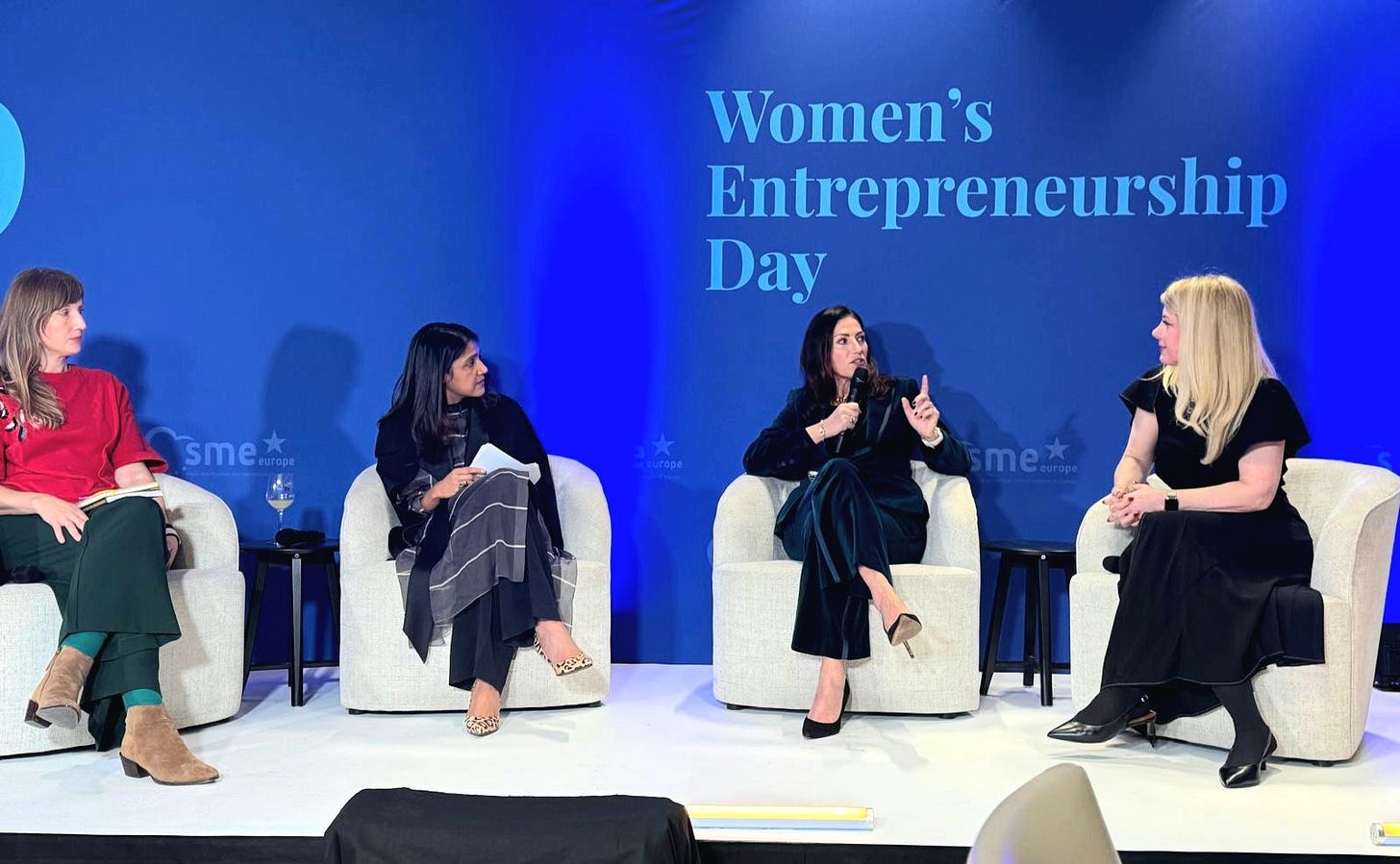
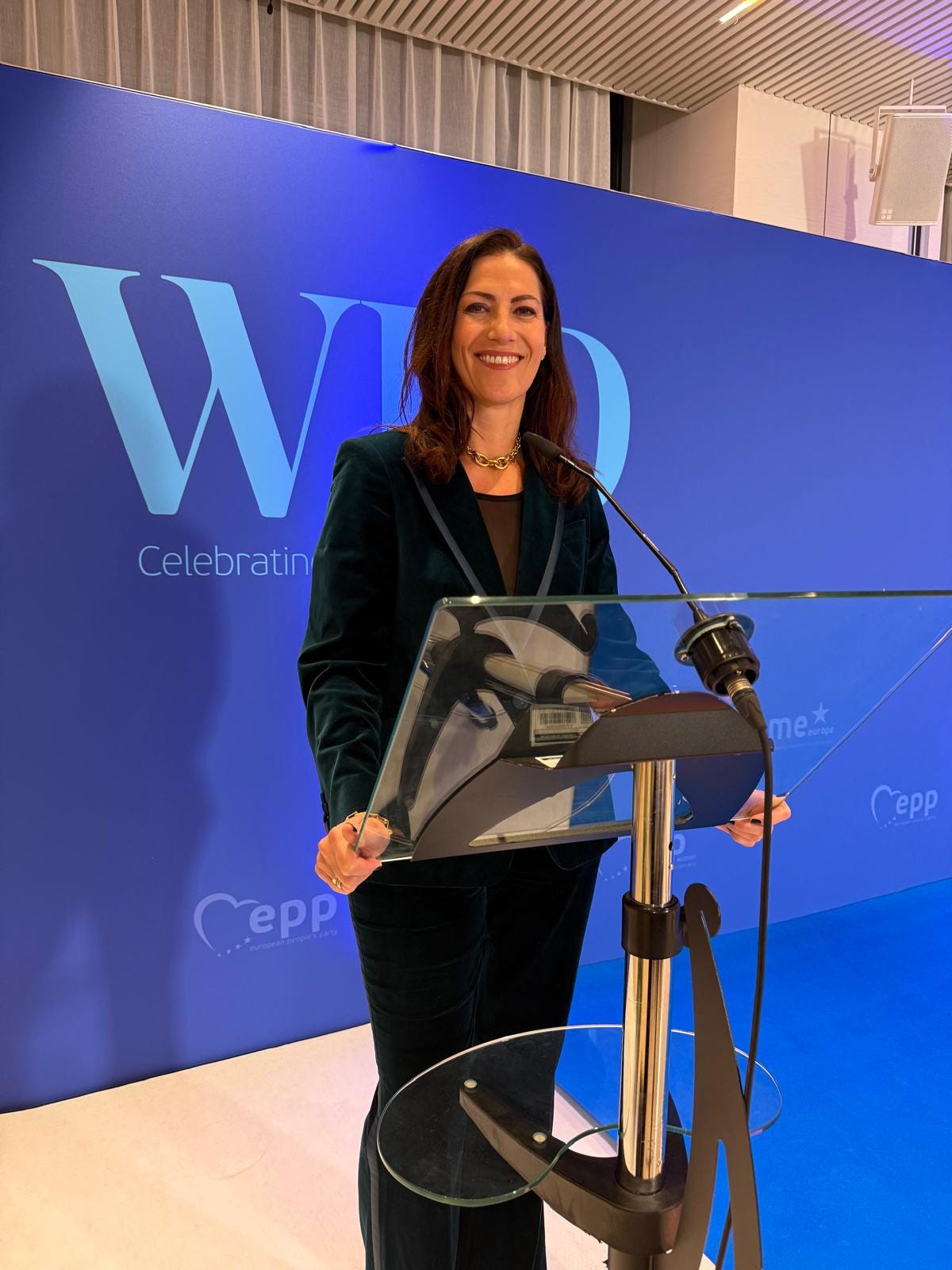
There was a delicious irony in the calendar this year: International Men’s Day and Women’s Entrepreneurship Day falling on the same date. In the middle of it, I found myself in Brussels, speaking at Women’s Entrepreneurship Day at the European Parliament, hosted by EPP Vice-President Jörgen Warborn and joined by President Roberta Metsola and so many brilliant women shaping Europe’s future. I spoke about women’s empowerment through technology - how AI can amplify our voices, help us reclaim professional and personal sovereignty, and unleash creativity. I believe that for people like me, with a “synthetic” intelligence - the ability to connect dots, integrate stories and ideas - AI heralds a new era of opportunity.
And yet, amid all this excitement, a strange irony is unfolding. Ten years ago, every school, every government, every think-piece insisted that all the smart kids must learn to code. Language departments? “Useless in the era of instant translation.” Philosophy? “Interesting but impractical.” Anthropology? “A hobby, not a path.” The Humanities were treated like indulgences - fine for the privileged, disastrous for the employable - and their students romantic dreamers with no career prospects. Fast-forward to 2025 and boom!: the Age of AI is quietly, steadily boosting the value of the very disciplines we tried to kill.
Why focus on the Humanities this week? Two reasons.
First, my friend Liora Kern - brilliant Brussels comms strategist - published an attention-catching post about Anthropic, parent company of Claude, hiring a Chief Editor for up to $320,000. Not a chief engineer. A chief editor. Mandate: “Advance the conversation. Identify and shape the questions that will matter most.” In journalism, we call that the ‘Why?’. And it is now highly compensated - even amid huge layoffs in tech.
Second, my eldest son Max [who, incredibly, turned 18 this week, having survived our parenting. Happy birthday Maxi!] - in the middle of A-levels and applying to university - had shortlisted one of the rare Economics + Languages degrees still offered in the UK. Nottingham was on his list. Then suddenly, it vanished. The degree had been quietly dismantled after he applied. This is happening everywhere.
One of the most valuable skillsets in the AI age is not coding faster, but thinking independently, communicating effectively, adapting to new contexts, and understanding what drives us: irrational, contradictory, magnificent humans. Deeply human skills are becoming premium - just as we dismantle the very disciplines that teach them.
Across the UK, humanities departments are vanishing
In the UK, more than 100 language degrees have disappeared in less than a decade. One in three UK universities has cut - or plans to cut - humanities programmes that were once considered pillars of civilisation. Over half of English universities have reduced or eliminated degrees in languages, history, archaeology, philosophy, and English literature. Entire language departments - French, German, Italian - have vanished from campuses. We treat these subjects are optional, even frivolous.
Synthetic Intelligence: the Other Kind of Smart
I’ll always remember my first university lecture on linguistics. The professor explained how language shapes perception. He used the famous Inuit example - supposedly dozens of different words for snow (later learned the explanation is more complex, full of roots and suffixes…). It blew my mind: language doesn’t just describe reality; it organises it. What you can name, you can perceive. What you cannot name, you may never truly see.
That day, something clicked. I realised that studying language, culture, stories, and symbols - the expansive and slightly dusty universe we call the Humanities - is really about learning to perceive reality in higher resolution.
Analytical intelligence - breaking down problems, testing hypotheses, spotting patterns - is heavily rewarded in academic and corporate settings. It’s the backbone of STEM. But there is another form of intelligence that has been undervalued for years: synthetic intelligence - the ability to combine disparate ideas into a coherent story, system, vision, or solution. It is creative, integrative, strategic. And it is making a comeback!
Recently, I unfollowed a particularly obnoxious tech bro who spent an entire post mocking students choosing Humanities degrees - anthropology, gender studies, literature - dripping with condescension toward their “lack of pragmatism.” He missed the point entirely. Humanities students often operate with a different kind of purpose than filling the skills gaps of the market economy. They want to understand power, identity, inequality, and societal change, - the very forces reshaping and operating the world.
In an era of uncertainty, when visibility is low and adaptability is everything, synthetic intelligence becomes invaluable.
What the research says
Humanities students, who write long essays, engaging with meaning, style, rhetoric do not carry “soft skills” - they carry hard transferables. A major University of Oxford study found that humanities graduates develop the most versatile and sought-after skills in the labour market: communication, cultural literacy, synthesis, judgment, research, critical thinking. They are not narrowly trained; they move across disciplines, sectors, and contexts with ease - something employers described as “highly valued.” Another Oxford University report showed humanities graduates tend to develop resilience and adaptability, thriving in volatile labour markets. These are precisely the skills the future rewards.
The real purpose of education
Is it just to supply the labour market with narrowly defined skills? Or is it to broaden your horizons? Cultivate nuance? Sharpen your critical thinking? Help you understand how humans behave, desire, fight, love, organise, self-destruct, rebuild - what truly drives us?
In the era of AI, the most valuable abilities will be the ones machines cannot replicate: asking the questions that matter; making people care; seeing the bigger story; understanding cultural context; exercising moral judgment; naming what others cannot yet see.
Humanities graduates will help shape AI companies, advise governments, edit models, curate narratives, draft ethics frameworks, design rituals, and create meaning where algorithms will fall short. The robots can code. But only humans can understand the depth, contradictions, shadows, and splendour of the human soul.
Creatively yours,
Charlotte
Subscribe to get new posts
Peakub is a home for creators, publishers, and teams to publish, grow, and monetize their work — all in one place. We're building a fast, privacy‑respecting platform that helps you focus on your craft while Peakub handles the plumbing — from content tooling to delivery and analytics.


I GO! by Charlotte Kan




Comments