
I GO! | Edition 5: More Than Meets the Eye - Power Dressing & Enclothed Cognition
The Science of Dressing with Intention
03/22/2025
This week in I GO! London - Vannes - and flashbacks to the Middle-East & Central Asia
In this latest edition of I GO!, I dive into the psychology of style—how what we wear not only shapes how others see us but how we see ourselves. From the concept of #EnclothedCognition to the symbolic power of uniforms and sacred attire, I explore how dressing with intention becomes a form of soft power—onstage, in diplomacy, and in daily life.
From 'suffragette' suits and ikat cloaks, I reflect on the deliberate choices I’ve made on global stages—from Abu Dhabi to Kazakhstan to the Women’s Forum in Paris—where dressing becomes a bridge between cultures and a silent but powerful statement.
Last week also took me back to my roots: the Golfe du Morbihan in Southern Brittany. A place shaped by tides, Celtic myths, and the world’s oldest standing stones—older than Stonehenge! A moving homecoming to a region that reminds me where I come from, and why I never stop moving.
And finally, a special evening at the Pagefield Awards in London with Sarah Baynes celebrating the role of activist journalists and backbench MPs. A powerful reminder of journalism’s mission: to inform, challenge, and hold power to account.
The Science of Dressing with Intention
Communication is mostly non-verbal. Before you even speak a single word, your presence—how you carry yourself, how you move, and what you wear—has already made a statement.
There’s a well-circulated but not entirely tested claim that 90% of communication happens beyond words. While the exact percentage is debatable, body language expert Albert Mehrabian’s research suggests that 55% of communication is nonverbal, 38% is vocal (tone, pitch, emphasis), and only 7% is in the content itself.
But here’s something even more intriguing: how you dress not only shapes how others see you—it shapes how you see yourself.
There’s a fascinating psychological concept called Enclothed Cognition, which suggests that what you wear affects how you think and behave.
In a 2012 study, psychologists Adam Galinsky and Hajo Adam explored this by giving participants lab coats—one group was told it was a “doctor’s coat” (associated with intelligence and precision), while another was told it was a “painter’s coat”. And guess what?... Those wearing the "doctor’s coat" performed better on attention-related tasks. They embodied those traits cognitively and behaviourally.
What you wear primes your mind for how you want to show up in the world.
Dressing for the Part
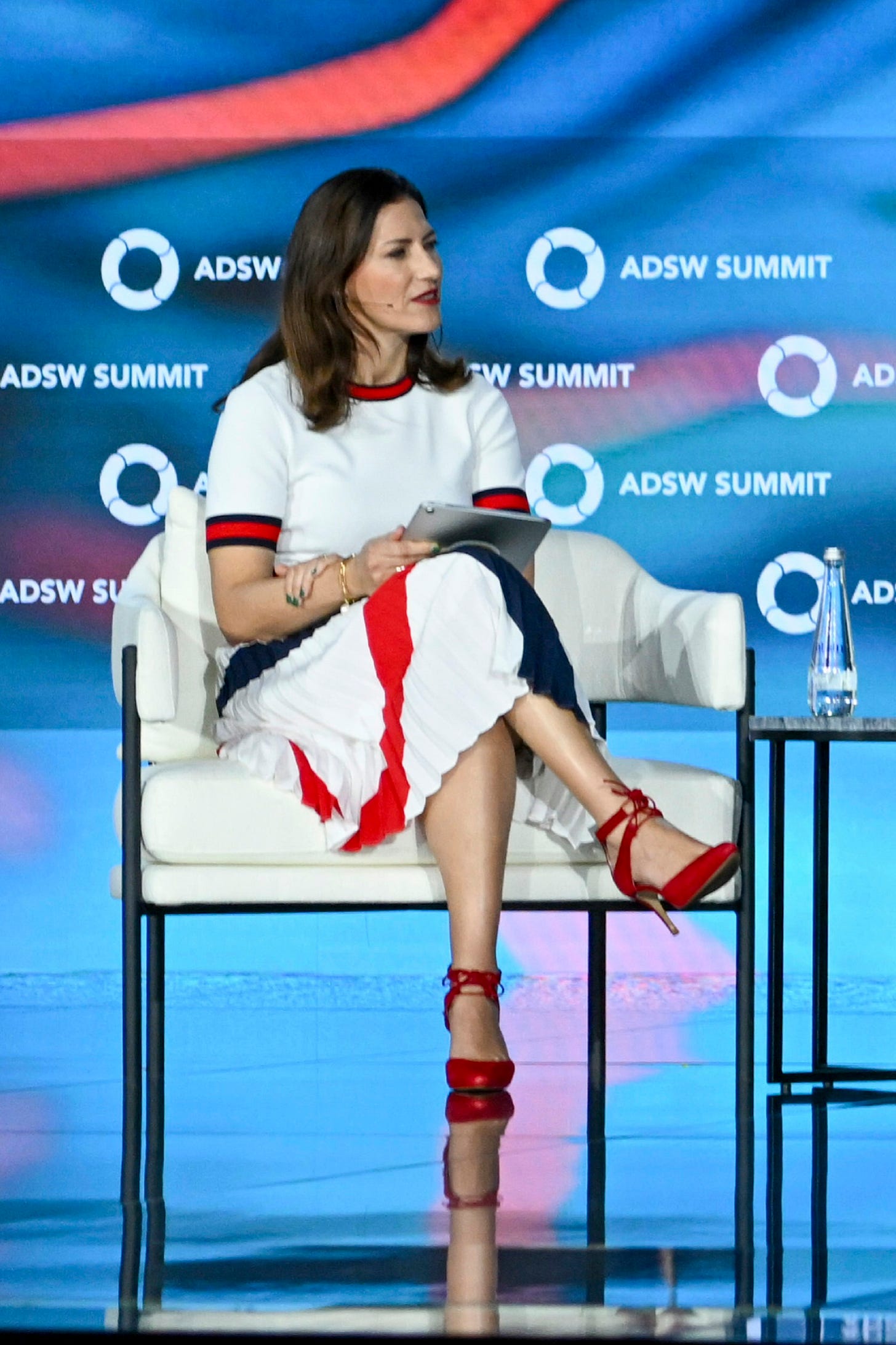
‘Power dressing’ is symbolic and deeply embedded in the way societies signal authority, purpose, and rituals. Just like priests, shamans, rabbis, imams, or those performing sacred rites, military officials and public figures wear uniforms designed to command respect and signal their role, create a sense of ceremony, hierarchy, and identity. A uniform tells you who someone is, what they stand for, and what role they’ve come to “play”. In many ways, when we dress with intention—on stage, at a diplomatic event, or in public life—we are doing the same: marking the moment, stepping into our role, and aligning our presence with our purpose.
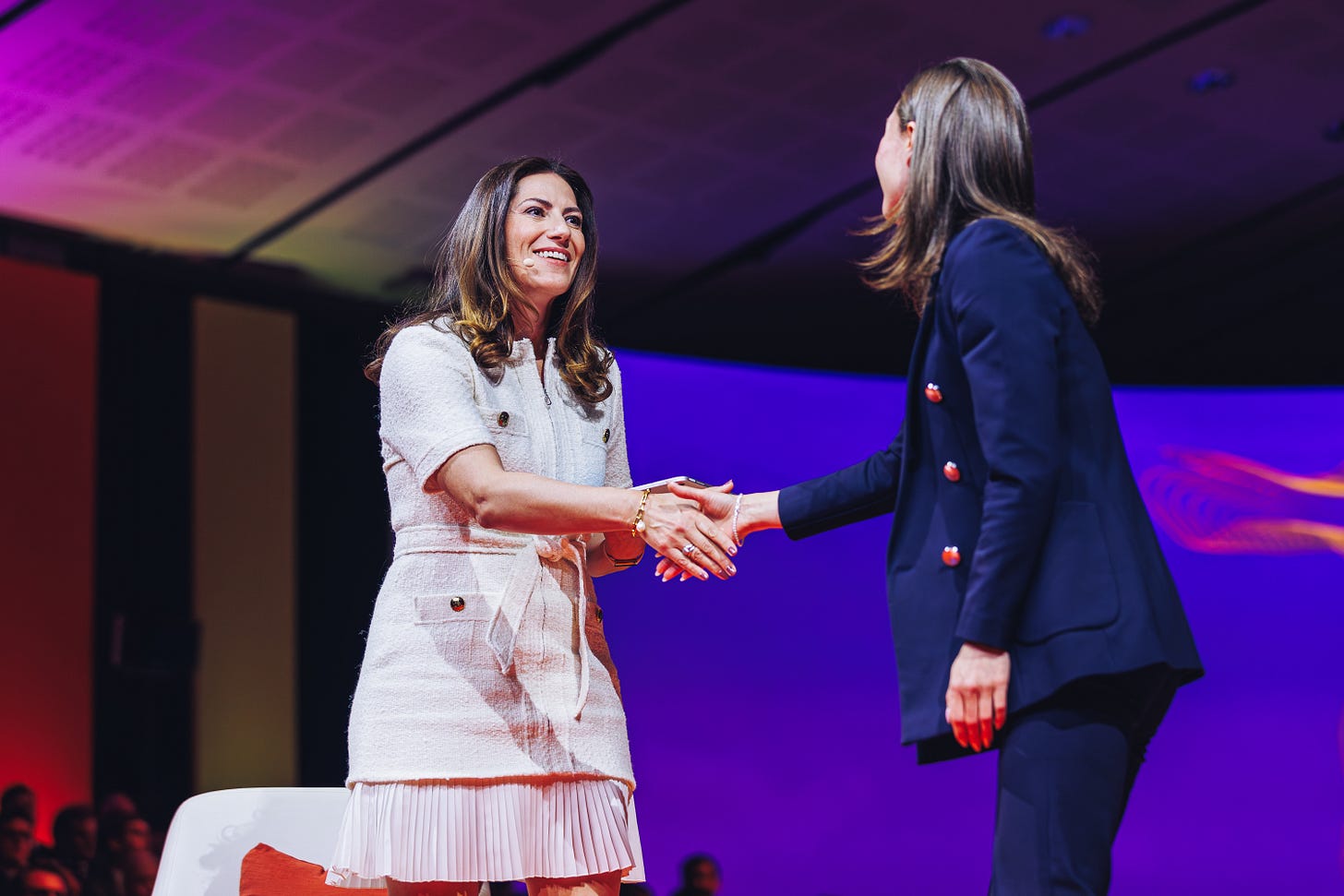
On stage, my choices are deliberate and very different from everyday life: what I wear is a strategy. As a Master of Ceremony, I channel the sacred energy of the role—part priestess, part conductor of momentum. My attire must fuel my aura, heighten my presence, and reinforce my authority:
Sharp silhouettes in white or bold tones to amplify my presence
A blend of masculine and feminine elements—fuchsia jackets with padded shoulders, long dresses with sharp heels, colourful suits etc. Since the events I moderate are often dominated by men, this allows me to both detach myself by emphasising my feminine presence but playing in the same field by retaining masculine elements.
Elegance, always, to show I aim to treat others with respect, try to navigate the world with grace, that I am an ally.
Clothing as Soft Power & Diplomacy
Beyond personal confidence, clothing is also a tool of cultural exchange and influence, enhancing diplomatic warmth and soft engagement – or subtly expressing disagreement.
Former U.S. Secretary of State Madeleine Albright famously used brooches and pins to send subtle political messages. When Iraqi media called her an “unparalleled serpent” after the Gulf War, what did she wear on her next visit to Iraq? A snake pin.
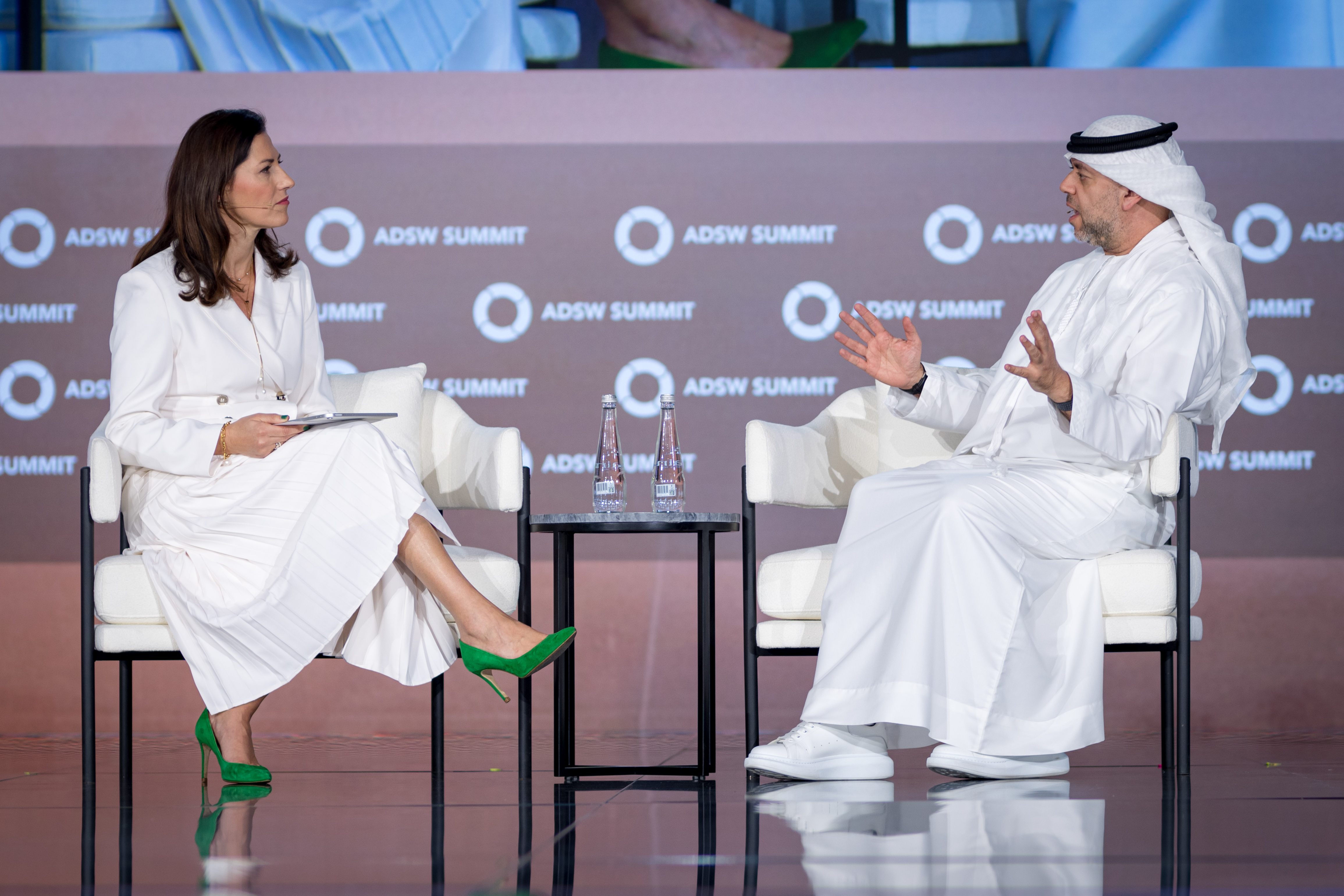
At a recent conference in the Middle East, I wore a long white coat dress with a pleated skirt—mirroring the elegance of men’s kandura while embracing my own femininity. My green heels were a nod to the event’s theme: sustainability. My outfit was a silent dialogue of mutual respect.
In Kazakhstan, I wore a delicate silk-and-wool felt jacket impulsively bought during a previous trip to Astana adorned with a ‘ram horns’ pattern—a traditional symbol of strength and determination (a perfect demonstration of ‘enclothing cognition’). The colours—soft blues and whites—evoked the sky, clouds, rivers, and streams of Kazakhstan’s vast landscape. I wore it to honour my hosts and acknowledge their cultural heritage (many attendees noticed and appreciated this gesture).
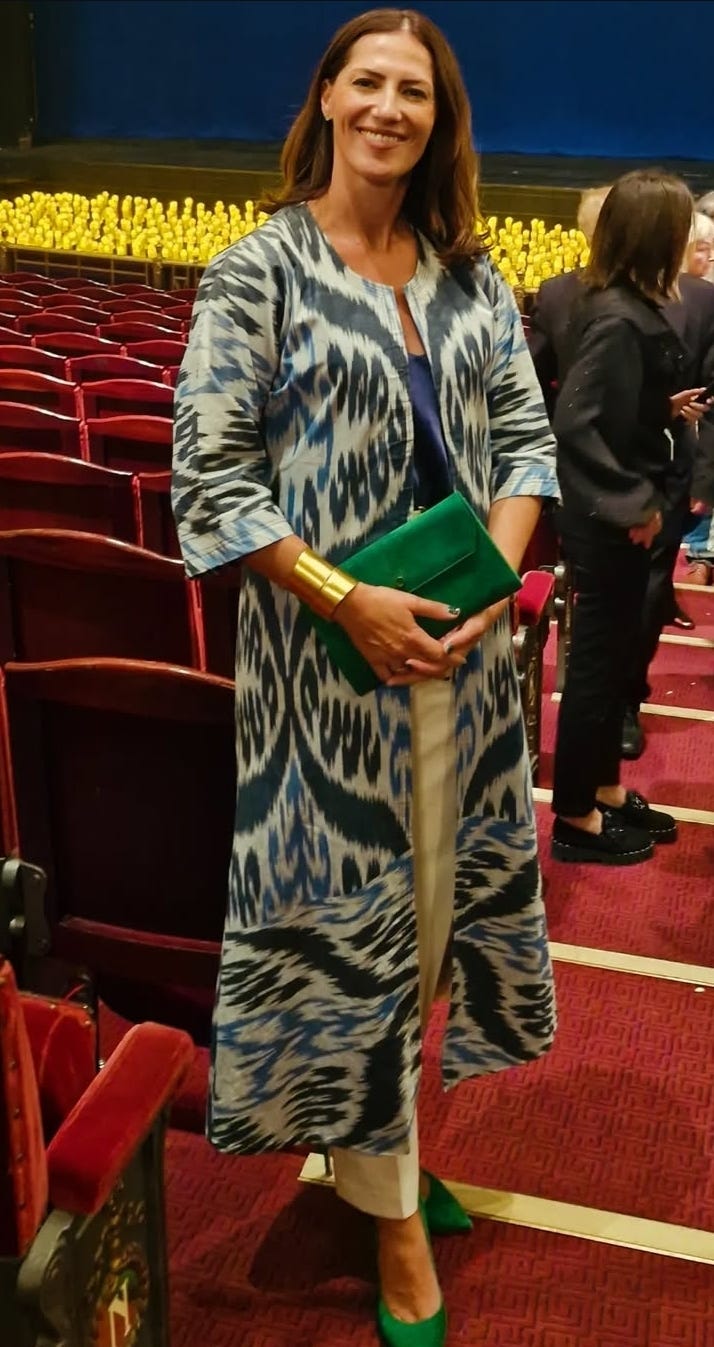
In Uzbekistan, at an event celebrating the country’s legacy, I wore a stunning blue ikat cloak acquired during my first trip. The azure hue pays homage to the Turkic world, and the fabric itself is a tribute to Uzbekistan’s deep textile traditions -Uzbekistan is one of the world’s largest producers of natural fibers, cotton yarn, and knitwear. Every thread in that cloak is steeped in history - displaying that legacy onto a global stage feels like a powerful tribute.
At the Women’s Forum, I wore a deep purple suit—the colour of the suffragettes, a symbol of defiance, progress, and power.
These choices were not random. They tell a story, they signal intent, and they connect us to the world around us.
The Takeaway? Wear the Message. Every day, with every choice, we communicate something to the world. So next time you get dressed, ask yourself: What story am I telling?
Back to My Floating Roots: The Gulf of Morbihan
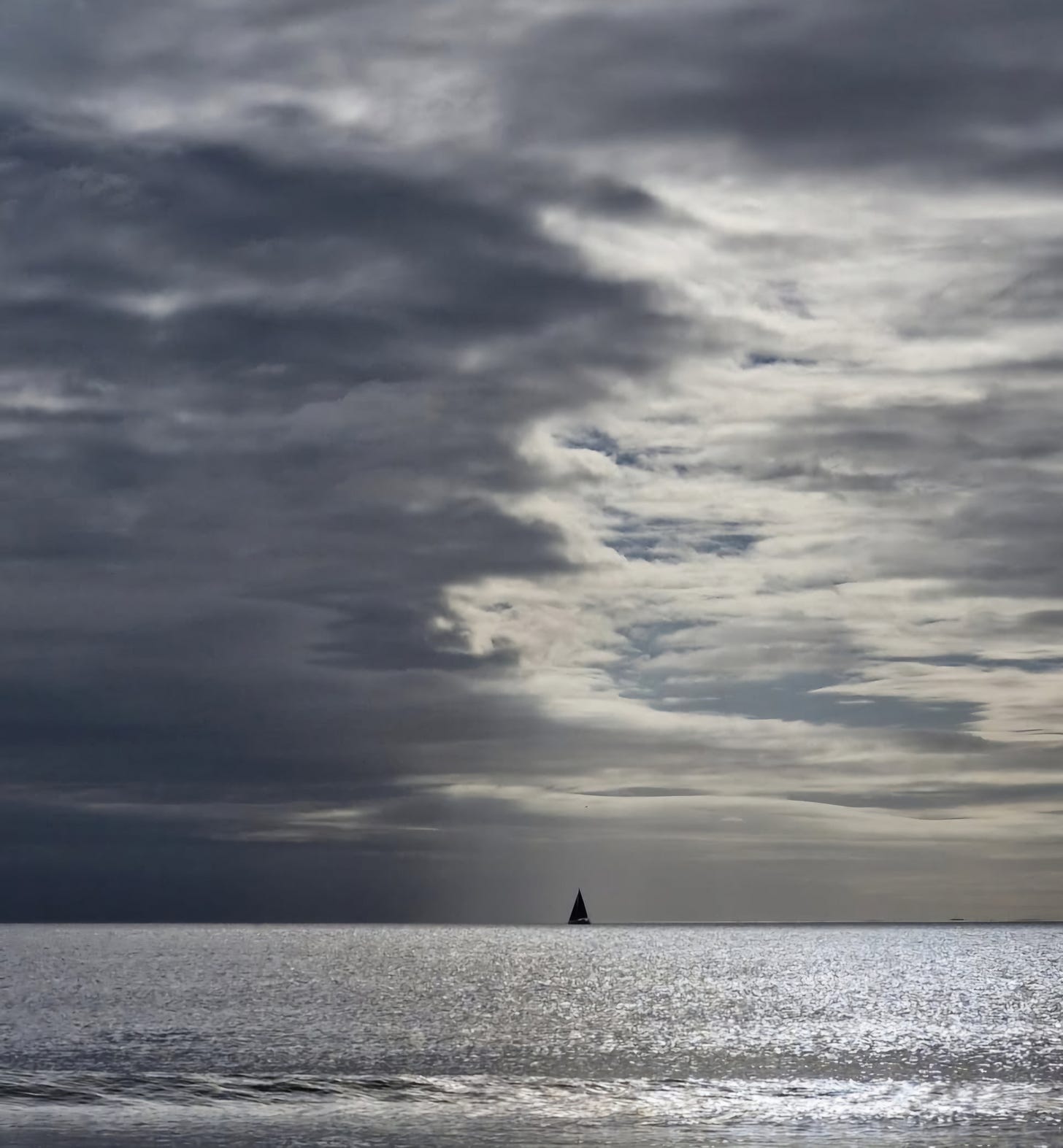
Last week, an unexpected turn of fate brought me back to my birthplace—the Golfe du Morbihan, Southern Brittany, France. This inland sea, dotted with 40 islands and countless islets, is a place shaped by myths, tides, and history - part of the very select club of the World’s Most Beautiful Bays. According to a Celtic legend, the Golfe’s islands were teardrops shed by fairies expelled from paradise—a poetic touch to an already unique geography.
The Morbihan is the only French department out of 96 with a Breton/Celtic name, meaning Little Sea. Its soft, golden light, rugged coastline, dense forests, and ancient granite megaliths give it a distinct, almost mystical atmosphere.
While Stonehenge in the UK is world-famous, the megalithic sites around Carnac, Locmariaquer, and Vannes are actually older than the Egyptian pyramids!
The Carnac megaliths form the largest collection of standing stones in the world, with over 3,000 aligned across the landscape.
The Grand Menhir Brisé (Broken Great Menhir) in Locmariaquer once stood over 20 meters tall before mysteriously shattering around 4,500 BC. No one knows why.
Some historians believe these stones align with celestial bodies, making them an early type of astronomical observatory.
When visiting, I often run through fields only to stumble upon these granite monuments to the past—silent and humbling reminders of how long humans have been around, connected to Universe and trying to make sense of the unknown.
Attuned with the tides
Unlike traditional tides, the waters of the Gulf of Morbihan don’t simply flow in and out—they create powerful whirlpools and reverse currents. At Port-Navalo, the entrance to the Gulf, you’ll find one of Europe’s strongest tidal currents—the Courant de la Jument. A dream for experienced sailors, a nightmare for the novices and the unprepared.
But these same conditions create the perfect environment for our local pride - oysters, which have thrived here since Roman times, thanks to the Gulf’s unique mix of saltwater and freshwater currents.
A Land Between Waters
I was raised in Noyalo, a small village near Vannes of fewer than 700 people, located at the entrance of the Presqu’île de Rhuys peninsula. Its name, meaning “the land between waters,” feels fitting—it’s surrounded by ponds, marshes, abers, rias, lakes, and coastal inlets. Land and sea constantly merge, you are almost circled by water, adding to the feeling of insularity.
The area’s “capital” is Vannes, or Gwened in Breton (from Gwen, meaning white). A charming historic market town with a stunning cathedral, surrounded by ramparts, flowery gardens, colourful medieval half-timbered houses —a major tourist destination attracting over 2 million visitors annually.
A foodie’s haven, Vannes’ cobbled streets are lined with boulangeries serving melt-in-the-mouth kouign-amann (a rich, buttery pastry), fromageries packed with fragrant cheeses and biweekly markets (Vannes boasts the best in Brittany and regularly contends for one of the best in France) overflowing with oysters, fresh fish, and organic products. Honest. Simple. Incredibly tasty food.
Thanks to its geography, the Gulf of Morbihan enjoys a mild climate, and an ever-changing seascape. Life is tranquil and outdoorsy. Vannes is regularly ranked among the top French cities for quality of life, thanks to its pristine natural environment, clean air, low crime, high-end amenities.
Perhaps growing up in The Golfe du Morbihan, with its shifting tides and whispering legends is why I’ve never been able to stay still.
Bretons, a people of sailors, farmers and merchants, have always been rooted in their land yet drawn to adventure. Their reputation—stubborn, hardworking (the region used to be one of the poorest in France, almost a ‘lost land’ until the early 20th century, though no more), deeply independent (we reluctantly became French in the mid-16th century and still consider ourselves a distinct Celtic people, my grand-parents spoke Breton and my great-grand-parents the traditional dress and “coiffe”), but authentic and loyal, “real”.
Every time I return, I appreciate it and see it more clearly: this place made me.
Celebrating Journalism & Backbench Voices at the Pagefield Awards
Onto more urban settings now. This week, I attended the Pagefield Awards at the Institution of Civil Engineers, a night dedicated to celebrating the power of journalism presented by Jonathan Ashworth, Chief Executive of Labour Together.
I had the pleasure of being invited by Sarah Baynes, an executive producer I first met more than a decade ago at Bloomberg TV—our conversations always rich and insightful.
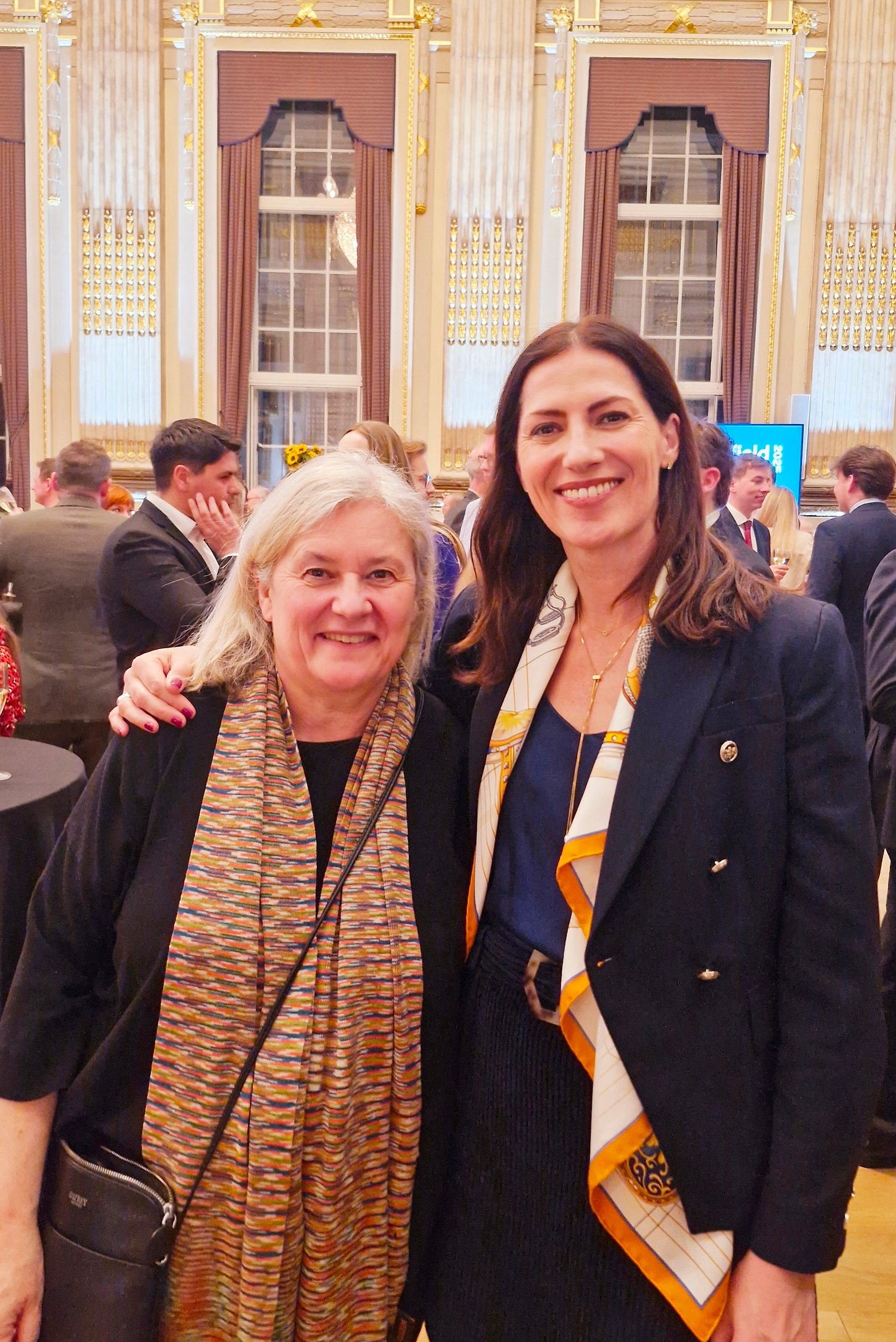
One of the evening’s highlights was the Backbencher MP of the Year Award, a tribute to those who challenge the status quo and push for change from the political sidelines. But what resonated most was the recognition of activist journalists, those who hold power to account, give voice to the unheard, and remind us why a free press is the backbone of any democracy.
Kim Leadbeater picked up the Political Speech of the Year Award for her Commons contribution on assisted dying while Channel 4’s Cathy Newman deservedly won the Scoop of the Year Award for her investigation on John Smyth’s abuse and her interview with Archbishop Justin Welby ahead of his resignation as head of the Church of England. Political Journalist of the Year Award went to Caroline Wheeler for her work on the infected blood scandal.
At a time when trust in institutions is fragile and narratives more contested or twisted than ever, the event was a powerful reminder of journalism’s purpose in society: to inform, challenge, and uncover truths that matter and that will change people’s lives.
Subscribe to get new posts
Peakub is a home for creators, publishers, and teams to publish, grow, and monetize their work — all in one place. We're building a fast, privacy‑respecting platform that helps you focus on your craft while Peakub handles the plumbing — from content tooling to delivery and analytics.

I GO! by Charlotte Kan




Comments