
I GO! Edition 3: Show, Don't Tell!
From Brazil to Japan, French luxury narratives and Den Bosch: Global Stories
03/01/2025
This Week: London – Den Bosch
With every journey, I feel more connected to the world—with fewer degrees of separation, deeper understandings, and a growing sense of synchronicity.
This week, work briefly took me to Den Bosch, a quaint medieval city in the Netherlands. Whilst at the airport, with my birthday approaching, and middle age settling in, I felt compelled to gift myself a very grown up French classic —the iconic Hermès silk scarf, also known as a “carré”. However, more than a scarf, what I was buying was a story—a thread woven across continents, generations, and traditions, much like my own life: born in France, shaped by travel, and enriched by diverse experiences. And everything, somehow, always tying together. Indeed, the silk used by the French luxury house is produced in…Brazil, and we can thank the Japanese for that!
A Silk Thread Between São Paulo, Japan, and timeless French elegance
As detailed in my second edition of I GO!, last week while in São Paulo, due to my fascination with Nippon culture, I spent time exploring the city's deep-rooted Japanese-Brazilian connections (Brazil is home to the largest Japanese community outside Japan). What I hadn’t realised before was the key role Japanese immigrants played in establishing Brazil’s silk industry—one of the world’s finest.
Sericulture began in China over 5,000 years ago, but in Brazil, it took root in the mid-19th century, alongside the coffee industry in the state of São Paulo. However, it wasn’t until the 1930s, under the influence of Japanese migrants, that Paraná, a biodiversity hotspot in the Atlantic Forest, known today as Vale da Seda (Silk Valley), properly became covered in row after row of mulberry trees—the only food source for Bombyx mori, a.k.a silkworms.
Today, Brazil ranks among the world’s top six silk producers (FAO), with smallholder farmers supplying Hermès and other luxury houses for decades. However, the industry is under threat—production has declined 77% in the last 20 years, due to pesticide contamination, climate change, and farm management challenges (Brazil Farmers). I was pleased to find out that Hermès local silk partner follows strict environmental and ethical standards as part of the UN Global Compact (Cambridge Institute for Sustainability Leadership).
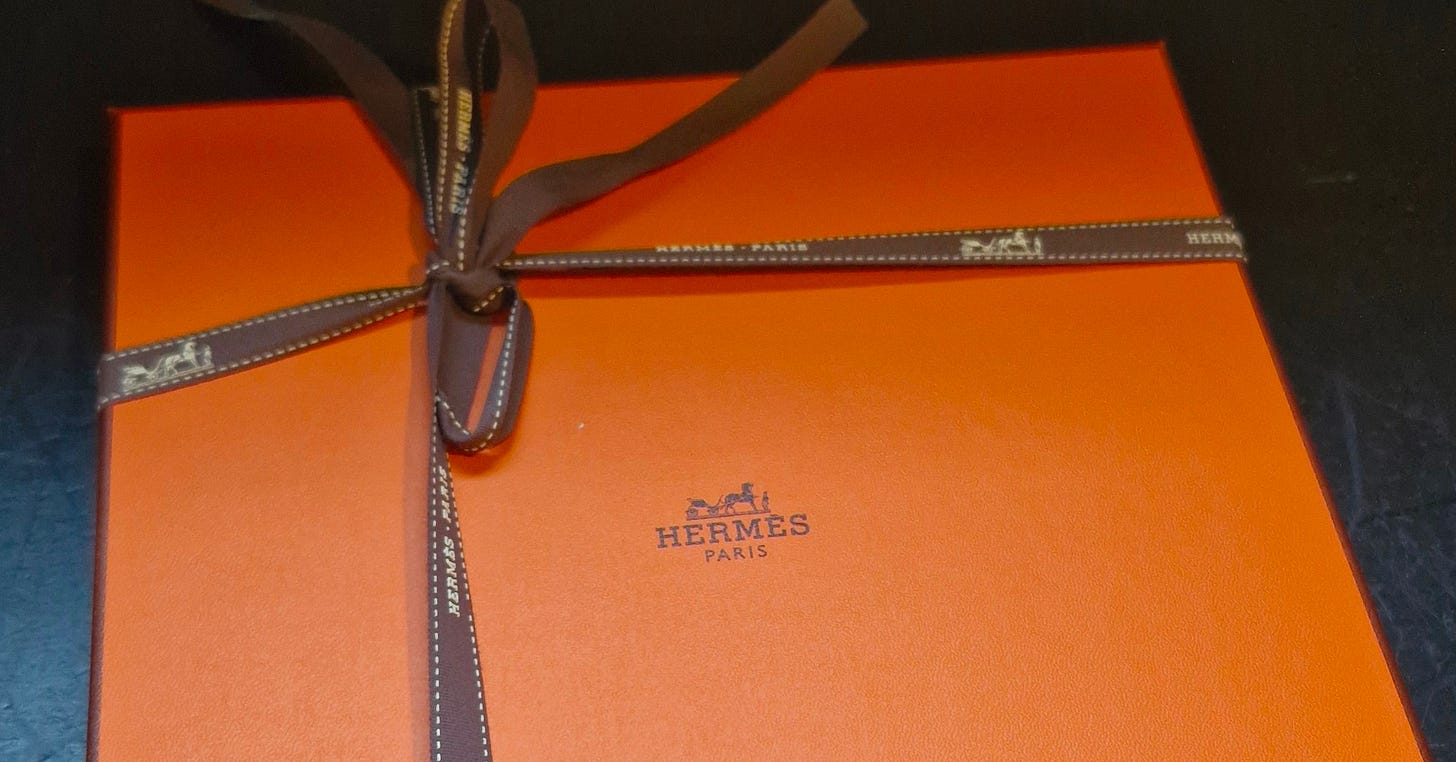
The elegant Hermès scarf embodies this full and diverse chain of hands, cultures, events, history. It is a testament to local craftsmanship and heritage - the results of hundreds of hours of labour and of elaborate artistry. The silk produced in Brazil is sent away to be woven in Lyon, France, and the colour is applied separately via silk-screening—sometimes requiring up to 40 individual screens for a single design. Each design is itself a work of art, created by artists commissioned by Hermès. The carrés are so unique that they are collectible - some fans even frame them or use them as home décor.
Stories Always Beat Data
Sustainability, traceability and craftsmanship are all part the Hermès brand, but what really ensures its longevity is story-telling - using narratives to create an emotional connection with customers. Why? Because humans remember emotions better than pure information.
Stories are up to 22 times more memorable than facts alone, American cognitive psychologist Jerome Bruner argued.
Storytelling is powerful and therefore hugely profitable— Hermès, LVMH, and Kering— luxury houses have built global empires on the power of narrative. Chanel, as a brand, embodies excellence but also Coco Chanel’s rebellion against corseted, traditional, sexist fashion. Dior’s dresses embody the freer “New Look” that redefined post-war femininity.
French luxury houses dominate the global market because what they sell is meaning. While fast fashion churns out disposable trends and fads, luxury brands cultivate rarity, heritage, and a sense of belonging to something …timeless. Like the silk scarf I hope my daughter will inherit and wear one day.
And this is the perfect segue way to my next point….
Show, Don’t Tell!
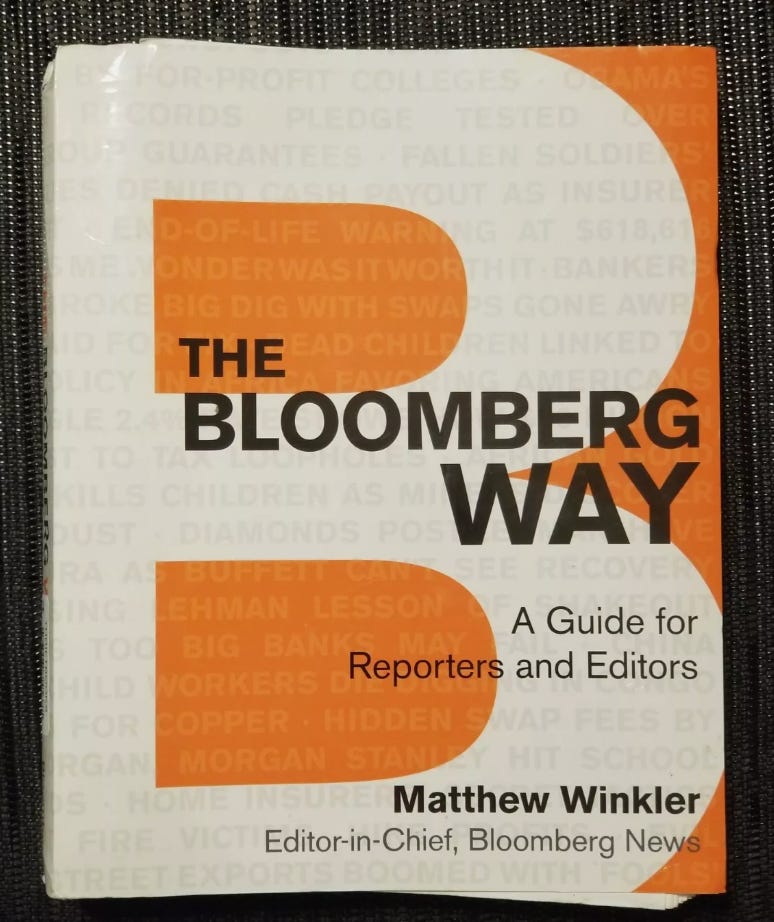
When I joined Bloomberg Television in 2005, like all new recruits, on day one, I was handed a copy of The Bloomberg Way—the in-house editorial bible designed to ensure all written and broadcast content followed the same strict storytelling standards. This book is packed with invaluable advice on how to communicate with clarity and impact, and it has served me well for the past two decades.
One of its most powerful commandments—which I always emphasise in public speaking and media training—is "Show, Don’t Tell!"
This communication principle is all about backing up statements with facts, figures, and anecdotes to make them more compelling. Instead of relying on broad claims or subjective language, it encourages using comparisons, rankings, percentages, and real-world examples to frame information with authority. In essence, it lets the evidence speak for itself.
Take this example:
"France has a strong luxury industry."
"France is home to 7 of the world’s top 10 luxury brands, including LVMH, the world’s most valuable luxury group."
Or this:
"Apple is a massive company."
"Apple’s $3 trillion valuation exceeds France’s GDP."
The difference? The second version in each case provides context and anchors the statement in hard data—instantly making it more authoritative and harder to dispute. It also makes it easier to immediately understand the size & scope of the issue being discussed.
Vague statements dilute credibility
Referencing third-party sources—rankings, industry reports, brand endorsements—adds even more authority. Example:
“Our company is a world leader in consumer electronics”
“We are ranked ‘World’s N.1 in consumer electronics’ by Forbes”
In a world overflowing with information, and whatever the political climate is currently in relation to accuracy and the truth, people trust facts over opinions, specifics over generalities, and proof over assertions. That’s why The Bloomberg Way has been a guiding force in my career, and why "Show, Don’t Tell!" is a rule I live by when communicating with impact.
Den Bosch: A Medieval Jewel Before Carnival
This week, an overnight trip to the Netherlands took me very briefly to 's-Hertogenbosch, or Den Bosch, in the province of North Brabant - and I was quite smitten by its understated charm.
This quaint Dutch city heaving with history is often referred to as the "mini Bruges" of the Netherlands due to its numerous canals and bridges. The city was built as a fortress on marshes, in a delta, during the Middle Ages. A lot of its rivers and canals run under the city, and can be explored during a scenic boat trip.
I had little time for tourism, but notable highlights included St. John’s Cathedral – the largest Gothic cathedral in the Netherlands, a few nods to Napoleon here and there (his 1810 visit clearly left an impression…) and some lovely, atmospheric side streets and beautiful merchant type brick buildings. The streets were packed with smiling cyclists and pedestrians and I couldn’t help but think that this is typically what Europe stands for: good quality of life.
I visited just before the Carnival celebrations so the town was covered in red, white and yellow flags, and excited locals were clearly gearing up for the party of the year! (despite the rather damp and grey weather…).
Gold, a relaxed tropical Notting Hill classic
Earlier this week, I had the pleasure to have lunch with Isabelle Toledano-Koutsouris, who has a long and impressive career in banking. We met at the Abu Dhabi Sustainability Week Summit back in January and reconnected in Davos on the margins of World Economic Forum.
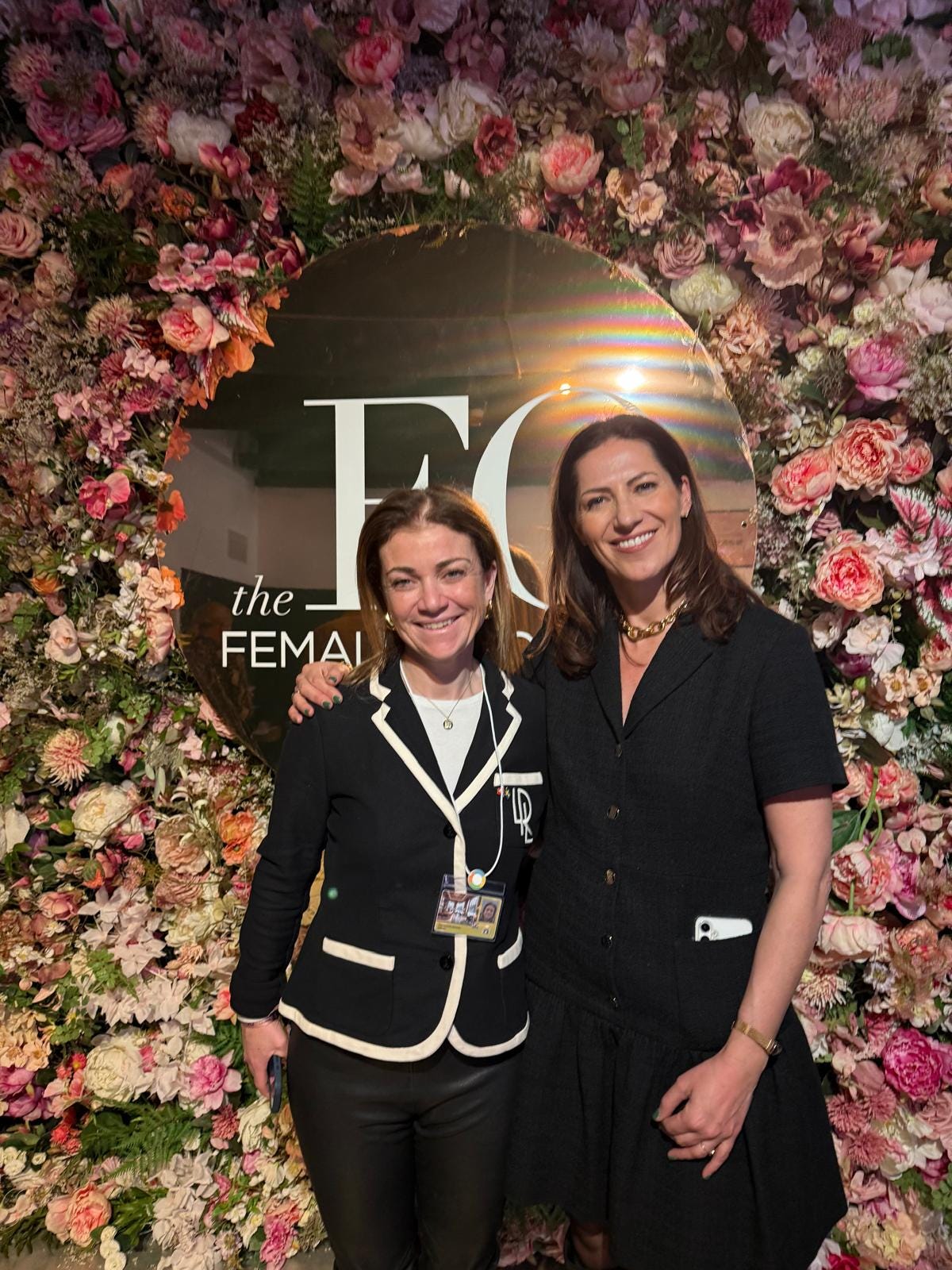
We ate at a well-known Notting Hill neighbourhood restaurant: Gold, on Portobello Road. Freshly back and still reeling from my enjoyable work trip to Brazil, I was happy to plunge in the relaxed, tropical atmosphere of the restaurant.
Gold does not offer fine cuisine but seasonal sharing plates, and I was impressed by the overall feeling of freshness and goodness. In the open kitchen, the chefs cook over fire, and the processes of wood-roasting, charring and slow cooking add a real kick to the quality ingredients used.
We enjoyed the chalk stream trout ceviche, pickled cucumber, horseradish, chilli; coriander Chargrilled purple sprouting broccoli, chilli, garlic vinaigrette; wood roasted whole sea bream, capers; and chargrilled leeks. I felt my skin glowing with the vitamins as I left.
That’s it from me. Next week: Barcelona! The annual grand tech fest that is Mobile World Congress (MWC), “the largest and most influential connectivity event in the world” requires flat shoes and … a lot of stamina to deal with the noise, the miles and the agitation in the Fira…
Until next time, keep GO!-ing.
— Charlotte
Subscribe to get new posts
Peakub is a home for creators, publishers, and teams to publish, grow, and monetize their work — all in one place. We're building a fast, privacy‑respecting platform that helps you focus on your craft while Peakub handles the plumbing — from content tooling to delivery and analytics.

I GO! by Charlotte Kan




Comments