
I GO! | Edition 23: Soul Food, Sacred Fires & the Unbearable Weight of History
08/04/2025
This Week: Kōyasan – Hiroshima – Miyajima – Beppu – Fukuoka – and now, Korea
Wrote most of this week’s edition from the ferry between Fukuoka and Busan, lulled by the gentle sway of the sea, retracing in my mind the incredible and diverse experiences of the past seven days - the huge distances covered by shinkansen, cable car, tram, train, ferry, bus and aching foot. Nearly 100 kilometres walked, countless stairways climbed, in the simmering heat… all endured in pursuit of wonder and discovery. But Japan continued to deliver.
Kōyasan, or the Mountains of Burning Desires
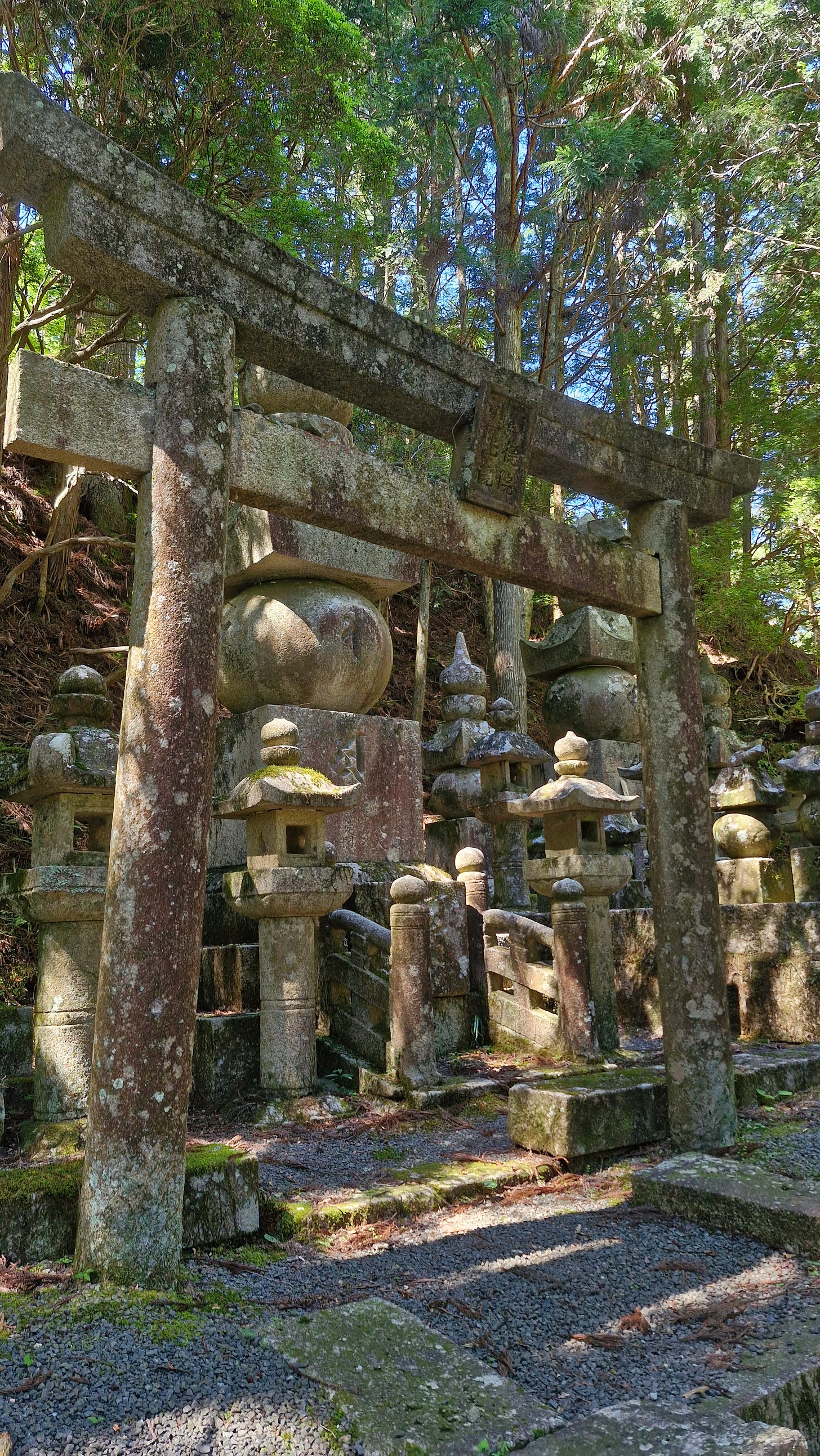
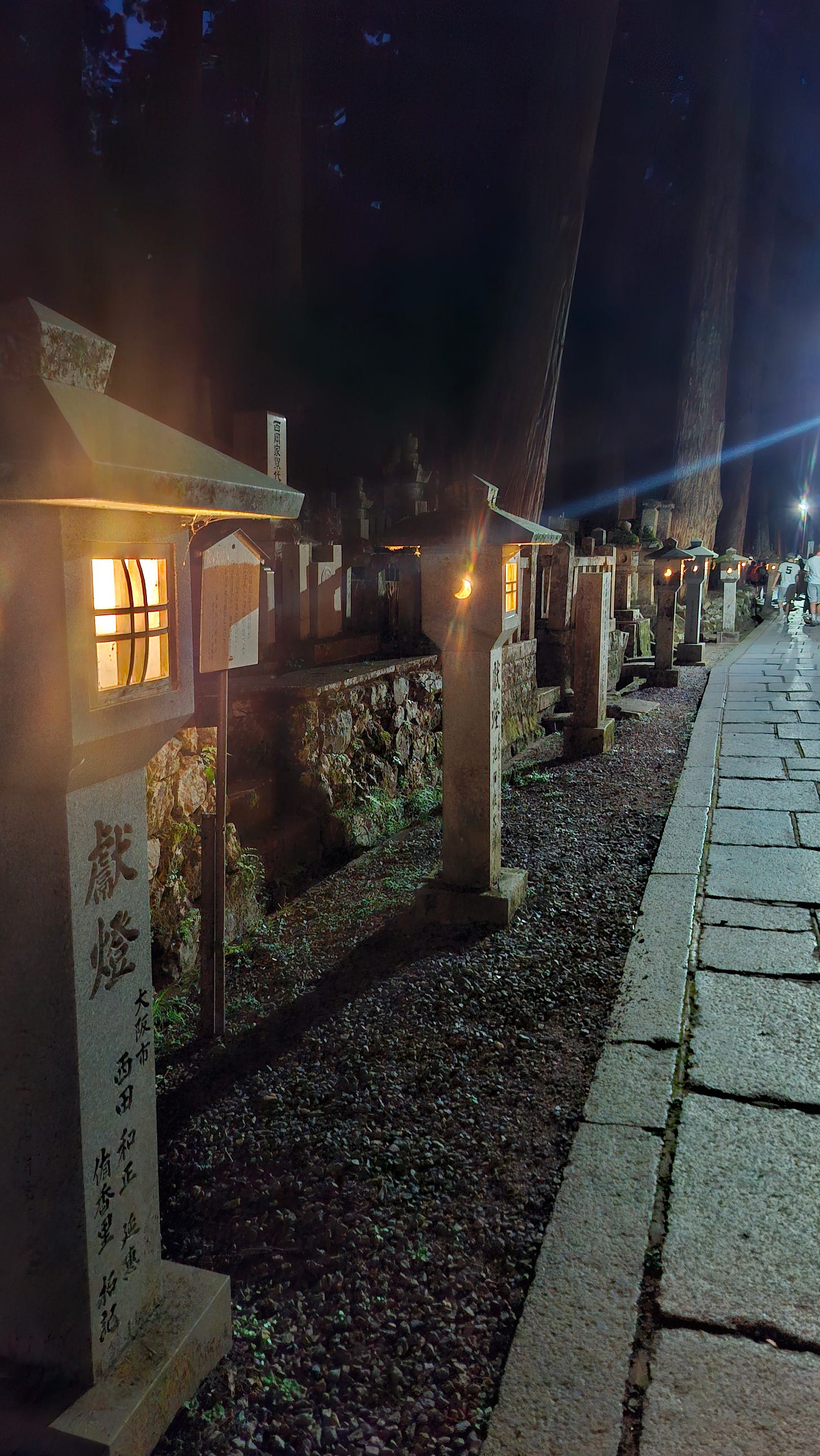
After the electric energy of Osaka, we sought elevation, in altitude and in spirit. We travelled deep into the forested mountains to spend a night in a Buddhist monastery in Mount Kōya, one of Japan’s most sacred sites. Founded by the monk Kūkai (also known as Kōbō Daishi) who brought the Shingon sect of esoteric Buddhism from China in the 9th century, Kōyasan is now a UNESCO World Heritage site with over 100 temples and 2,000 religious buildings nestled in its quiet village, as well as the largest graveyard in Japan, which provides an eerie experience to night visitors.
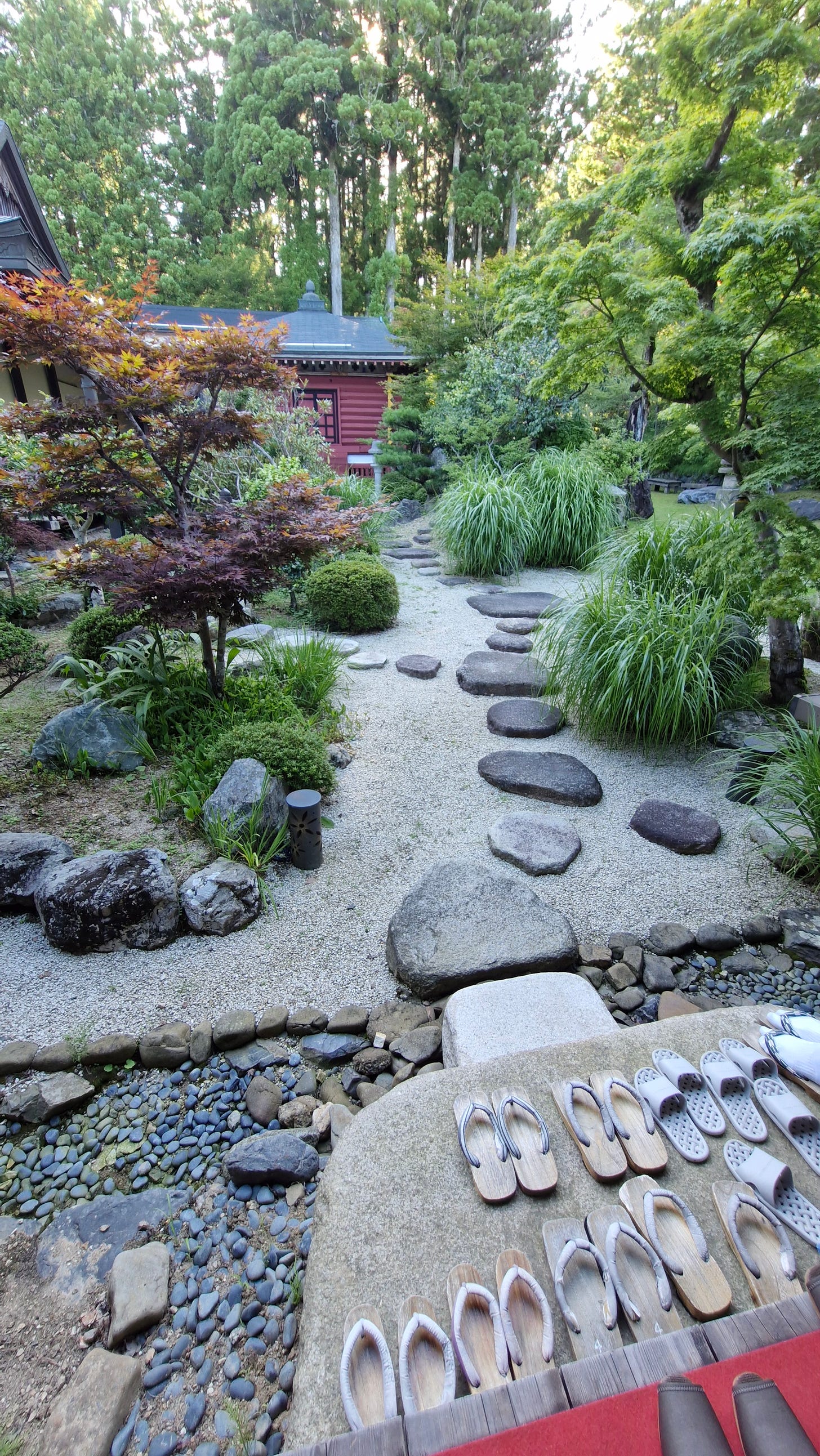
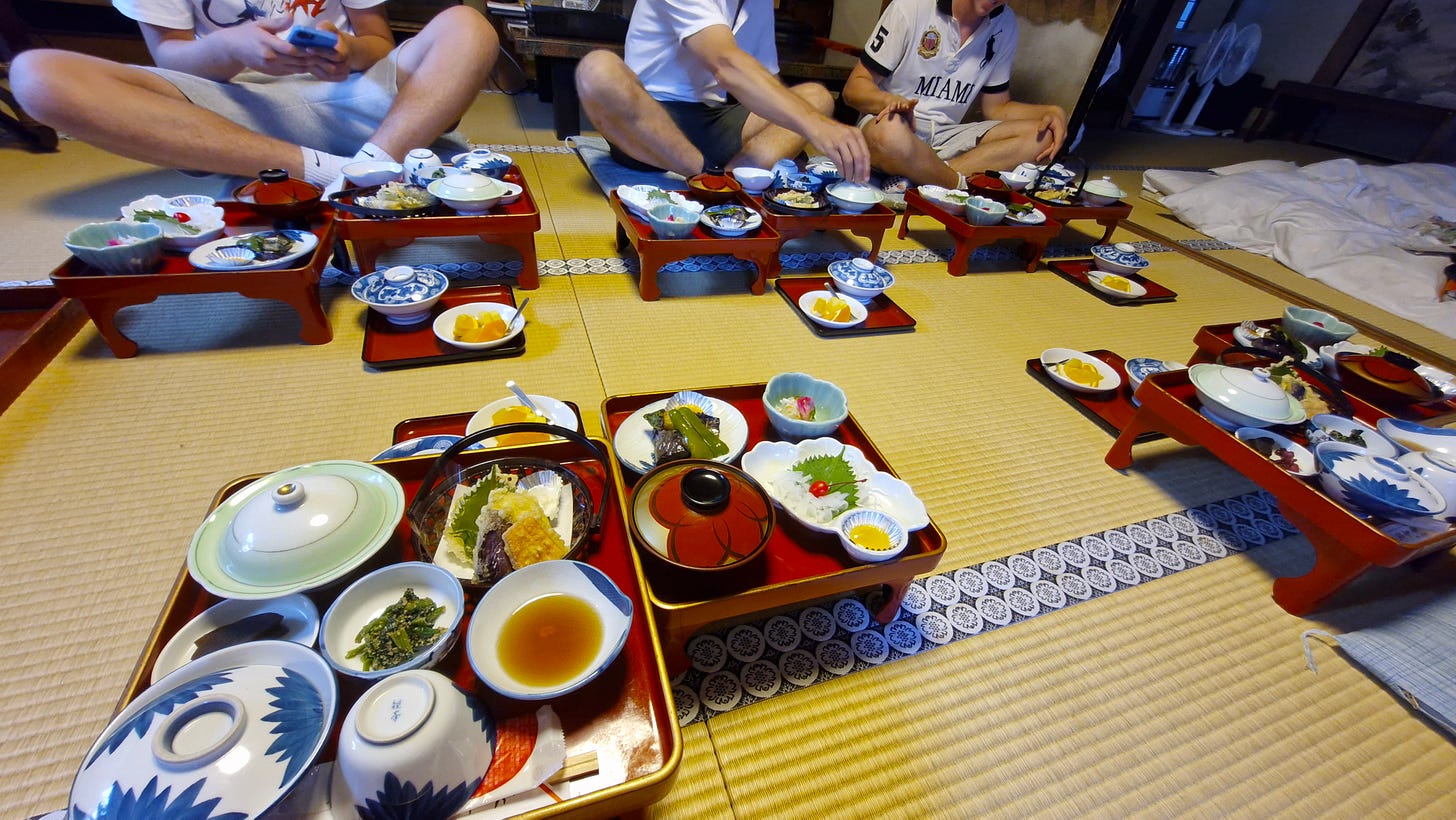
We slept in tatami rooms overlooking immaculate zen gardens and were served shōjin ryōri (Buddhist vegetarian cuisine) delicately prepared with unfamiliar ingredients chosen not just to nourish the body, but to soothe the soul (not a hit with everyone in the family sadly).
But it was the Goma fire ritual that left the deepest imprint. A mystical purification ceremony performed by Shingon monks, it involves the burning of wooden sticks, each representing worldly desires, in a sacred fire. The flames are believed to embody the wisdom of the Buddha, and aim to burn away our attachments (to things, people, feelings, expectations, whatever gives pain etc.). The intensity of the fire, the rhythmic chanting of mantras, the way the monks’ faces flushed with intense heat and devotion - it was a trance-like, deeply moving spectacle that I will never forget.
Hiroshima: The Scars Beneath the Silence
It is difficult to find the right words to capture the tragedy that unfolded in Hiroshima nearly 80 years ago. Raw, immense pain and sorrow that we glimpsed when visiting the Peace Memorial Museum.
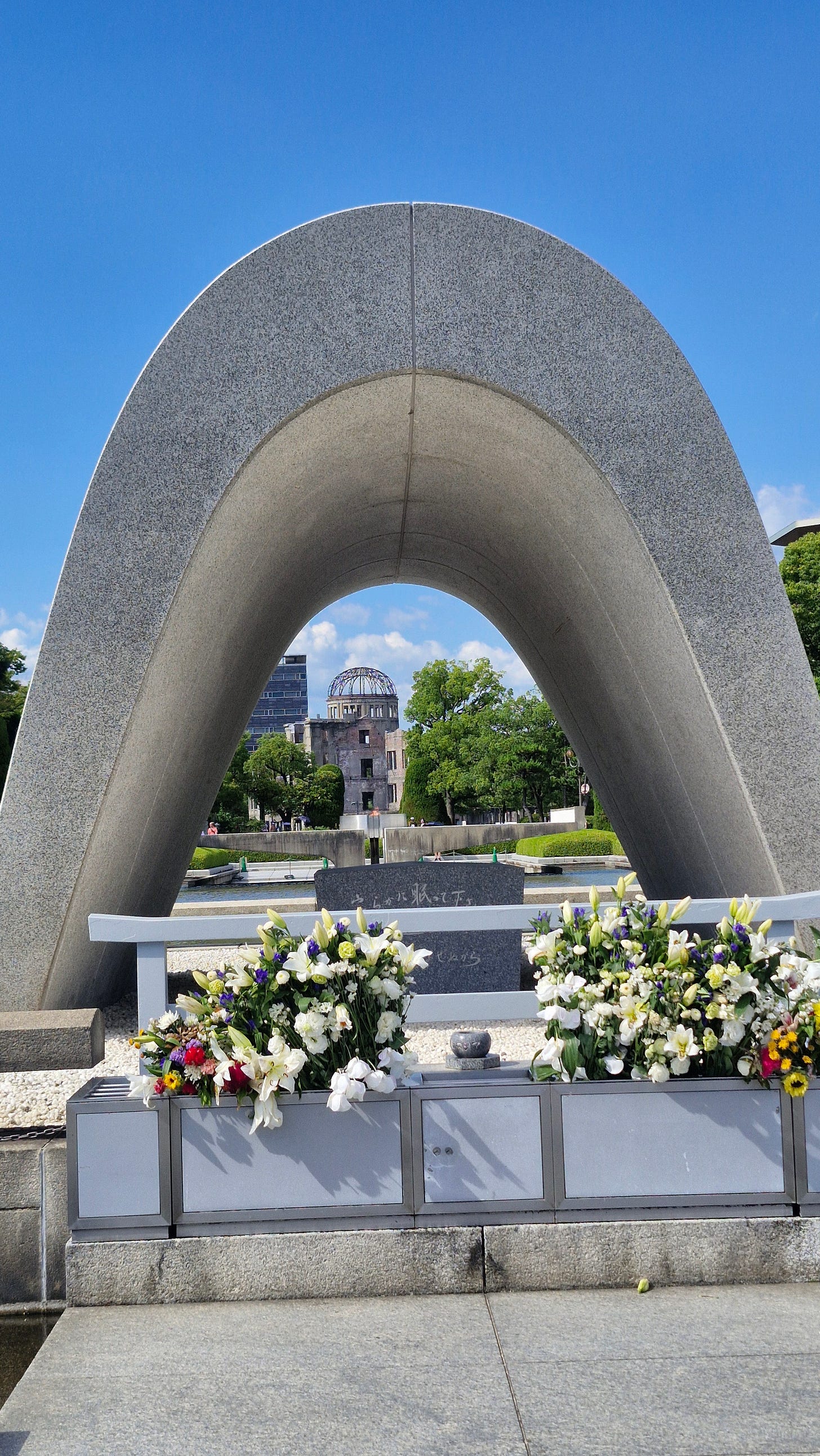
Hiroshima today is serene - green, orderly, almost too peaceful for the horrors it has witnessed. Walking through Peace Park, with its sculptures and stillness, I was struck by the paradox between memory and daily life. We were moved as a young mother cycled past us, her two small children in the front and back seat singing a cheerful tune in unison. Just metres away from the infamous A-Dome, and the ‘Ground Zero’ just below where the bomb exploded (in the air). A moment of joy suspended in a place of unthinkable pain.
140,000 lives lost in the immediate aftermath of August 6, 1945. Thousands more in the years that followed - from radiation, illness, and unimaginable suffering. The atomic bomb didn’t just change the course of war; it altered our species’ moral trajectory. The American narrative speaks of necessity, of precipitated surrender and reduced loss of life. But supposed necessity does not absolve cruelty. It was also a show of power to the USSR.
And yet: since that day, nuclear weapons have not been used in war, and Japan became a democracy. The precarious balance of deterrence holds. For now.
An elderly woman, as I waited for the ferry for Miyajima, gave me a leaflet pleading for world peace and to never forget visiting Hiroshima. I won't.
Miyajima – Paradise Found
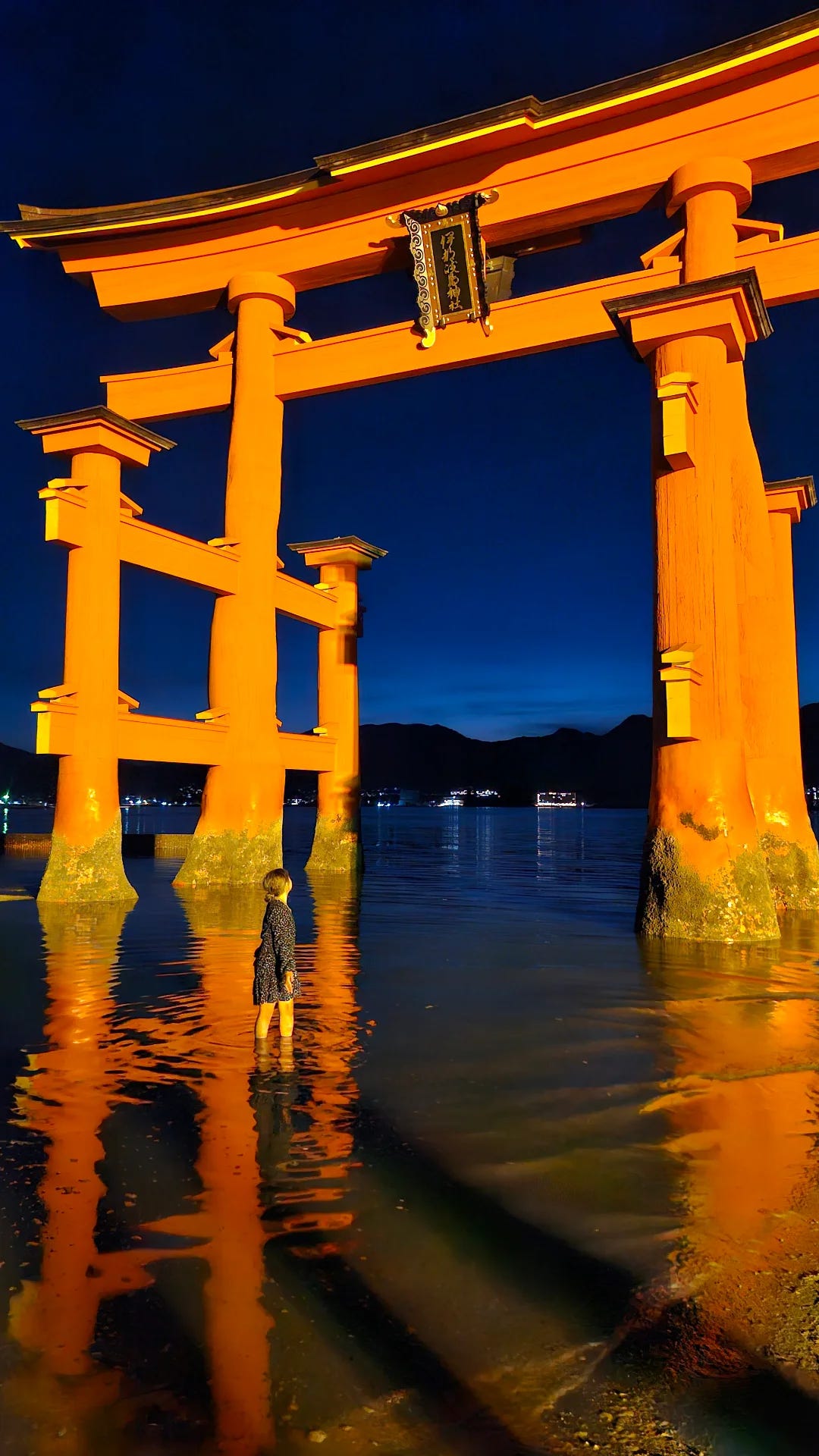
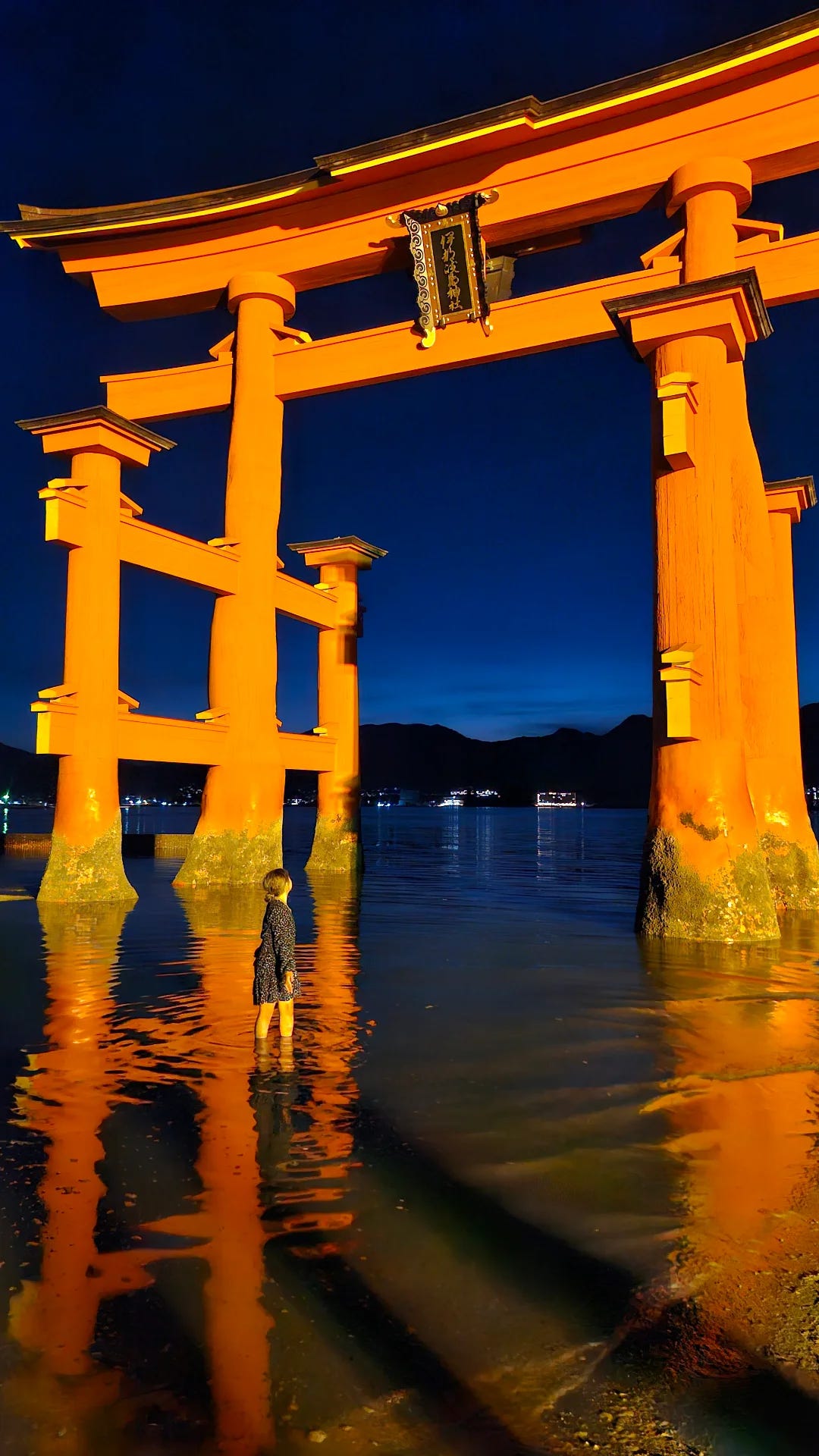
Ah…Miyajima, the sacred island of the gods, where the Great Torii Gate of Itsukushima Shrine rises from the sea like a mirage. At night, the crowds retreat to the mainland, and the island becomes something else entirely - quiet, intimate, illuminated by a warm summer moon. Wild deer brushed past us as we stood beneath the vermillion gate.
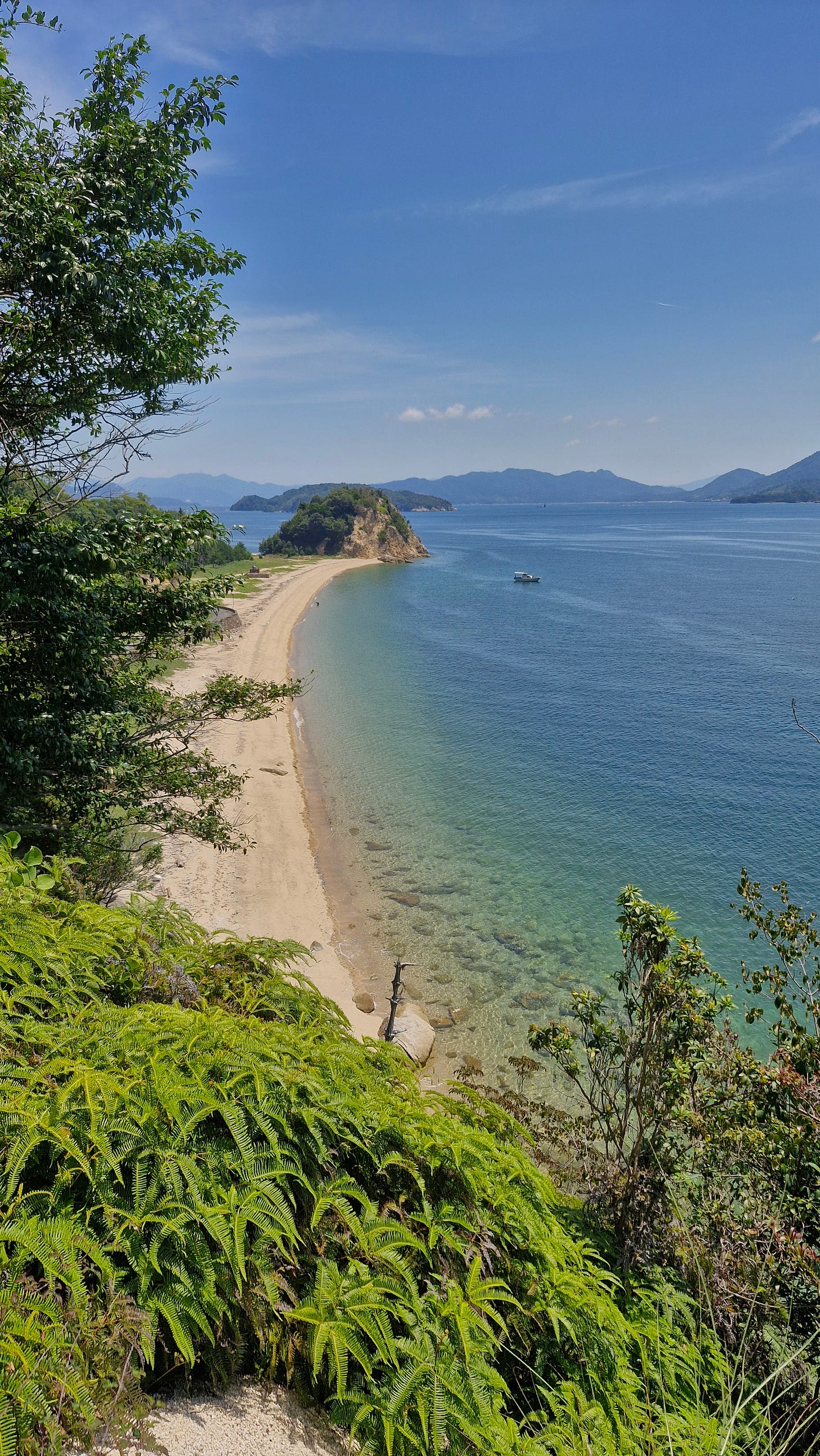
We stayed in a charming family-run inn where a sumptuous seasonal dinner was served in twelve different courses on our room’s tatami mat. We rang the gong of peace at Daishō-in Temple, still moved by the stories heard in Hiroshima. We pushed bikes up steep hills under the blazing sun, swam in crystal-clear waters, made it to the summit of Mount Misen by cable car (and whimpered on the steep descent), and toasted to life with saké and cold Sapporo on the beach.
It was perfect.
Beppu – Hells, Sand, and the Seedy Underbelly Again
Beppu was... an experience. Known for its abundance of natural hot springs, the town oozes volcanic activity - steam rising from manhole covers, sulfur in the air, bubbling pools of scalding water nicknamed “The Seven Hells of Beppu.” We visited several, each one stranger and more theatrical than the last—one blood-red, one milky-blue, one boiling with mud.
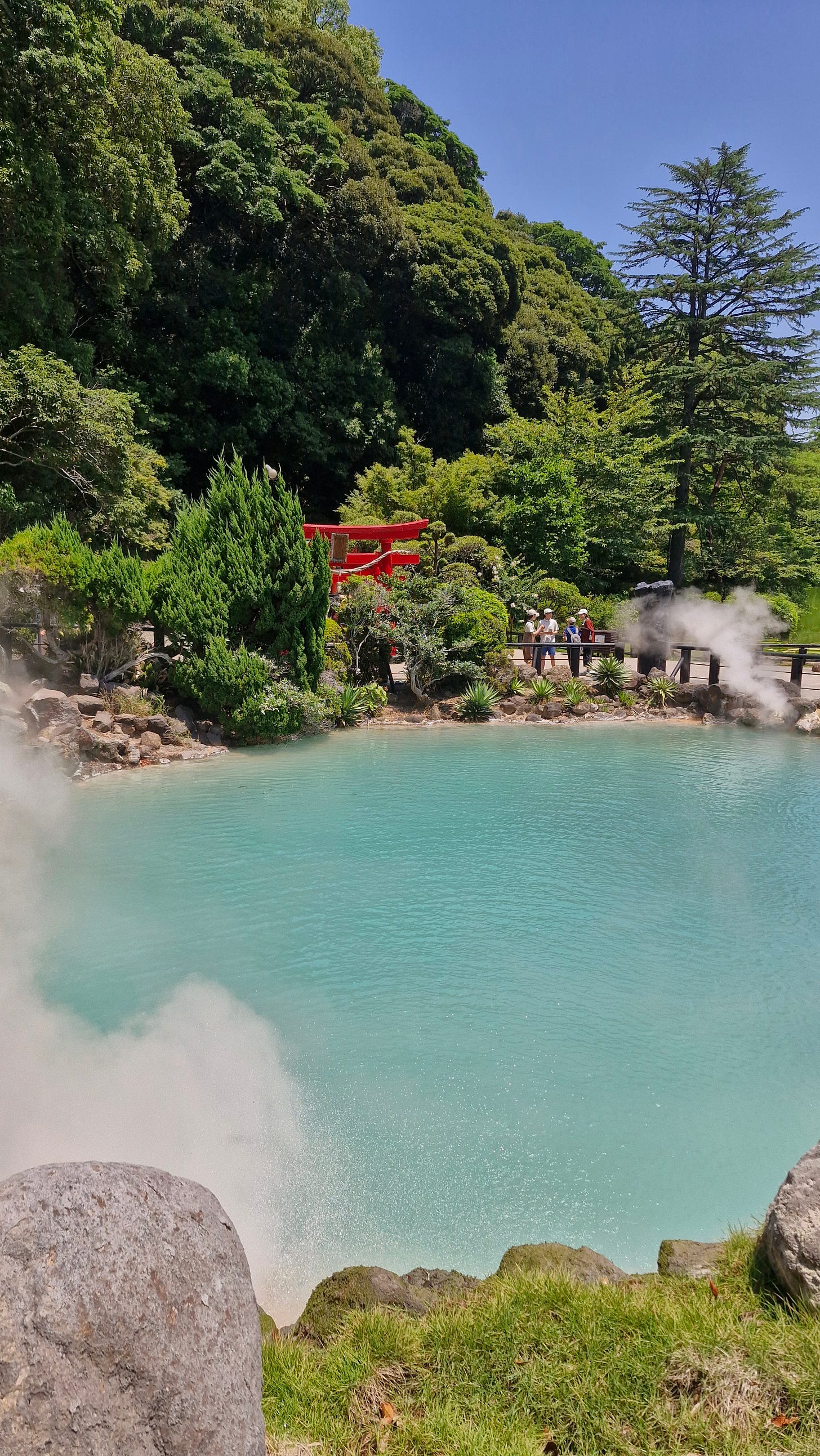
We got buried in black volcanic sand at Takagawara, the city’s oldest onsen. The weight of the earth on our bodies, the heat penetrating deep into our bones - both claustrophobic and oddly calming.
But Beppu also has a darker edge. A rough-and-tumble port town with a prominent red-light district - like every Japanese city we visited. There’s something striking about Japan’s double life: the serenity of temples, the purity of rituals, the conservatism of the country, and yet the quiet pervasiveness of transactional intimacy.
What fascinates me about Japanese culture is indeed this ability to embrace contradiction - impermanence and perfection, purity and eroticism, tradition and innovation, silence and spectacle, conservatism and laissez-faire.
In a era where we are so quick to judge, condemn, chose, exclude, confront, Japan offers another way: holding space for complexity without rushing to resolution. Letting things be contradictory. Letting opposites coexist. Letting nuance breathe. Letting things just... be.
Fukuoka, The Gateway to Korea
Fukuoka was our final Japanese stop - modern, coastal, a little anonymous. We didn’t linger long, but enough to taste amazing local Hakata cuisine and board the ferry to Busan.
Next Stop: South Korea!
As I wrote, the Japanese coastline receded into mist behind us, and Korea beckoned ahead.
With love and awe, always,
Charlotte x
Subscribe to get new posts
Peakub is a home for creators, publishers, and teams to publish, grow, and monetize their work — all in one place. We're building a fast, privacy‑respecting platform that helps you focus on your craft while Peakub handles the plumbing — from content tooling to delivery and analytics.


I GO! by Charlotte Kan




Comments