
I GO! Edition 48 - The Serpent
On Omens, Instinct and Learning to Read the World
08/02/2026
This week: The Aegean Sea, Türkiye
"I'm gonna show you where it's dark, but have no fear" Nightcall - R.I.P Kavinsky
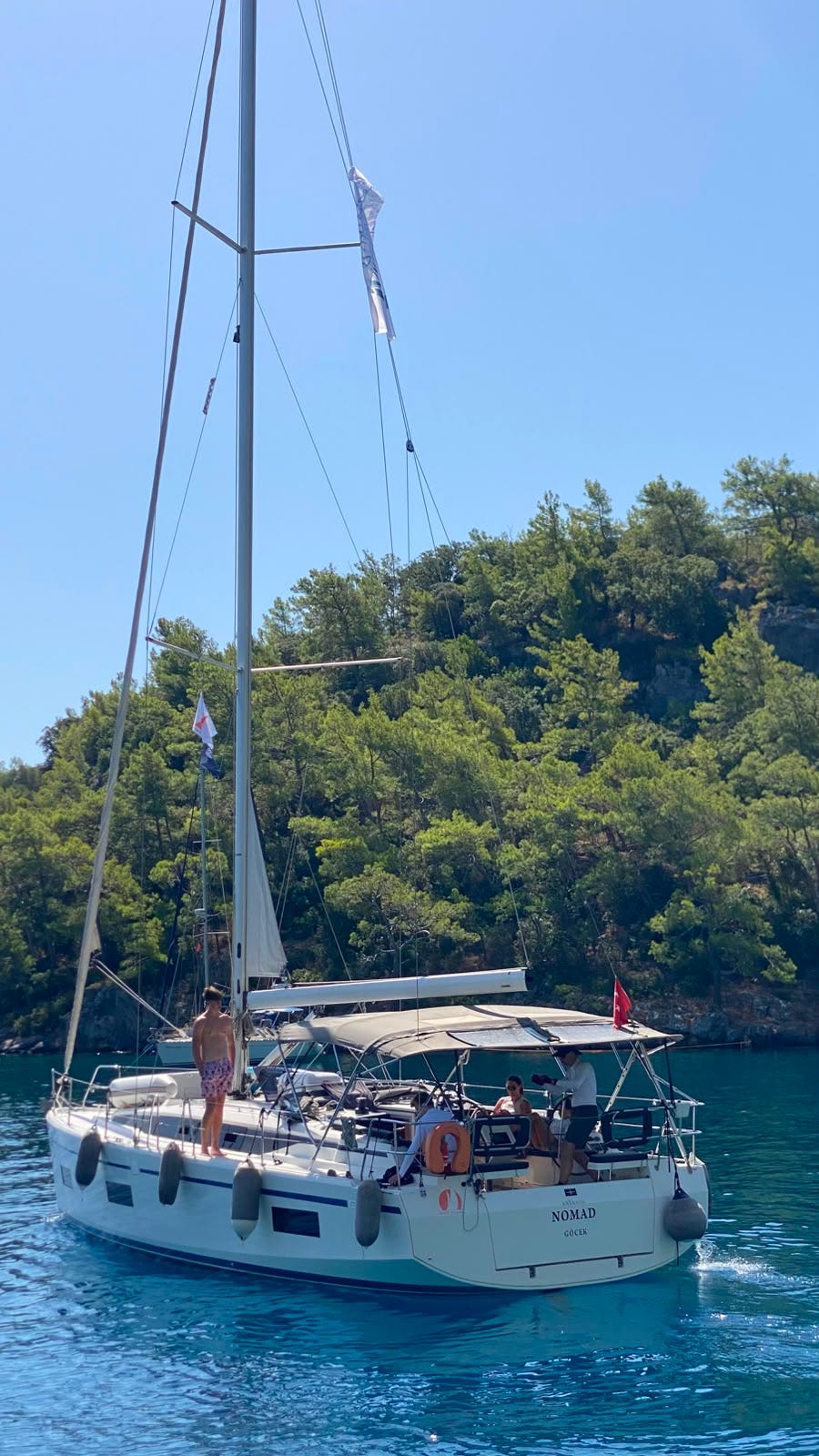
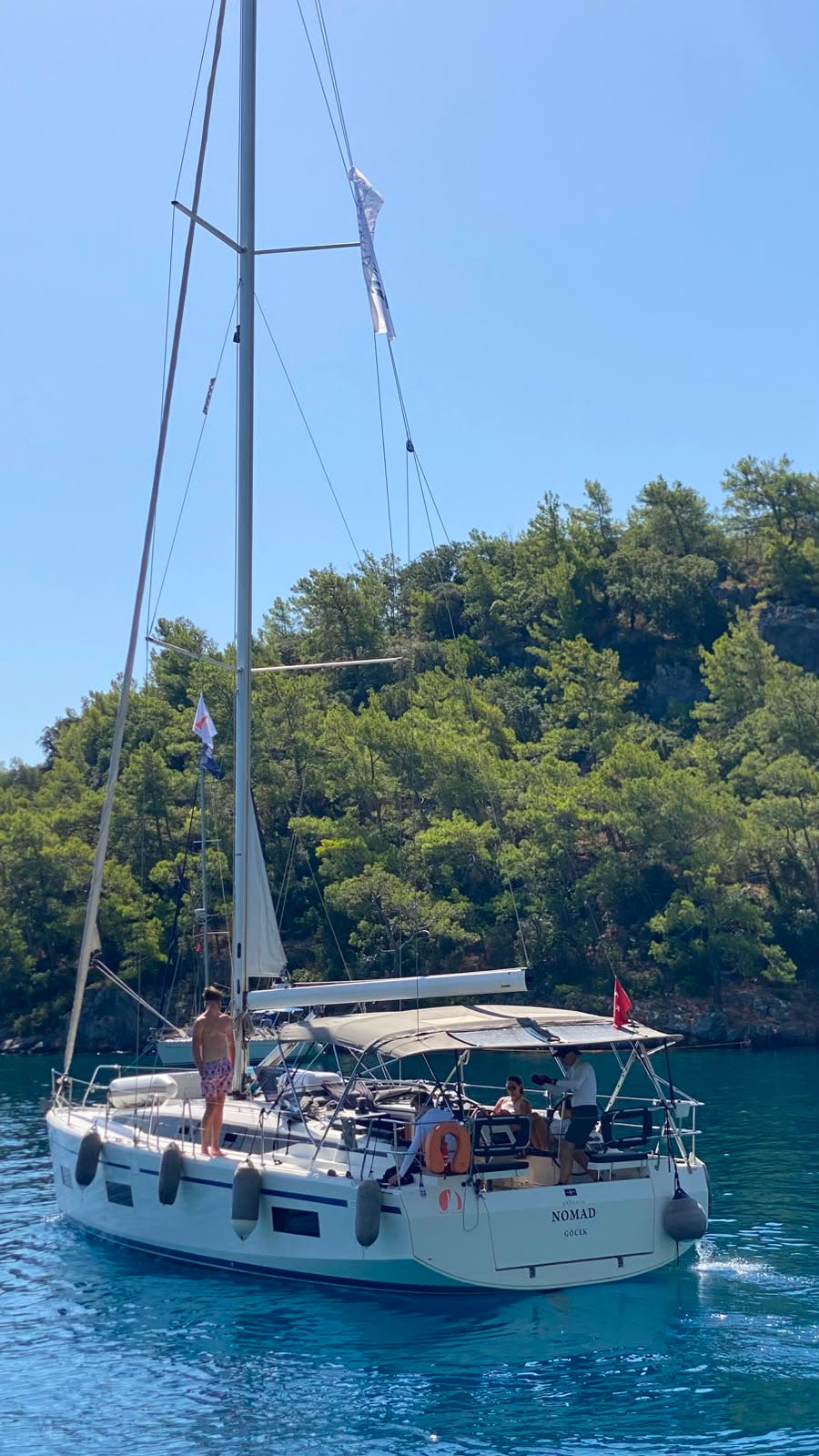
Thus ends our 'fair voyage' - our week of sailing from bay to bay, on the western shores of Anatolia, where the Aegean Sea has, for millennia, connected rather than separated Greece and the Turkish mainland, allowing Ancient Greek, Lycian and Anatolian civilisations to mingle through trade, seafaring and culture. I felt a pang in my heart when stepping out of our boat, the magnificently serendipitously named Nomad, evocative of a region I love, Central Asia, my life of travel and how our own family does holidays: moving every few days to explore, seek new, nourishing, pastures...
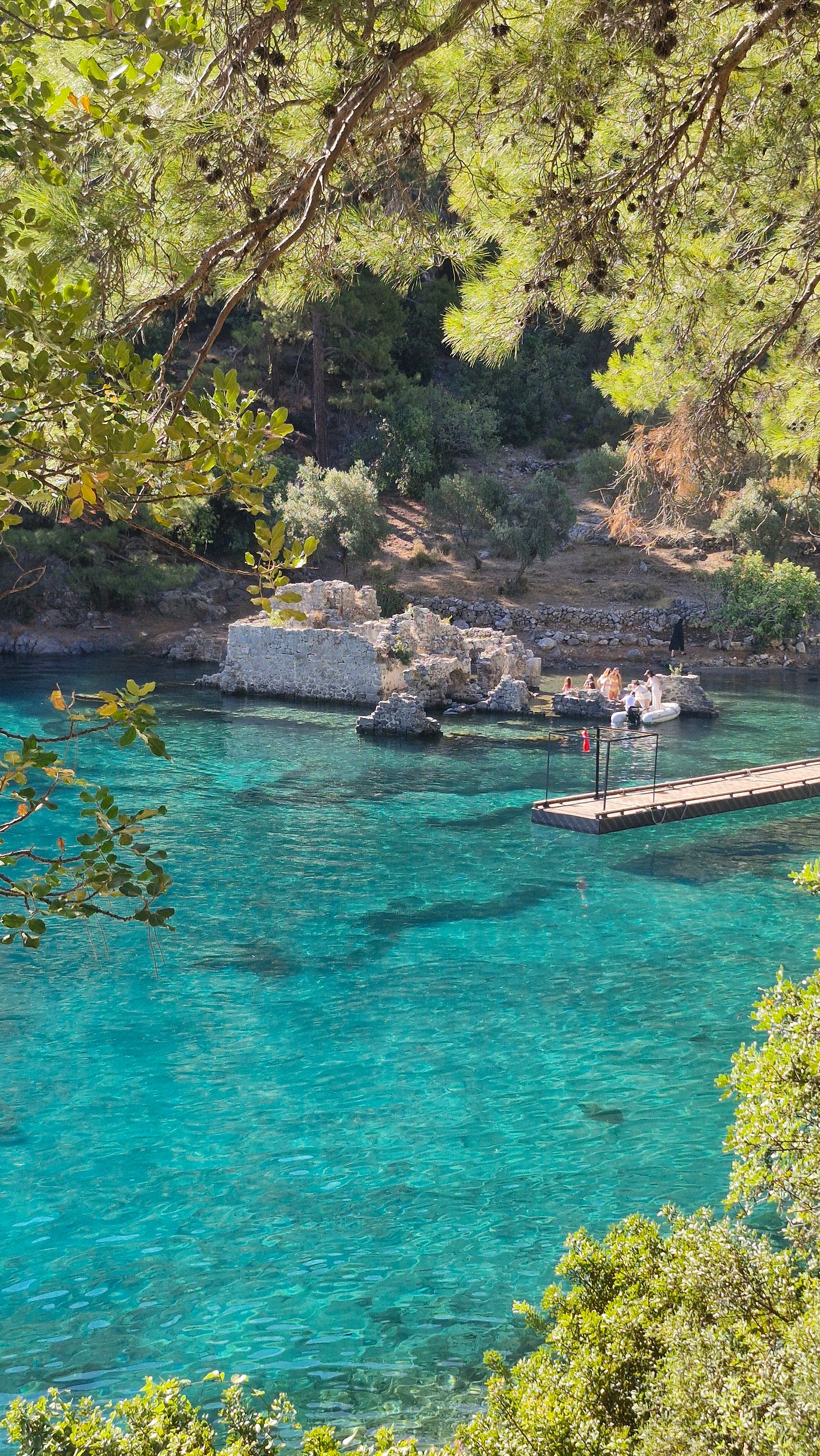
One of those beautiful mornings last week, along with some of the lovely fellow sailors from our Turkish fleet, we walked along the coast to explore Cleopatra’s Baths, an ancient site half-submerged in the startling blue-green waters of the magnificent Göcek Bay.
When a small but significant event reminded me of the power of what the Ancients took very seriously: omens.
The Ancient site itself invites reflection: legend has it that Mark Antony had the baths, fed by thermal springs, built for his beloved Cleopatra, as a wedding gift.
Cleopatra is one of those women who has captivated our imagination for millennia. Her beauty. Her sensuality. Her formidable political intelligence. Her power. The last pharaoh of Egypt, the final chapter: a woman. I was lost in those thoughts and....
Then came the snake.
I was walking, alone, on the hill above the ruins to catch a better glimpse, when suddenly, a serpent, startled by my presence, shot across my path, right in front of me, and disappeared into the undergrowth.
First, I felt my heart racing - good old reptilian brain.
Then I smiled.
Of course.
Of course a snake. At Cleopatra’s Baths.
[Remember how Cleopatra died? A poisonous bite rather than a final humiliation, goes the legend…]
A good omen, I decided. A meaningful synchronicity, a sign of being on the right track, my destiny fulfilling itself. A sign, but not from the gods.
The serpent
Like most people, I am terrified of snakes - we are programmed by evolution to do so apparently.
For Carl Jung, the serpent was one of humanity’s great archetypal images: ancient, instinctual, emerging from the deepest layers of the ground: our psyche.
The snake lives close to the earth. It disappears underground. It hides.
It can kill. It can heal.
It frightens us because it belongs to a world older than reason.
Across civilisations, the snake has accumulated an extraordinary charge of meaning: knowledge, sexuality, danger, medicine, fertility, death, rebirth.
A snake often symbolises something from the unconscious entering awareness:
Transformation. Because it sheds its skin, the serpent is an ancient image of death - and therefore renewal. In Jungian psychology, this is the process of individuation: an old psychological identity becoming inadequate and something new trying to emerge.
Life energy. The serpent represents libido in Jung's broad sense - not just sex drive, but psychic energy, desire, creativity and the fundamental drive toward life. Something embodied rather than intellectual.
The Shadow. Snakes frighten us. They also represent something our conscious personality has rejected, feared or failed to integrate. Encountering it symbolises reconnecting with a part of us that sits outside our preferred self-image - our own darkness.
Wisdom and knowledge. The serpent is both dangerous and wise across mythologies. In Jungian thought, archetypes aren't morally clear-cut, tidy. The snake can heal or poison, create or destroy. There is a duality to it.
For Jung, such powerful symbols as the snake throughout history arise from the collective unconscious, patterns so deeply embedded in human experience that we encounter them again and again in myths, religions, dreams and art.
The serpent fascinates us because it represents something the rational mind cannot quite....tame. Domesticate. Control.
Instinct.
Omens: The Language We Forgot
There was a time when an encounter like this would not have been dismissed.
But the ancient Greeks watched the flight of birds. Romans consulted augurs. Oracles were sought before journeys and wars. The natural world was "saying" something.
And what it was saying was: Pay attention.
Look at the signs. Reconnect to yourself.
Not the rational self, the ego, the civilised ‘me’, the brain. But the intuition: the message that makes your skin crawl or your guts recoil. In fear or recognition.
When you feel strongly connected to yourself, you know intuition is the highest form of intelligence - that which requires no processing.
Jung had another word for certain strange coincidences between our inner and outer worlds: synchronicity.
Meaningful coincidences. Not believing everything happens for a reason - which would be obscene with so much unfairness and suffering in this world.
More of an uncanny moment when something happening outside us seems to mysteriously align with something happening within us.
The purely rational mind would say: a snake crossed the path. And....that's pretty much it.
But a symbolic, curious, maybe poetic, mind would ask: Why did I notice? Why does it move me? What is it telling about my deepest psyche at the moment, my deepest truth?
Tout est bleu: Turquoise
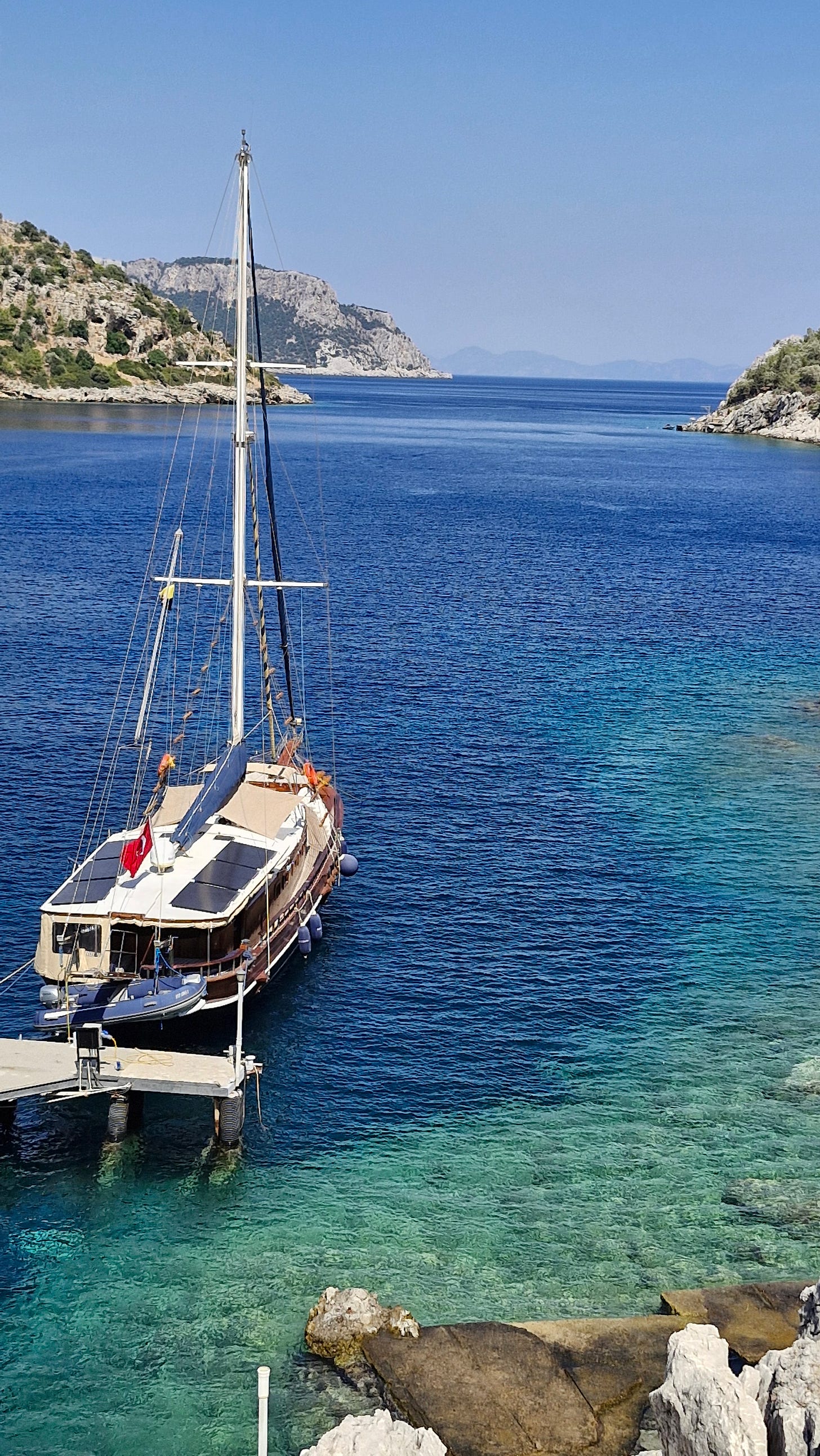
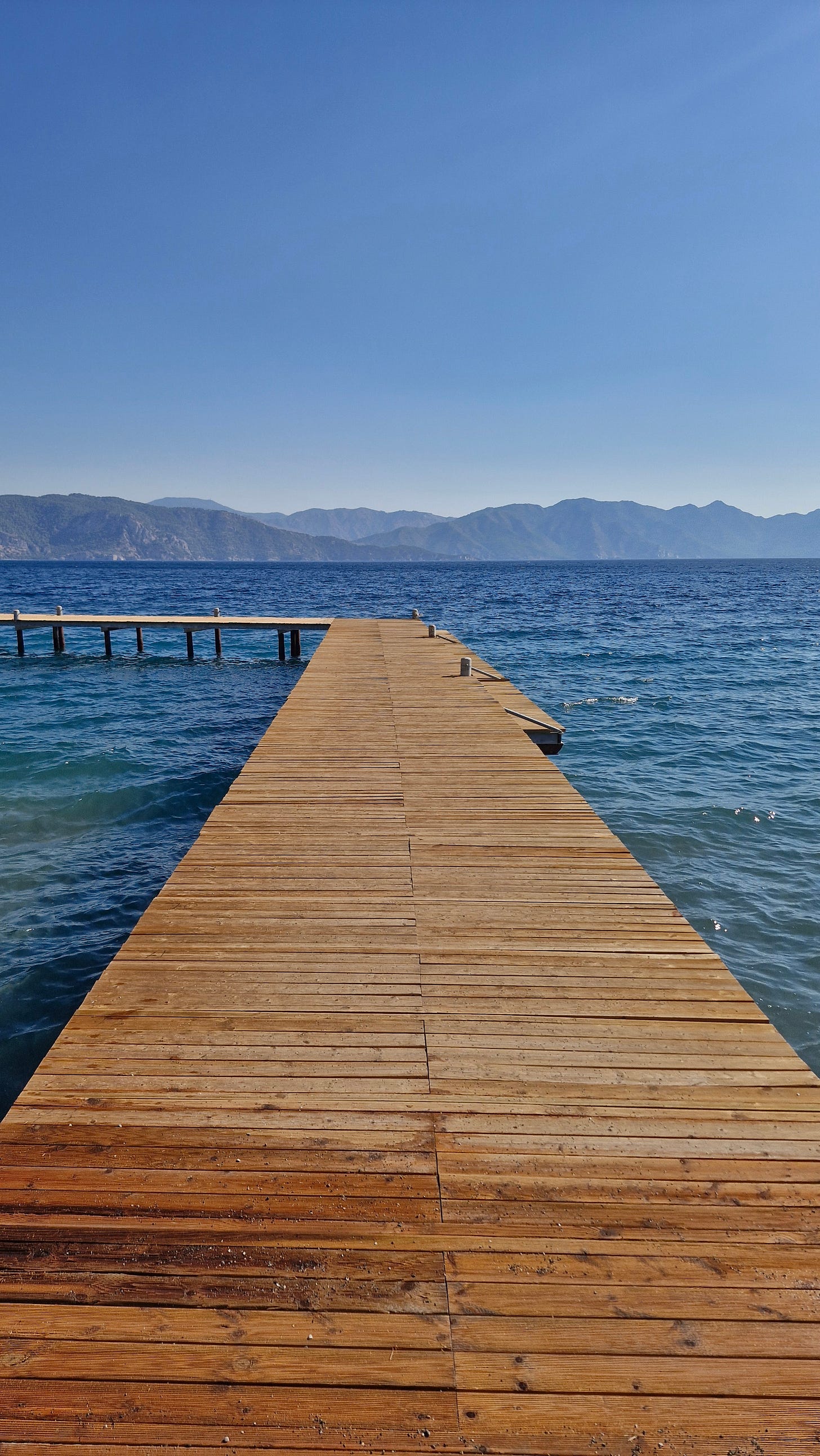
Time at sea makes me particularly susceptible to all this: those dream-like days sailing Türkiye’s magnificent southwestern coast, appropriately named the Turquoise Coast. A reverie on the water.
Turquoise comes from the French pierre turquoise, literally, "Turkish stone" : the blue-green mineral that reached Europe through Türkiye, creating a stir.
And here the colour is everywhere. Sometimes cobalt. Sometimes sapphire. Sometimes almost emerald. Then, as the depth changes beneath the boat, that luminous blue: turquoise.
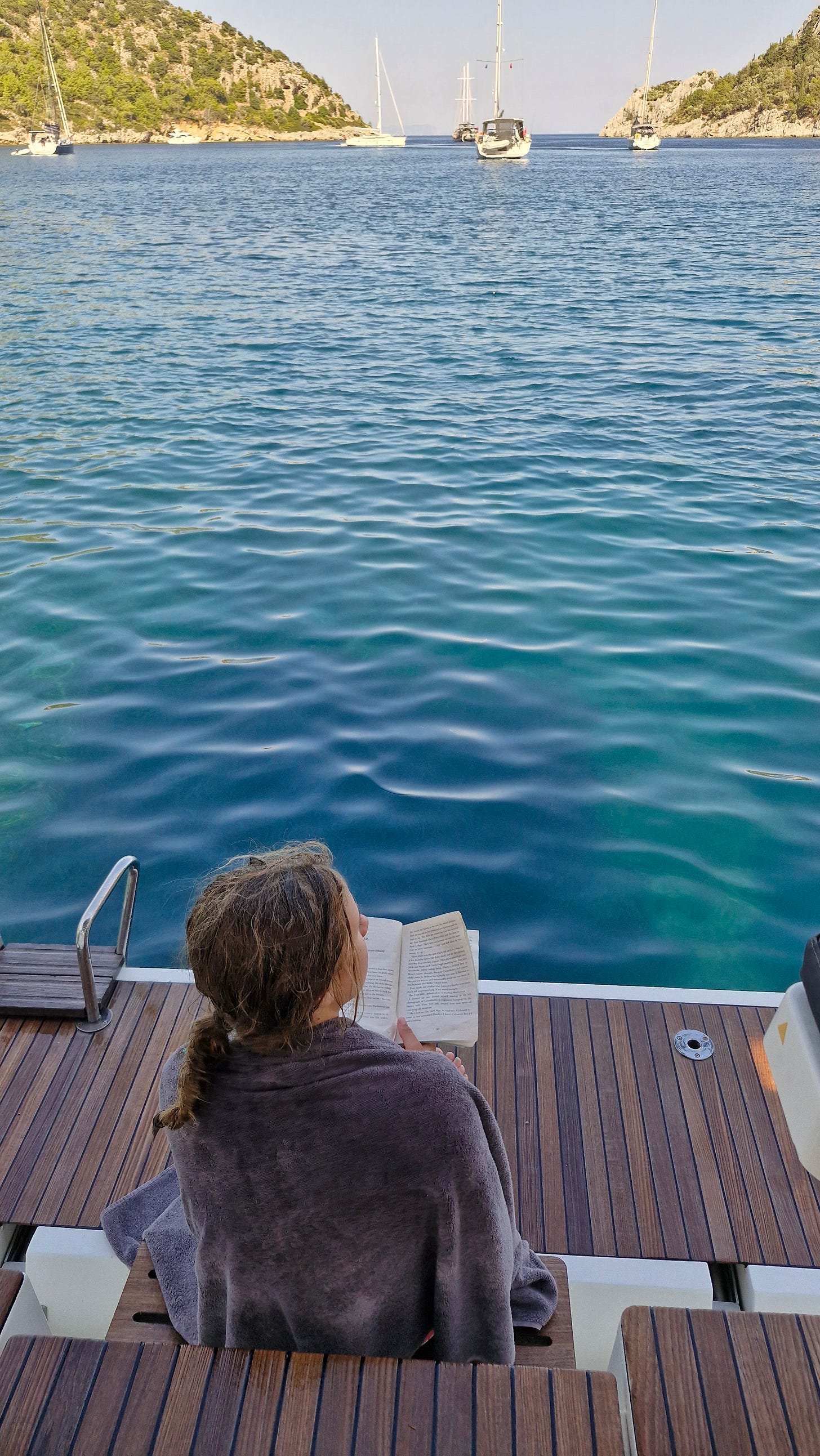
During our trip, we sailed into impressive bays and small coves surrounded by pine forests. We swam or jumped out from the boat into pristine waters. We ate, napped, read, drank, danced on deck. We slept with the sound of water against the hull.
Time changes at sea.
So does perspective.
Thalassa
The Greeks called her Thalassa. She can be generous. She can be merciless. Every civilisation that lived beside her eventually made her sacred.
At sea, the fantasy of control disappears. You cannot negotiate with the wind, the current, the weather.
You learn instead to read.
The clouds.
The waves.
The sails.
The movement of the boat.
You adjust.
You respond.
You steer.
There is something very profound at play here, because sailing requires two qualities we often see as opposites: agency and surrender.
Your hands remain firmly on the helm. Your eyes on your destination. But you accept that forces infinitely larger than yourself are at work.
Sailing is a beautiful metaphor for life - and a majestic lesson.
Your perennial student,
Charlotte
Subscribe to get new posts
Peakub is a home for creators, publishers, and teams to publish, grow, and monetize their work — all in one place. We're building a fast, privacy‑respecting platform that helps you focus on your craft while Peakub handles the plumbing — from content tooling to delivery and analytics.

I GO! by Charlotte Kan




Comments