

I GO! Edition 42 - Easter, Compassion and the Gift of Attention
“For I was a stranger and you welcomed me.” — Matthew 25:35
04/06/2026
“Attention is the rarest and purest form of generosity.” - Simone Weil
I am spending Easter in the Golfe du Morbihan in Southern Brittany, in my childhood home where my mother still lives, alone (but not lonely, well surrounded and deeply involved in her village community).

Behind the house, there is a small studio flat with its own independent entrance. My mother rents it to people who need somewhere to stay for a while - people temporarily working in the area, people going through a divorce, after a bereavement, youngsters from the countryside starting their first small job. People in transition. People between lives. People with little, often a bit - or a lot - battered by life.
Yesterday morning, as my children were running around the garden excitedly hunting for Easter eggs while the church bells rang in the distance, the man currently renting the studio came out with his dog and walked slowly along the path near the garden. Mid-60s, no partner, no children, no house of his own. He stopped for a moment, smiled, said something mundane about the egg hunt, and looked at the children for a few seconds.
The children noticed him. “He is staring,” they said.
And I turned to my mother, slightly annoyed, because I wanted to enjoy this precious family moment privately, “What’s he doing here, can’t he walk away?”
We were waiting for my sister and her family, my aunt and uncle. The table was beautifully set for Easter lunch: colourful flowers, decorated eggs, oysters opened in the kitchen, lamb slowly cooking in the oven, champagne cooling in the fridge, a beautiful cake from the boulangerie on the counter.
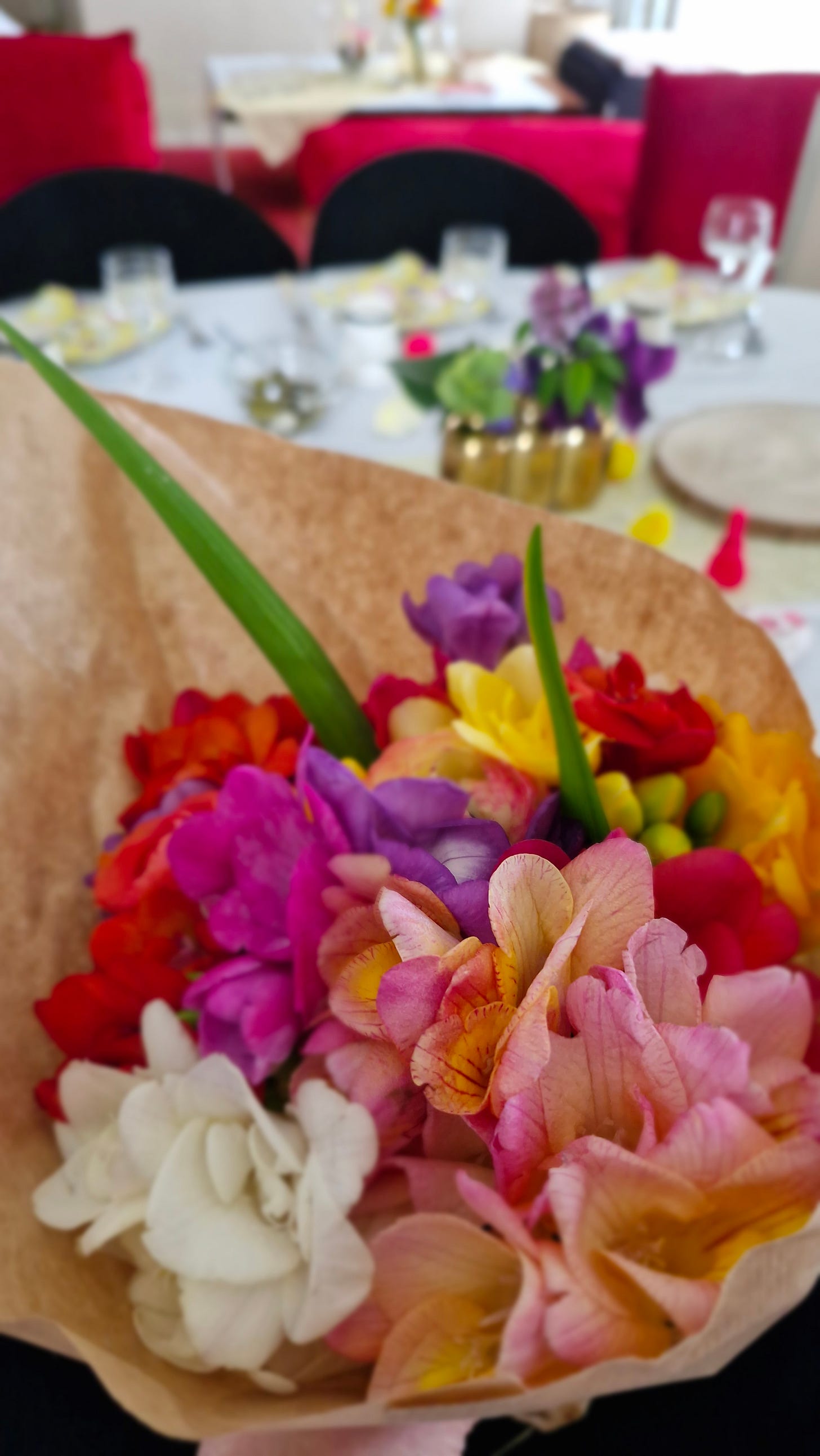
A house full of the noise of children, family, life.
He eventually walked away with his dog.
We had lunch, the children joking around, we drank, ate too much, like families do on Easter Sundays.
And last night, I could not stop thinking about him.
Alone in his small studio, probably hearing the children laugh, the glasses clink, the cars arriving, the door opening and closing - life happening very close, but not for him.
And I felt shame. Deep shame, in fact.
Not just because we did not invite him - though arguably, you cannot invite every stranger into your Easter lunch - but because I saw him as an inconvenience.
On the one day in the Christian calendar that is supposed to be about hope, compassion, forgiveness, resurrection after suffering.
The central figure of Easter for Christians is a man who was betrayed by a friend, abandoned by his followers, judged by the crowd, executed by the state, and died almost alone.
Easter is, symbolically, also the story of the abandoned person.
And in my childhood home, I let that story play out again in miniature: a man, his dog, a small rented studio, silence, a life that probably did not go as planned. Life and solitude separated by a few meters.
On the day Christians celebrate the abandoned, the suffering, the excluded, we also naturally celebrate abundance, food, children, spring, life - especially in my Celtic homeland where paganism and mysticism are always intertwined.
And the lonely people? They remain outside the frame.
I was raised Catholic but consider myself to be a “spiritual atheist” (wonder, awe, and connectedness to the universe). I long ago rejected the institution, the dogma, the rules, the contradictions, the ostentation, the power structures, the rigidity of the rites. The superstition. The claims of moral and social superiority.
But I never rejected the message.
“For I was a stranger and you welcomed me…
Whatever you did for one of the least of these brothers and sisters of mine, you did for me.” - Matthew 25
Whether one believes or not is almost irrelevant. For two thousand years, European civilisation was built around the idea(l) that the moral test of a person is not only how they treat their family and friends, but also how they treat the stranger who has nothing to offer them.
That is a much harder test. And Europe has often failed. And so do we.
The precious gift of attention
There is a sentence by the French philosopher Simone Weil that I have always loved:
“Attention is the rarest and purest form of generosity.”
Not help, grand gestures, but attention.
Seeing people. Acknowledging them. Not making them feel invisible.
The German philosopher Hegel wrote that human beings fundamentally seek recognition - to be acknowledged as existing, as mattering. Hannah Arendt argued that to appear in the public space, to be seen and heard by others, is part of what makes us fully human.
In my professional life, I spend my time on stages, moderating discussions, interviewing leaders, entrepreneurs, ministers, scientists, CEOs.
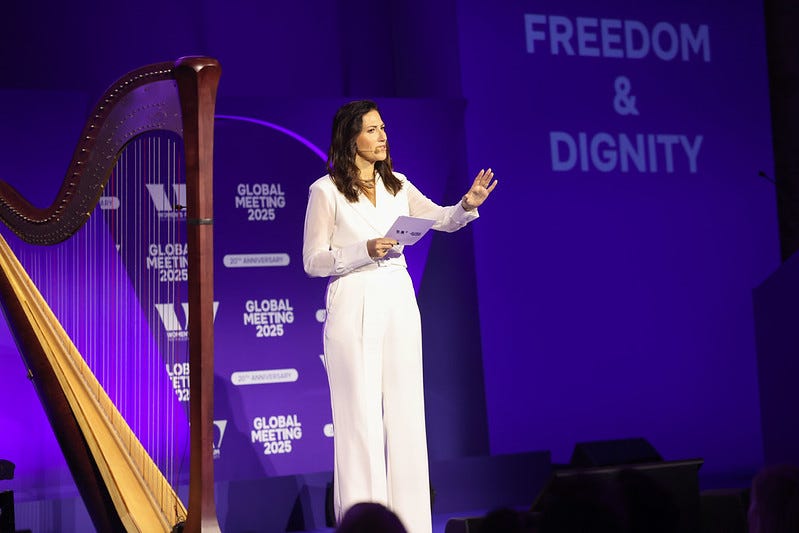
People often think my job is to ask questions, manage time, keep the conversation flowing. But that is not really how I see my job.
I see my job as being present and giving attention.
To the speaker who is nervous.
To the CEO who wants to be understood.
To the minister who wants to explain a difficult decision.
To the entrepreneur who wants to be taken seriously.
To the audience who wants to feel included and part of the story.
What I try to do is make people feel seen, heard, acknowledged, recognised - and hopefully inspired - if only for an hour, on a stage. I am, in a way, a professional giver of attention.
Attention is connection.
Attention is dignity.
Attention is love.
“Love thy neighbour as thyself.”
With willingness to try,
Charlotte
Subscribe to get new posts
Peakub is a home for creators, publishers, and teams to publish, grow, and monetize their work — all in one place. We're building a fast, privacy‑respecting platform that helps you focus on your craft while Peakub handles the plumbing — from content tooling to delivery and analytics.
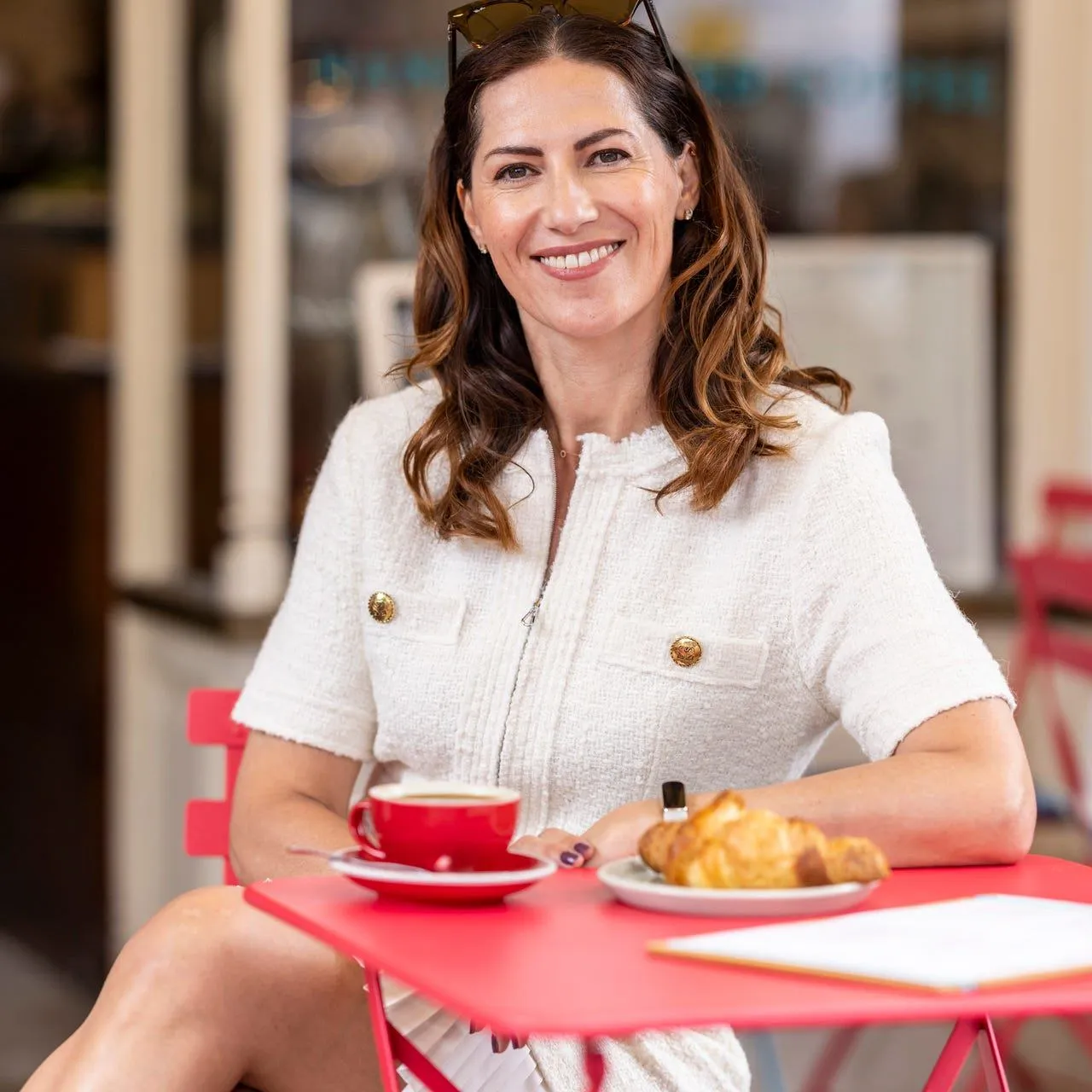

I GO! by Charlotte Kan




Comments