
I GO! Edition 7| Cybersecurity as a Strategic Priority, Meeting A Central Banking Legend, Lille and its Flemish Renaissance Splendour
A Busy week of Much Travelling, Connecting People & Ideas & European Pride
04/06/2025
This Week: London-Lille-Paris…and Sydney!
Publishing this newsletter a bit later than usual as it has been an incredibly busy week where I moderated conversations at the InCyber Forum Europe in Lille, Northern France, followed by a short trip to Paris to conduct an interview with a central banking legend, former ECB President Jean-Claude Trichet, in one of Paris’s most stunning and exclusive clubs and travelled to Australia to explore how to #MakeTheWorldABetterHome (btw the award of the best food ever served on a plane, by far, goes to …Cathay Pacific!).
InCyber Forum Europe: the urgency to scale up cybersecurity
This week I helped facilitate three intense and thought-provoking days of dialogues on cybersecurity, and how Europe can strengthen its technological independence and sovereignty on the path to security autonomy at the InCyber Forum Europe in Lille.
Founded by France’s General Watin-Augouard, the Forum is the biggest event on digital security and trust on the continent, bringing together over 20,000 participants from 100 countries — CISOs, policymakers, military officials, diplomats, startups, tech leaders, and journalists.
The introduction - and conclusion - of the Forum I guess, is that despite numerous successes and strengthening international cooperation, the fight against cybercrime now stands at a critical crossroads.
Cybercrime is a real scourge, with a global cost estimated at $9.5 trillion in 2024 — a 10% increase from the previous year, according to the World Economic Forum.
French National Security Agency ANSSI in its recent annual cyber threat report last month, stressed that not only is cybercrime rising sharply indeed, with ransomware victims spanning a wide range of sectors (including schools and hospitals), there’s also been a notable increase in attacks aimed at destabilisation (especially when Paris hosted the Olympic Games), and just as worryingly, a surge in state-sponsored espionage operations.
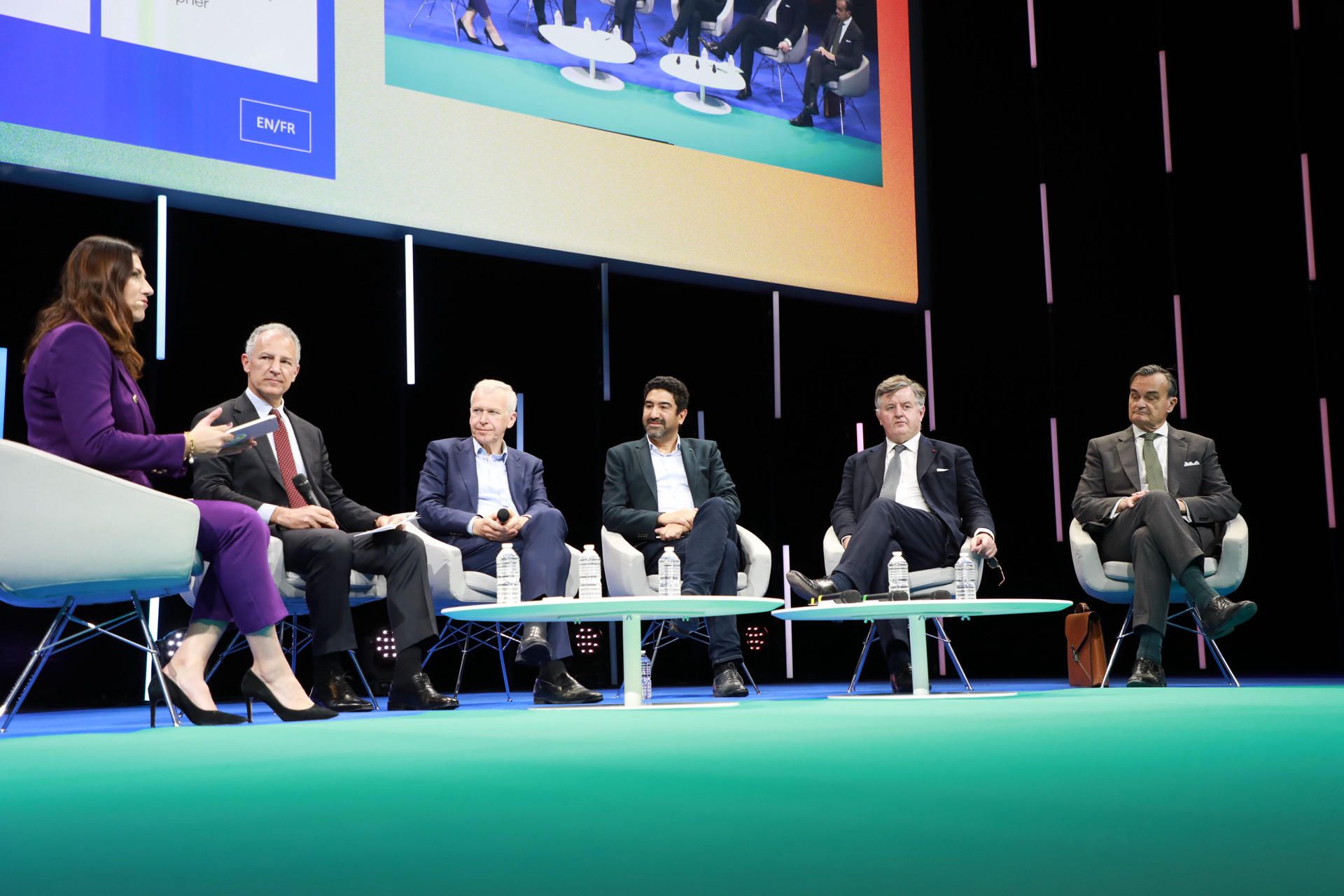
I had the pleasure, amongst many conversations, to moderate a fascinating “super-panel” titled ‘Europe Under Pressure’, exploring the continent's growing strategic urgency in the face of shifting transatlantic relations, with diplomatic and business heavyweights such as Jonathan Cohen, former U.S. Deputy Representative to the UN, Yves Leterme, ex-PM of Belgium, Gérard Araud, ex-French Ambassador to the U.S. & UN, Augustin de Romanet, President of Paris Europlace, and Tariq Krim, entrepreneur and visionary on European tech sovereignty.
And I am afraid the picture is rather dire for good old Europe, which has underinvested for decades in defence & security and needs a huge financial effort to catch up (3.5% of GDP, so €250 billion more annually, according to Bruegel). On the plus side, with great talent and skills, political will, a patriotic push for “Buy European” (technology) and regulation like NIS2 providing more visibility, a real cybersecurity culture could be scaled up and permeate the region’s economic fabric.
Another highlight of the event was a keynote by Joe Sullivan, a former security leader at eBay and PayPal who also served as Chief Security Officer (CSO) at Facebook, Uber, and Cloudflare. Joe was famously convicted in 2022 for obstruction of justice related to a data breach—but hearing his side of the story is worth it. Joe is now advocating for clearer regulatory frameworks in security and shaping how companies handle cybersecurity incidents. His work with charities, especially around suicide prevention online and the use of tech for good (like online disclaimers for harmful searches) is deeply inspiring. Meeting him and his wife Prathiba, was a real pleasure.
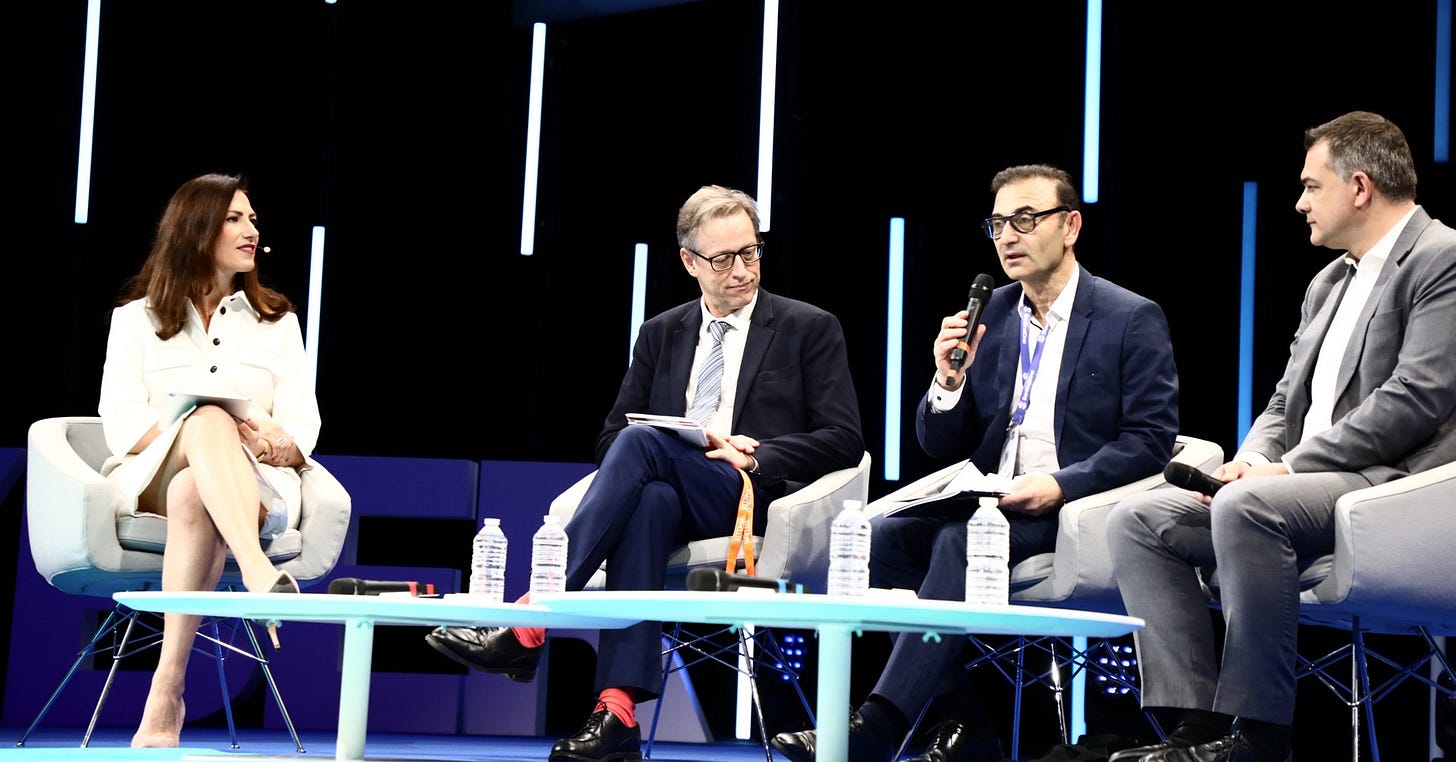
Also enjoyed hearing during one our panels that feminising cybersecurity could help close the massive skills gap in Europe and France…
In praise of Elegance
In a week once again dominated by aggressive, crass, antagonistic bluster by some administration, I found myself enjoying a fleeting moment of elegance, depth, and thoughtfulness on Thursday in Paris, in the hushed salons of the Cercle de l’Union Interalliée, one of the most exclusive private members’ clubs of the French capital.
Back in my Bloomberg TV days in the mid-2000s (has it really been that long?), Jean-Claude Trichet, former head of the European Central Bank, and his American counterpart, Ben Bernanke, were the rock stars of monetary policy—cryptic oracles holding the fate of markets in their press conference riddles.
Fast forward to Thursday this week, and the immense privilege of interviewing Jean-Claude Trichet himself at the 4th edition of the Mitsui Bussan Commodities Day. On stage, we discussed geopolitics post-US tariff turbulence, inflationary risks, Europe's place in an increasingly fragmented world and how to regain further independence and sovereignty, his longstanding call for a Federal Europe.
As ECB President from 2003 to 2011, Mr Trichet played a crucial role during the eurozone’s formative years and its first major crisis—the 2008 global financial meltdown and the European sovereign debt crisis. A believer in monetary orthodoxy, Trichet was sometimes criticised for being too focused on inflation to preserve the ECB’s mandate of keeping it within the 2% range. However, that is because he viewed ensuring complete trust and credibility in the institution as vital, especially during turbulent times.
And that’s where in the soft velvet carpets and tapestries of the Cercle, amid sunlight filtering through tall windows and the quiet clink of silverware in the next rooms, I was reminded what real leadership sounds like. Calm. Informed. Composed. Confident without aggression.
Mr Trichet has a distinctly French diplomatic style—polished, courteous, discreet. He has a charming, almost old-world refinement to his demeanour.
Like Michel Barnier I had the pleasure to interview last year at the same event, Mr. Trichet, to me, embodies a rare and dying breed—the “Gentleman à la Française.” Discreet, rigorously prepared, intellectually sharp, and elegant in both spirit and presence.
The mark of a great leader isn’t just what they say on stage—it’s how they carry themselves off it. How they speak with peers and porters alike with the same grace and respect.
I pay a huge amount of attention to that, as true character really shows up in how powerful men and women treat those they do not need to achieve their goals. I was not disappointed.
We closed the event with a great display of Japanese hospitality, omotenashi-style, with saké dégustation, fine nippon inspired cuisine, jazz band and beautiful views over the manicured gardens.
A Lil’ surprise in Lille
Is Lille under-rated or what, with its eclectic architecture, belfries, brick townhouses, and estaminets (Flemish brasseries)?
The InCyber Forum meant spending a whirlwind couple of days in the Capital of French Flanders, near the border with Belgium — and what a feast for the architectural senses! Between lunch breaks and before networking soirées, I managed to sneak off and explore a bit — and realised France’s 10th largest city is a little gem hiding in plain sight.
Of course, it won’t charm you like Paris or Aix-en-Provence, or make you feel alive and hold on to your purse like Marseille — but Lille welcomes you ‘Nord-style’ without ‘chichi’, as we say in French (in a simple, no-nonsense and warm way).
The city centre exudes old wealth and that’s because it was the epicentre of much industrial activity the 19th century, especially in textile.
The historic town centre is a feast of Flemish-Renaissance flamboyance, sprinkled with buildings like rich old cakes spilling over with Chantilly cream — ornate facades, gilt flourishes, and belfries poking at the unusually blue skies. The magnificent Grand Place is flanked by the imposing Chambre de Commerce, the sumptuous Vieille Bourse (Old Stock Exchange), the Opera House with its neoclassical lines, Palais des Beaux-Arts etc, paved streets, terraces and cute cafés ….
And then there are the estaminets — cosy Flemish brasseries with dark wooden beams, candlelit corners, and hearty menus.
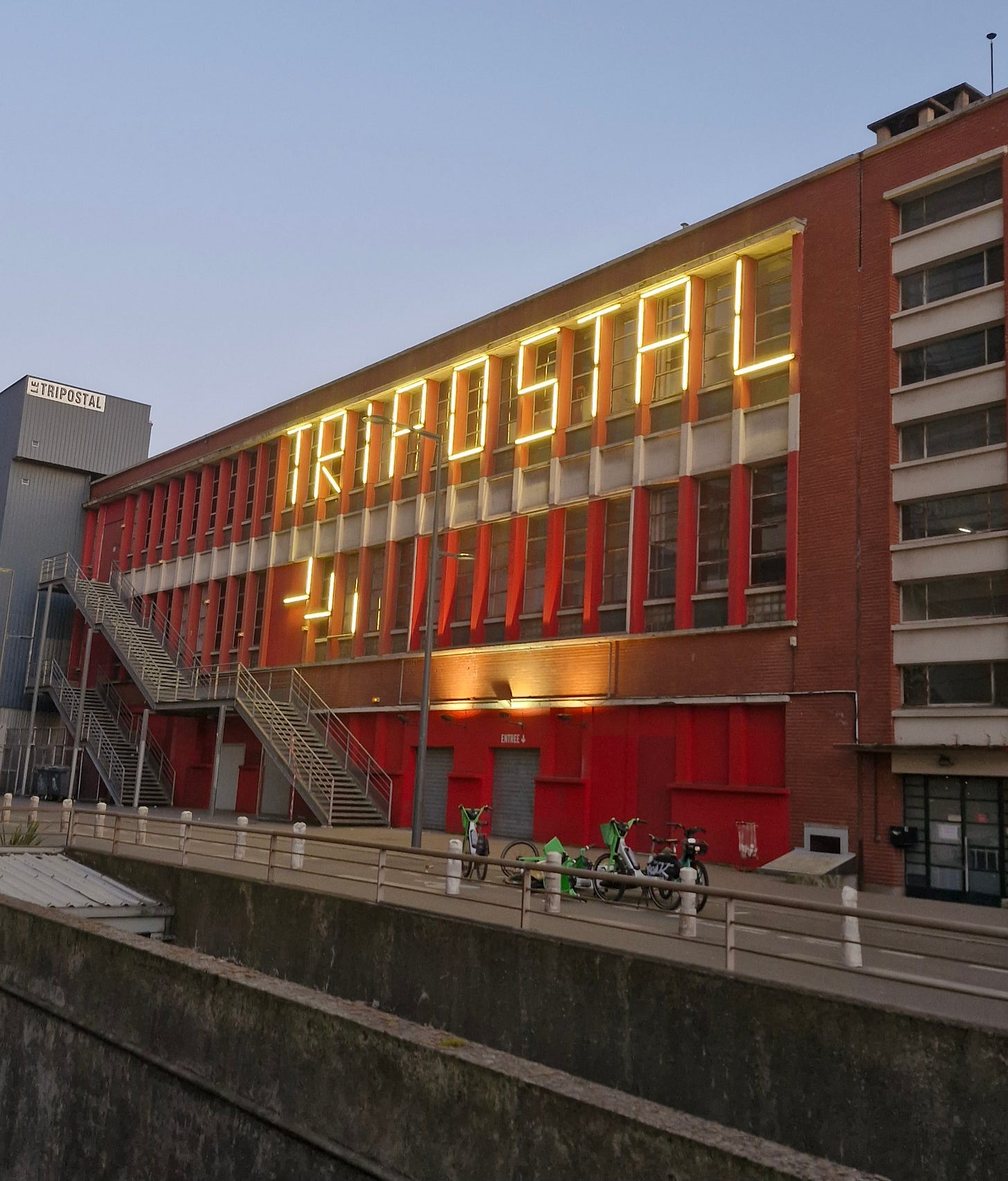
Today Lille is reinventing itself as a cultural powerhouse, tapping into its rich heritage, and with universities and research centres, tech and innovation hubs, contemporary art exhibition spaces (Tripostal and the nearby Piscine in Roubaix etc). A typical, aspiring European city trying not to turn into a museum, and that makes you proud to come from a continent steeped in culture and history — a legacy that, like a heavy wool blanket, might sometimes slow your stride, but also keeps you warm and grounded as the winds howl and the world outside grows colder…
Subscribe to get new posts
Peakub is a home for creators, publishers, and teams to publish, grow, and monetize their work — all in one place. We're building a fast, privacy‑respecting platform that helps you focus on your craft while Peakub handles the plumbing — from content tooling to delivery and analytics.

I GO! by Charlotte Kan



Comments