
I GO! Edition 39. MWC wrap-up: Connection x Connectivity, Tech-alienation & The Great Intelligence Exodus
We are building extraordinary systems of connectivity – but what we are really starving for is connection.
03/08/2026
This week: Barcelona
“The modern age… may end in the deadliest, most sterile passivity history has ever known.” Hannah Arendt The Human Condition (1958).
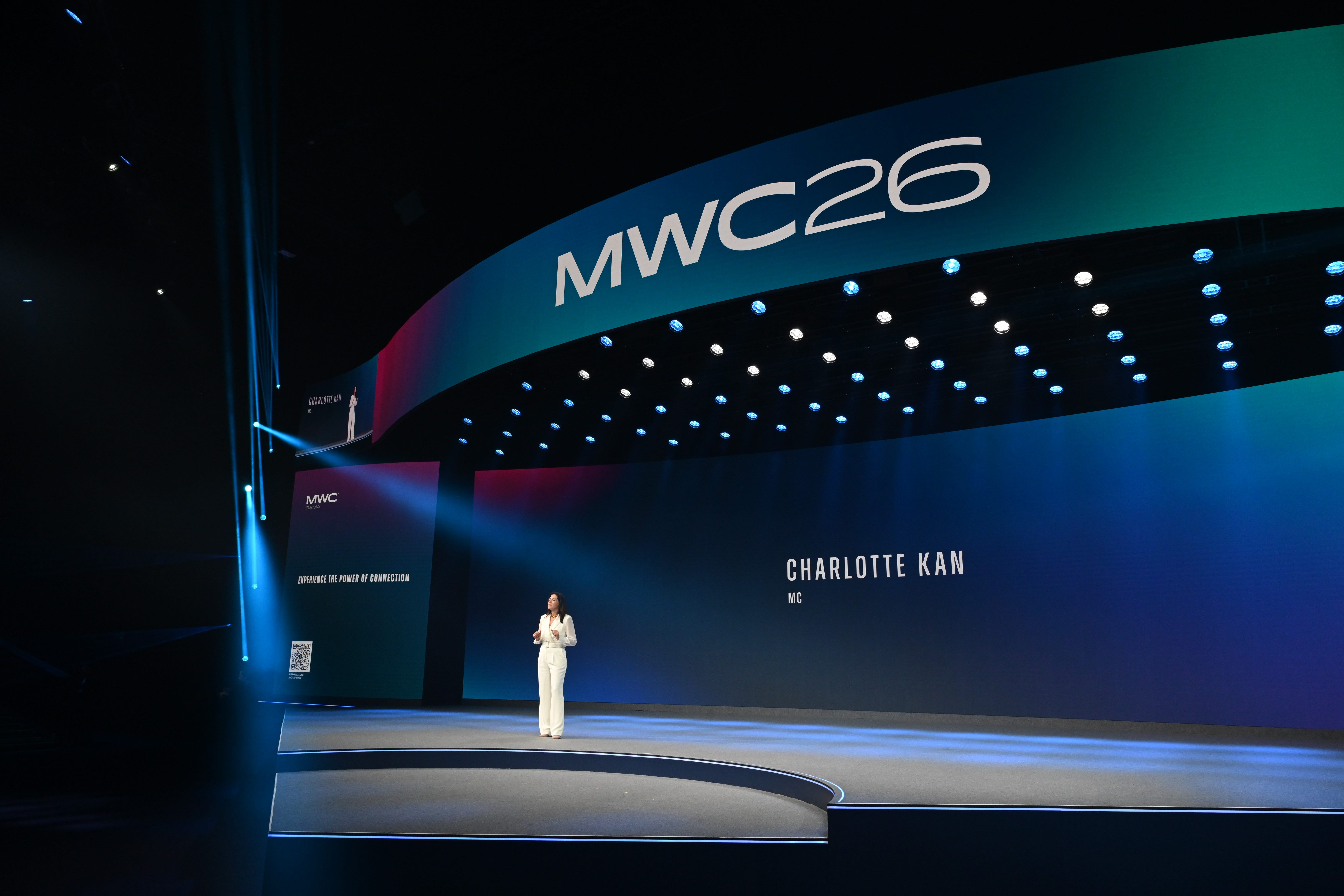
This week, I found myself in the Catalan city for the annual grand fest of all things to do with tech & connectivity: Mobile World Congress - the place to be to take the pulse of what’s next in AI, telecom, cloud and infrastructure. And after years of attending, I was happy to have the opportunity to grace, or disgrace depending on the audience’s point of view, the main stage to introduce a succession of leading tech observers and players, as well as conduct many interviews with industry leaders and moderate discussions. As usual, it was both intense and interesting, and I leave Barcelona with a clearer sense of where technology is heading, achy feet, and many thoughts and mixed feelings about modernity.
MWC 2026: Connectivity × Connection
MWC is about connectivity but really, it’s about connection – otherwise why create mega-events? (Nearly 105,000 attendees from 207 countries & territories according to organisers GSMA).
At a private corporate dinner one evening, a telecom executive summarised the industry’s trajectory across the table from me: “More speed. More seamlessness. More capabilities. More applications etc…”
I noticed people were using the words “tasks”, and clients, and ecosystems, and whether AI will kill the software industry. All I wanted to talk about was…life.
So I looked at him straight in the eyes and said: “But is this what YOU as an individual really need? What your hearts, your guts, your soul want? We’re all here to discuss ways to increase the flow of communication, ideas, data – but what we all crave and want is more connection. To others, to ourselves, to the world. That’s what we need and want.”
Isn’t it?
Many philosophers and sociologists have been exploring this idea since the industrial revolution: the progressive disconnection of modern humans from the conditions of life itself. From Max Weber’s “disenchantment of the world” (I GO! Edition 37) to Hannah Arendt warning that modern societies risk producing people who are highly productive yet strangely detached from the experience of living.
“What we are confronted with is the prospect of a society of labourers without labour, that is, without the only activity left to them.”
Arendt’s broader argument was that human life has three dimensions:
Labour: sustaining life (work, production)
Work: building the world (institutions, objects, systems)
Action: the uniquely human realm of meaningful interaction, politics, and shared life
Her fear was that modern societies might elevate labour and production while neglecting action, leaving people materially productive but existentially disconnected – a society that works constantly but forgets how to live (to me, some of the highest GDP countries have entered that zone a long time ago).
And although I work inside the systems accelerating the shift to a promised brighter future - technology, economics, geopolitics, AI conversations – I can sense the human yearning, the hunger underneath them. And the anger too.
Indeed, the telco industry builds the infrastructure of connectivity at extraordinary scale and speed. But it raised a different question for me, and one we must always go back to: Why? To what end? Because the most valuable thing it enables remains very simple: meaning and human connection. Don’t get me wrong: connectivity is what saved me from a life of mundanity and provincial drudgery. As a young Xennial, it allowed me to cash in my globalisation and mobility chips and build the bigger life I craved abroad.
But connectivity mustn’t happen at the expense of connection.
Connection is not a nice to have, but a strong biological need - an urge, even. It’s how us vulnerable humans are wired to survive. Our brains have evolved for attachment, cooperation, recognition by others. The proof is that when we feel seen, understood, acknowledged, we release powerful neurochemical signals to reinforce trust and belonging – all that lovely oxytocin, dopamine and serotonin surge.
Psychologically, connection is also acknowledgement of the person’s existence and individuality. Not just interaction, but feeling understood, that someone registers your presence, wants to share meaning or emotion. Connection is quality of attention.
At the social level, connection is how humans build networks of trust, reciprocity, shared identity through connection. Civilisations progresses and function because people feel a bond with communities, institutions, narratives about who “we” are – shared stories.
And at the deepest level, connection is a sense of relationship with the world itself – with nature, culture, spirituality, purpose, time - past and future. Connection helps answers the most fundamental question: not ‘Who am I’, but ‘Where do I belong in this vast system?’ Personally, I love this life because I feel deeply connected to all & the whole - to the shared human experience, to consciousness itself, the simple fact that we come from the universe and return to it (“We are made of stardust”). And love, to me, is the purest expression of that divine connection, that sense of dissolving with it all, almost.
The Great Intelligence Exodus
Anyone with teenagers will agree: AI feeds on the human brain. Listening to Azeem Azar’s Keynote on Day 2 of MWC 2026 talk about our Insatiable demand for artificial intelligence (”We are supply constrained not demand constrained“), and how we now manufacture it on a grand scale, it becomes clear that outsourcing our human intelligence to AI systems comes with all sorts of considerations.
Because intelligence is adaptive.
As a species, we have spent a great deal of time, money, energy educating ourselves. Now we put those resources into machines.
We are not sure the human brain has become more intelligent since prehistoric times, but modern people score much higher on IQ tests than people did a century ago (it’s the so-called Flynn Effect), and some studies suggest IQ levels are plateauing or even declining slightly, possibly reflecting changes in education, reading habits and cognitive environments. There is growing evidence not just of IQ changes but of declining attention span, deep reading ability (cognitive neuroscientist Maryanne Wolf’s research suggests heavy screen reading can weaken critical analysis, empathy, complex reasoning and long attention spans because digital reading environments encourage skimming rather than deep comprehension).
The point is: intelligence is not absolute, it evolves all the time.
So what will happen to human intelligence? What happens when we curate cognition itself (by prompting etc.), rather than generate it? Any thoughts on that?
Don’t we outsource intelligence already? By using the internet, satnav, search engines, doctors and accountants?
How will our intelligence adapt? By being more…emotional, linked to human experience? That would be the best case scenario.
Barcelona = Gaudì
Finally got to visit Casa Battlò during my stay and plunged into the genius of the blue eyed Catalan wonderkid – engineer, artist, visionary.
Voluptuous, curvy shapes, aquatic, fauna and flora patterns…what a dream-like, transporting visit.
Icing on the cake: a nod to the master by the crème de la crème of our contemporary artists, and some of my favourite: digital & AI artist Refik Anadol & Japanese starchitect Kengo Kuma. Enjoy:
Hasta Luego,
Carlotta
Subscribe to get new posts
Peakub is a home for creators, publishers, and teams to publish, grow, and monetize their work — all in one place. We're building a fast, privacy‑respecting platform that helps you focus on your craft while Peakub handles the plumbing — from content tooling to delivery and analytics.


I GO! by Charlotte Kan




Comments