
I GO! Edition 41 – Freelancers, the lone knowledge mercenaries fighting with competence and courage
In this world, you are either a Master, a Slave or a Freeman. The latter chooses discomfort over obedience.
03/28/2026
“Most people do not really want freedom, because freedom involves responsibility, and most people are frightened of responsibility.” Sigmund Freud wrote.
This week, after many twists and turns, I found myself reflecting on the huge highs and occasional blows & lows of freelance life - the uncertainty, the freedom, the constant reinvention. And why I chose this life in the first place. A life of discomfort. A life of risk. A life lived on the edge - financially, professionally, psychologically. A life of going it alone. Freelancing is like playing casino with life: you can win big - but you must also be prepared to lose everything in an instant. Burn it all down and start again. Again and again. And strangely, you may even relish it. The uncertainty. The danger. The fight. And of course, I would not change it for all the money or fame in the world. Nothing tastes like freedom.
Masters, Slaves, or Freemen
The Master is the one who owns - the company, the capital, the platform, the system, the land, the audience, the distribution, the network. Masters control resources and therefore control others.
The Slave is the one who depends on the system - salary, hierarchy, approval, promotion, pension, permission. The Slave trades autonomy for security, stability and belonging. There is nothing wrong with that; societies need structure, institutions and organisations to function. Many slaves have no choice, some, unconsciously, prefer it.
But then there is a different breed: the Freeman.
The Freeman owns less, or little, but belongs to no one. He or she does not control the system, but the system does not control them either. They operate at the margins, surviving through skill, reputation, relationships, mobility and adaptability.
They are exposed to risk, but also to opportunity. They cannot hide behind institutions, titles or structures. Their only capital, and protection, is competence and reputation. Their safety net, their ability to start again.
Freemen throughout history were merchants, sailors, mercenaries, explorers, writers, traders, craftsmen, entrepreneurs, artists, adventurers, journalists - and today, freelancers.
They lived between worlds. Not peasants tied to land, not nobles tied to courts, not bureaucrats tied to institutions. They moved, negotiated, built, lost, rebuilt, learned, adapted.
Freelancers today are very similar. They are not climbing a ladder; they are navigating an ocean. Some years are calm, and some years are storms.
Freelancing must have something to do with a visceral need for freedom, independence, a fear of institutionalisation and having to play games, of being “owned”, trapped in a golden cage, unable to walk away, a curiosity, a desire to pursue excellence. Integrity. Ultimately, it’s a personal quest, for those who want to be the heroes of a life they author themselves, a professional life that unfolds like a Bildungsroman.
Self-reliance, the aversion to conformity
Unlike what popular wisdom suggests, the term “freelance” does originate from medieval Europe, but first appeared in literature in Sir Walter Scott’s 1820 novel Ivanhoe (though the practice and principle of paying soldiers/mercenaries per battle exists since Antiquity).
“I offered Richard the service of my Free Lances, and he refused them—I will lead them to Hull, seize on shipping, and embark for Flanders; thanks to the bustling times, a man of action will always find employment,” a feudal lord says in the novel about the paid army he’s assembled.
In Ivanhoe, a “free-lance” referred to a mercenary knight, a warrior who was not sworn to any lord and would fight for whoever paid him. The word is a combination of:
Free = not tied to a master
& Lance = the knight’s weapon
Today, it refers to “a person who does any type of work on one’s own terms and without any permanent or long-term commitment to an employer.” (Merriam-Webster). A “skilled independent professional” is another definition by the World Bank.
Freelancing is not a job. It is a personality type.
There are generally three types of professional trajectories:
The heirs - who inherit network, money, position and confidence.
The climbers - who climb inside organisations through political strategy.
The builders - who create their own structure from nothing, with skills and energy.
The people who build everything themselves usually have:
very high autonomy
very high risk tolerance
very high work capacity
a strong internal locus of control
difficulty tolerating unfairness or dependency
and often a deep fear of ever needing anyone (and general distrust)
Freelancing is rarely just a professional choice. It is often a personality structure.
Running a one-person company
When you are freelance, you are not doing a job. You are running a one-person company where the product is YOU.
You are the CEO, sales team, marketing department, communications agency, social media manager, content producer, brand strategist, business development director, negotiator, project manager, accountant, book-keeper, legal department, tax department, invoicing department, accounts receivable department and customer service department - and only after all that, the person who actually does the work they are paid for.
Clients abuse your position constantly. They pay you to fight the battle, but expect tactics and strategy too - for free. You are at their mercy for payment, on their timeline, not yours. They drop you at the last minute, demand loyalty but offer none, and treat your independence as infinite availability.
That is the deal. That is the price of independence.
Freedom means no one owns you. But it also means no one protects you.
The rise of the ‘Gig’ economy
Freelancing is not a marginal phenomenon anymore; it is a structural transformation of the labour market as we are moving from a job economy to a project economy. However, it is difficult to quantify the number of freelancers worldwide because of the rather open definition: gig, temp, contract worker, self-employed, micro-entrepreneur?
According to global labour data, around 1.57 billion people worldwide are self-employed or working independently, representing nearly 46% of the global workforce. The online gig economy alone accounts for an estimated 154 to 435 million workers globally, roughly 4–12% of the labour market.
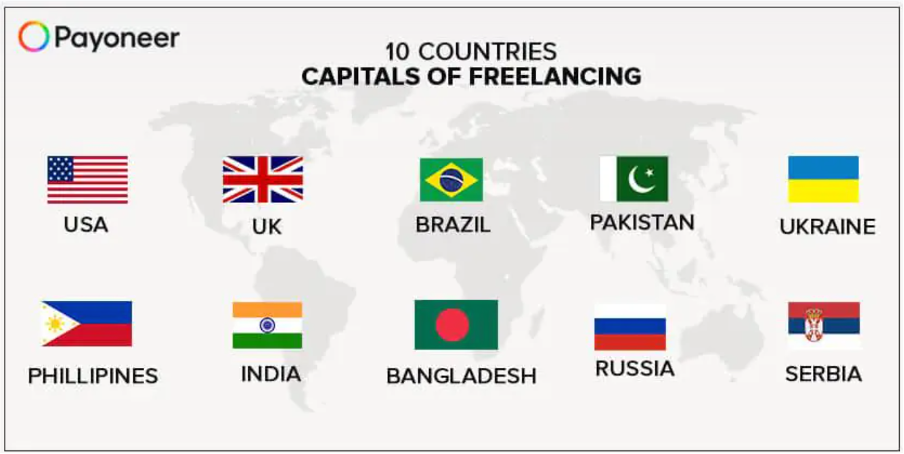
“Gig Work,” a term coined around 1915 and more recently popularised by platform work, describes the exchange of labour for money on a short-term and payment-by-task basis. At present, gig work, flexi-work, on-call work, freelance, and other future terms describe non-standard employment (NSE) forms that deviate from the conventional parameters of standard employment. When these forms become prevalent, we can talk about a “Gig Economy,”"the World Bank states.
The online gig economy is growing rapidly. The freelance platform market itself is projected to more than double between now and 2030, driven by remote work, digital platforms, and companies increasingly hiring for projects rather than permanent roles.
However, they describe very different realities: from digital freelancing (writing, design, IT, marketing), to online services (tutoring, virtual assistance, accountancy), and platform-based work (ride-sharing, food delivery etc).
What is certain is that this is not a temporary trend: companies want flexibility and specialised skills on demand, and workers increasingly want autonomy, mobility and control over their time (driven by a generational shift in values, Gen Z prioritising sustainability, work-life balance, and social justice over traditional career stability or company loyalty).
But beyond economics and labour market statistics, freelancing is not just a way of working. It is a way of living.
And over time, it changes you.
And not always for the better.
When you have to deal with absolutely everything alone, when work can disappear overnight, when you cannot take anything for granted and have zero visibility from one season to the next, you do not have time for self-pity.
You become impatient - because your time is literally money. Intolerant of inefficiency, incompetence and entitlement. You expect people to move fast, decide quickly, work hard, take risks and be bold - like you.
You struggle with authority, hierarchy, fixed schedules and rigid processes. You loathe office politics. You find it hard to delegate. And you work unbelievably hard, so expect others to push themselves like you do - unfair.
And there is loneliness too. You carry everything alone, are responsible for everything, often feel like an outsider even when you are successful.
Freelancing makes you hard.
You have little time for small ailments and complaints, cannot afford to be ill, to take time off, to nurse your pain or sorrows and those of others. I was working with my daughter in my arms when she was three days old. I recorded a podcast the day my father passed away, within an hour of receiving that phone call. Bravado, or desensitisation, wrong priorities?
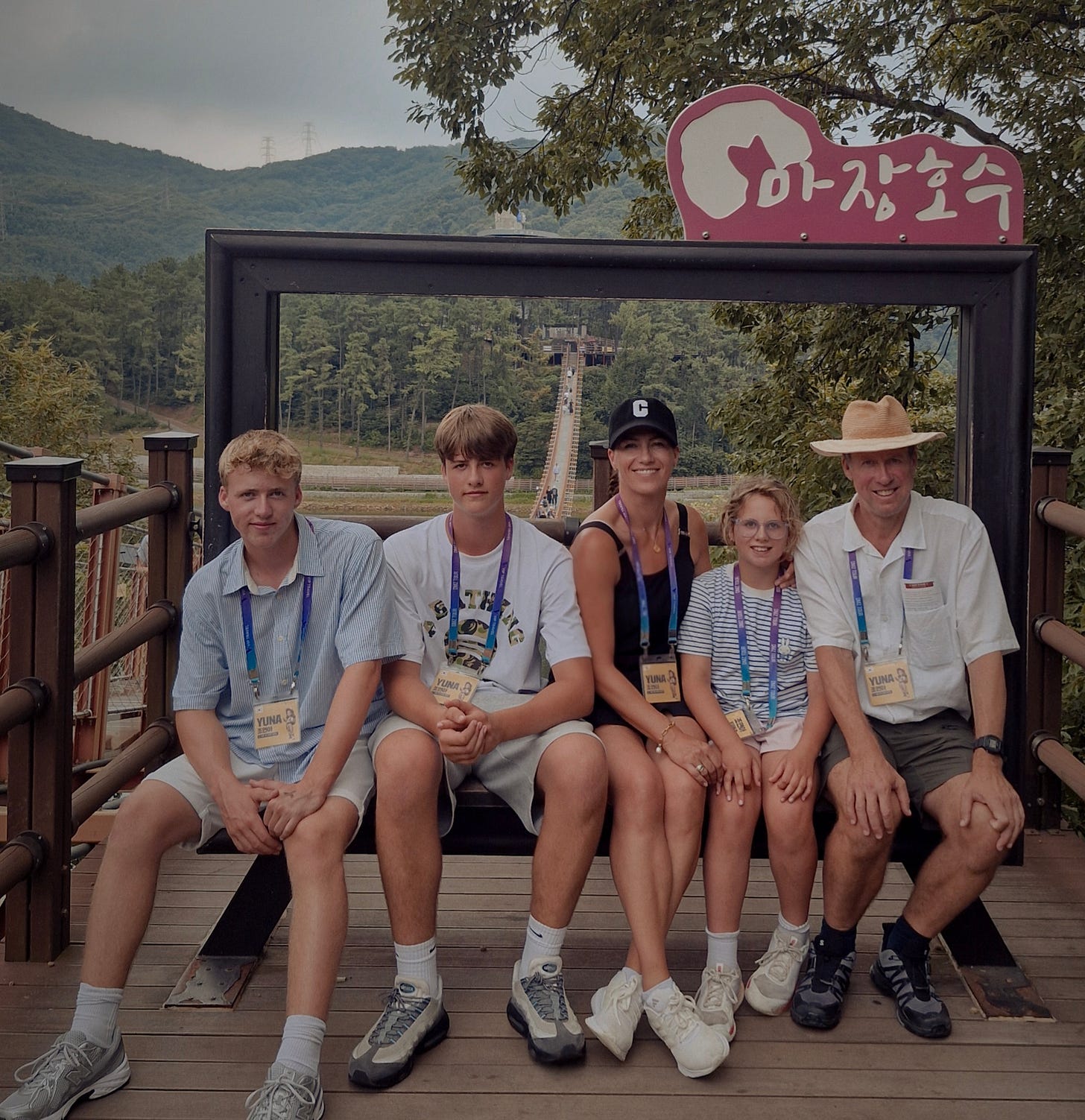
I have often sacrificed the needs of my family, been impatient, not present or engaged enough. I have also shown little kindness and grace to myself (huge kudos here to my husband David who’s been incredibly supportive over the years).
The price of freedom
Whilst most people optimise their life for stability, predictable income, a career ladder, a pension, belonging to an institution and low volatility, freelancers optimise for autonomy, variety, mobility and self-determination. High volatility and loneliness rather than acceptance by the group. Most people go for easy. We go for difficult.
We value discipline, honour, courage and responsibility.
In the end
What I am most proud of in my own journey is not the stages, the events, the travels, or the people I have interviewed. It is not the achievements, after many years of sacrifices, but what I had to overcome along the way - mostly fear, and a lack of self-belief.
It is how I built my life.
A life I love.
Myself.
And that I tried my absolute hardest.
My hat off and admiration for all the people reading this who have embarked on this incredibly difficult journey.
With love, Charlotte
Subscribe to get new posts
Peakub is a home for creators, publishers, and teams to publish, grow, and monetize their work — all in one place. We're building a fast, privacy‑respecting platform that helps you focus on your craft while Peakub handles the plumbing — from content tooling to delivery and analytics.

I GO! by Charlotte Kan




Comments