
I GO! Edition 32: Slowbalisation & the Long Agony of the ‘Global Citizen’
This week: Luxembourg → London
10/18/2025
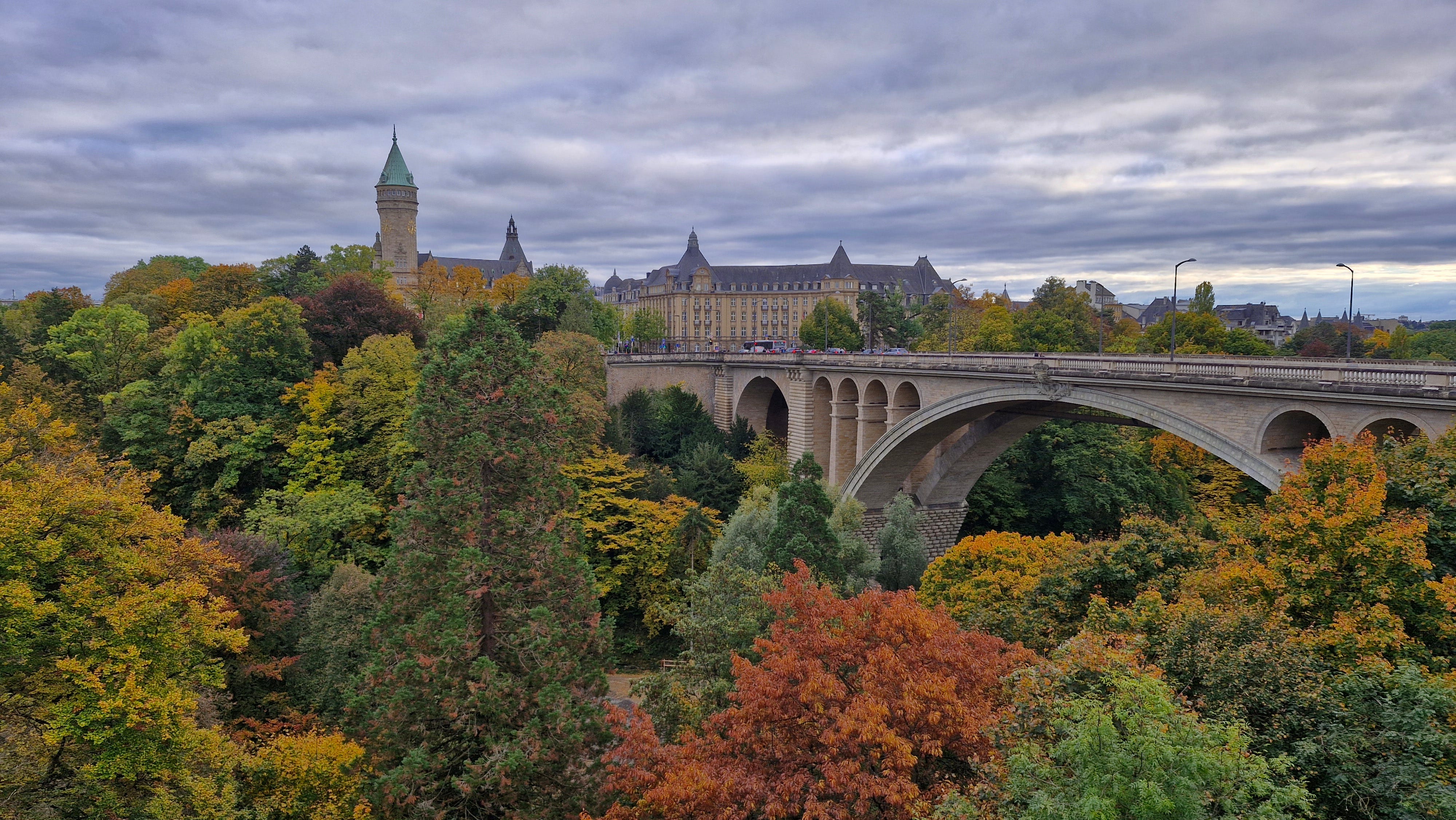
At the Luxembourg Investment Forum this week, I heard something that stopped me mid-thought. An expert, speaking onstage, disagreed with a question containing the increasingly widespread idea that we’re witnessing ‘deglobalisation’. Yes, many agree that the era of hyper-globalisation - the rapid, frictionless integration of markets and supply chains - is over. And we may have entered an era of “slowbalisation”: a deceleration in global integration that began after the 2008 financial crisis and has since been exacerbated by events like the COVID-19 pandemic. I am not qualified to judge whether this is for the best or not, but I belong to a generation that feels ‘of the world’ and calls for renewed energy for the concept of ‘global citizen’.
What was once seen as a pathway to prosperity and peace is now often blamed for rising inequality, the dire consequences of offshoring on traditional industrial basins (Detroit, Rust Belt cities, Northern England and France, Eastern Germany…), cultural erosion, democratic deficit, the empowering of transnational corporations and unaccountable institutions (WTO, Big Tech etc.) over local communities, massive environmental degradation, and a loss of control.
While these criticisms seem valid, as always, the story more nuanced.
Because I can guarantee you: without globalisation, I probably wouldn’t be gracing this page - or world stages. Globalisation gave me a chance. The chance to find myself.
The Age of Possibility
Globalisation lifted hundreds of millions out of a life of misery - especially in China, India, and Southeast Asia.
Extreme poverty fell dramatically, from 35% in 1990 to 18% in 2000, largely thanks to these countries entering global markets (World Bank).
World exports of goods and services as a percentage of global GDP grew from 19% in 1990 to 27% in 2000 (World Bank).
During the 1990s, the world cracked open - politically, economically, and culturally. For those of us born in the late 1970s and early 1980s, this meant coming of age just as globalisation reached warp speed.
We were perfectly timed to ride the wave of hyperconnectivity.
It was an era of increased meritocracy. Of enhanced social mobility for many. Of falling borders and rising possibilities. A time when access to higher education, economic opportunity, cheap travel, technology empowerment expanded - unevenly, yes; temporarily, perhaps; with the environmental and social costs we now better understand - but undeniably, it was an exciting world full of promise for many.
Especially for hungry, curious kids like me - who wanted to experience the world and who, for the first time, were not restricted by means, geography, or culture. The entire world felt more accessible. We were free to become ourselves wherever we saw fit.
This made me reflect: many of us were - and are - globalisation’s “lucky children.”
Because globalisation wasn’t just an economic system. It was a worldview. An attitude. A frequency you could tune into.
The first true global citizens
Every time I land in a new country, I feel like a fish in water. It’s not just ease. It’s activation. Something in me sparks. My senses sharpen. My curiosity flares. I notice everything: the smell of the air. The texture of signs. The rhythm of street crossings, the smell when passing kitchens. The glances exchanged between strangers. Their features. World history written on their faces. The taste of the first coffee. Something deep and instinctual lights up - the way it does when you’re exactly where you’re meant to be. I become more me.
Is it character? Partly. But it’s also generational.
Xennials like me were among the first university students to use email, the first jobseekers to search for work online, the first backpackers to plan their adventures in internet cafés - when our parents barely even spoke a foreign language. We studied abroad through EU mobility schemes like Erasmus, interned with multinationals expanding across continents, and entered the job market during a rare window of post-Cold War economic optimism. Before the financial crash. Before the climate reckoning. Before the screen swallowed everything.
The fall of the Berlin Wall and the collapse of the Soviet Union brought a massive expansion of liberal democracies and capitalist markets. China and India liberalised. NAFTA and the European single market transformed trade. The World Wide Web was born. Suddenly, borders felt lighter, and the future felt borderless.
We consumed music globally - burning pirated CDs, downloading MP3s, discovering underground scenes from Tokyo to Toronto. We watched MTV Europe, listened to Moby, quoted Trainspotting, and danced to Daft Punk. We absorbed American TV and British sarcasm, French philosophy and German techno. Culture wasn’t something we inherited - it was something we curated, across borders.
As the world reconfigures around new lines - of security, sovereignty, and self-preservation - the global citizen feels both more necessary and more exposed.
We’re seeing more closed borders, more binary thinking, more national narratives. And yet - the climate doesn’t stop at the border. Nor does technology. Nor, frankly, does humanity.
Global citizenship in the 2020s demands more nuance. More empathy. More energy. It’s less about movement, and more about connection. Maybe less about being everywhere - and more about being present, wherever you are.
I am, fundamentally, of the world. That home is not a fixed place, but a state of receptivity.
With universal love,
Charlotte
Subscribe to get new posts
Peakub is a home for creators, publishers, and teams to publish, grow, and monetize their work — all in one place. We're building a fast, privacy‑respecting platform that helps you focus on your craft while Peakub handles the plumbing — from content tooling to delivery and analytics.

I GO! by Charlotte Kan




Comments