
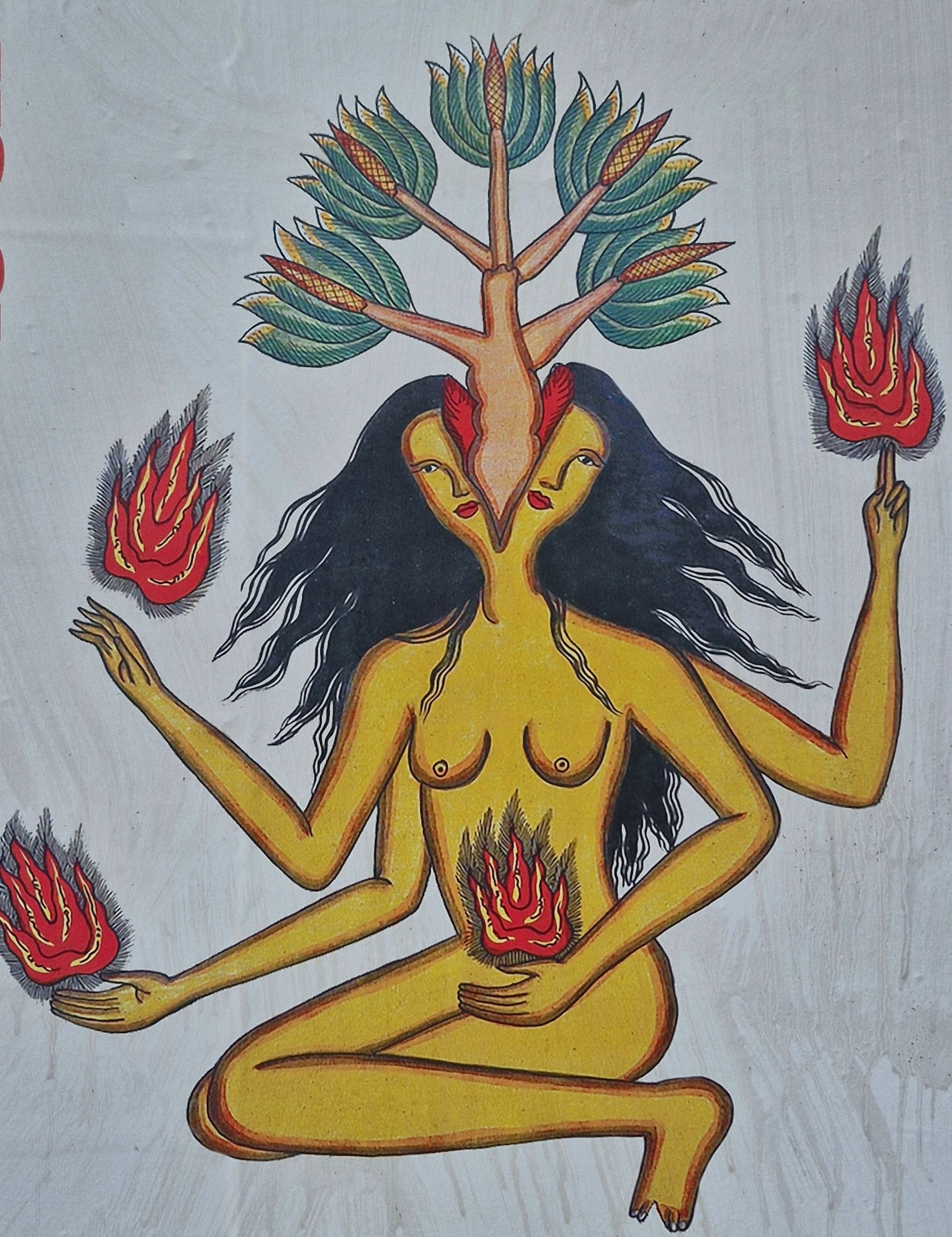
I GO! — Edition 6: Creative Entrepreneurship, Awakening Your Shakti… and Sakura.
On blooming on your own terms.
03/29/2025
This week in I GO! I unpack what it means to build a career—and a life—around creative freedom rather than fixed labels. From the rise of the creative generalist to the accelerating force of the creator economy, I explore how eclecticism is no longer a flaw, but a future-proof strategy.
I reflect on identity, multidimensional work, and why subjectivity is power, not a weakness.
We’ll dive into the numbers behind cultural industries, and awaken our inner Shakti—the fire, the force, the power of the feminine divine.
Also inside: Sakura season, self-expression as currency, and a quick dispatch from a very 2025 press lunch in Chelsea.
Eclecticism as a Business Model
“Specialisation is for insects.”
“A human being should be able to change a diaper, plan an invasion, butcher a hog, conn a ship, design a building, write a sonnet, balance accounts, build a wall, set a bone, comfort the dying, take orders, give orders, cooperate, act alone, solve equations, analyse a new problem, pitch manure, program a computer, cook a tasty meal, fight efficiently, die gallantly” — Robert A. Heinlein (Science fiction author, aeronautical engineer, and naval officer).
The institutional world abhors multidimensionality.
You will constantly be required and will often, willingly, label yourself. To shrink. To fit in. To define yourself by function, skill, or title so that you can be placed neatly within the value chain. You’ll avoid mixing the personal with the professional, your side gigs with the day job, the real ‘you’ with work.
How about the opposite - ‘radical authenticity’, self-expression and eclecticism as a business model?
Take journalism.
Traditional media asks for neutrality, detachment, obedience to rules and standards, sticking to an editorial line.
There’s absolutely a place and a need for it.
But I favour the freedom and realness of subjectivity—where emotion and personal reflection offer more universal resonance and potential for transformation.
So this week before hitting the road again, I reflect on creative entrepreneurship to honour the polymaths who create value through original ideas, on their own terms, and preferably by blurring the lines. Yes, hail the modern “Renaissance” men—and women—mixing Science with Humanities, the Sacred with the Profane, Pop culture with ‘Haute’, the Feminine with the Masculine, Left and Right brain, to build something unapologetically theirs—anchored in passion, purpose, and …freedom! Mixing the arts, technology, storytelling, experience design, cultural insight, and community curation, they turn ideas into impact, influence, and, importantly income.
The Rise of the Creative Generalist
I was recently asked—again—to define my “role” for a conference name strap.
My mind momentarily short-circuited. Freelance journalist? Moderator? Writer? Communication consultant? Storyteller? Presenter? Brand ambassador? Communication Strategist?
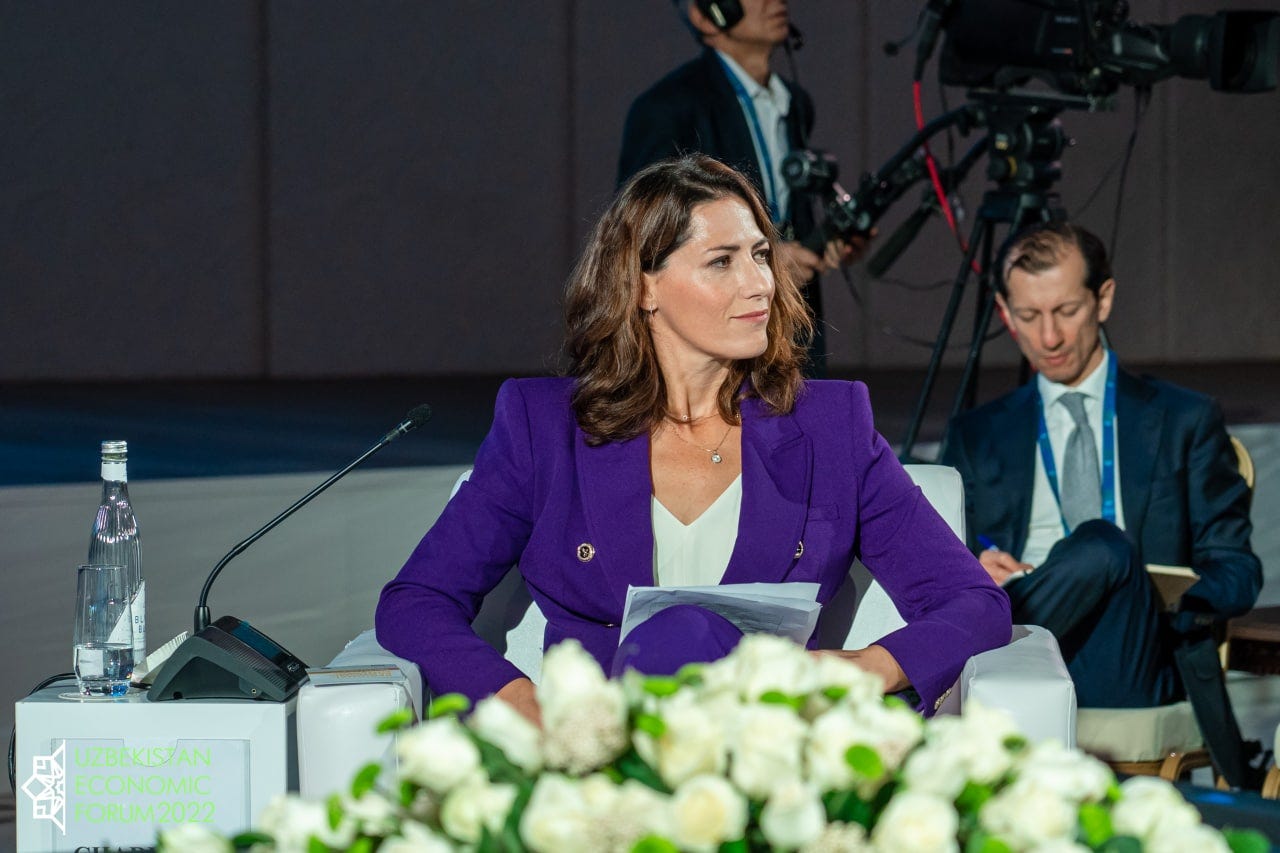
I moderate conversations across multiple sectors - business, geopolitics, sustainability, tech, culture, AI, women’s empowerment. Why stifle my curiosity and limit oneself to one?
In a world obsessed with specialisation, choosing eclecticism is a quiet rebellion—and increasingly, in a fast-changing and uncertain world, a competitive edge.
Businesses polled by World Economic Forum predict that by 2027, almost half (44%) of core skills will be disrupted. Many workers already suffer from FOBO – or the ‘fear of becoming obsolete’ – with more than a fifth of them in the US who think they might lose their jobs to emerging technology like AI (when in reality, it’s not robots they should fear but the decision by some technofascist to “streamline” the org chart).
In this context, being multi-skilled, versatile, adaptable and creative can provide a lifeline and many more opportunities. Hence the boom of the so-called ‘creative economy’.
The creative economy has a rather flexible definition. “It is an evolving concept which builds on the interplay between human creativity and ideas and intellectual property, knowledge and technology,” UNCTAD argues.
Mixing design, arts, media, and entertainment, the global creative economy is now valued at over $2.25 trillion. With 6–8% annual growth, it is one of the fastest growing sectors (UNESCO, 2023), fast becoming central to the economy, with forecasts that cultural and creative industries will generate 10% of global GDP by 2030—fuelled by AI, digital platforms, and content ecosystems.
Creative Power as Economic Strategy
Once dismissed as "soft power", creative industries are now part of serious economic diversification strategies—especially in fast-developing economies:
Saudi Arabia is rebranding itself by investing heavily in culture through initiatives like the Riyadh Creative District, the Red Sea International Film Festival, and large-scale public art programmes like Noor Riyadh.
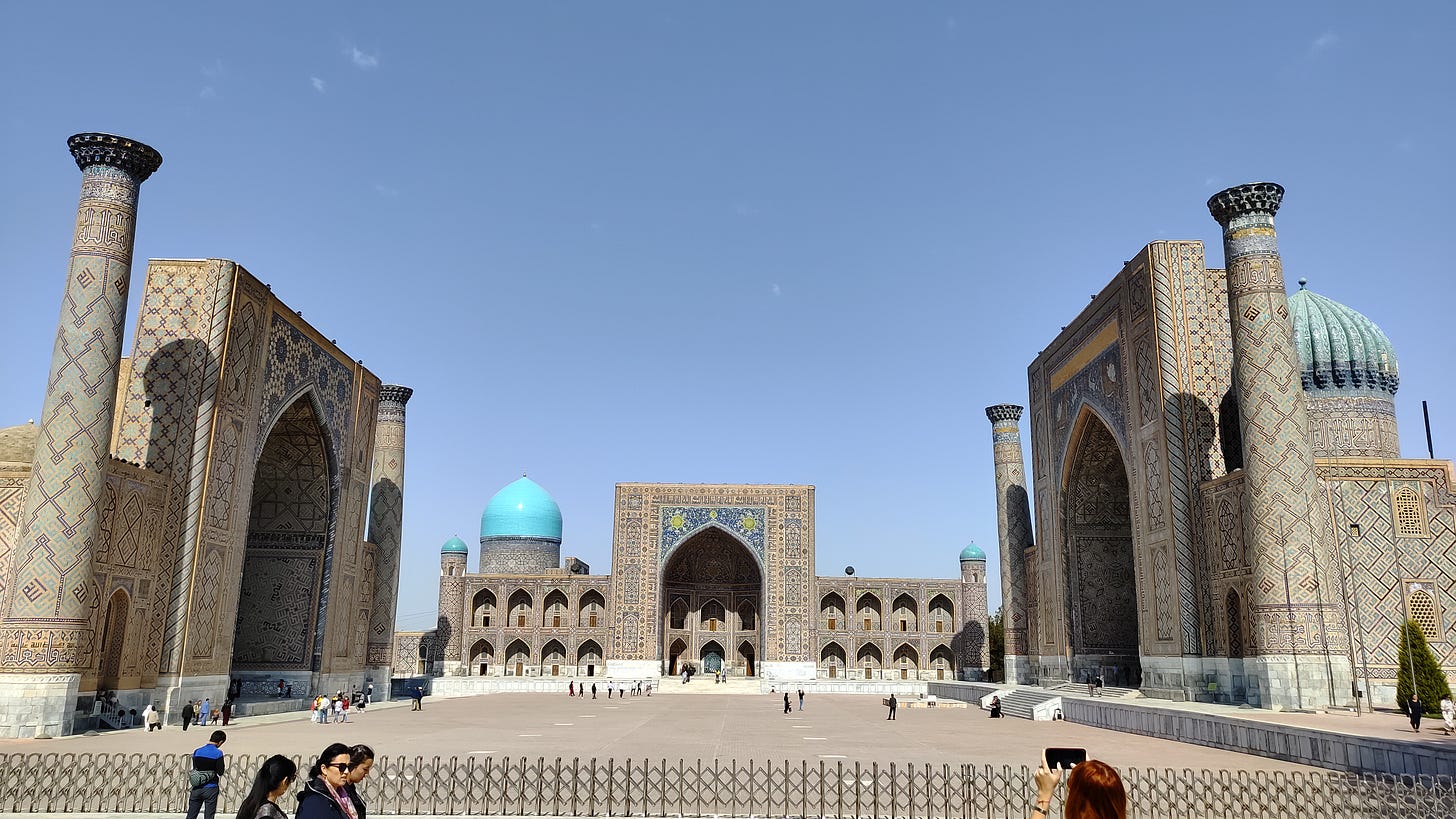
Uzbekistan recently hosted the 4th World Conference on Creative Economy under the patronage of UNESCO, and will tap into the economic power of the arts by launching a Bukhara Biennial, the first event of this kind in central Asia in September 2025 after opening a new national gallery, the Centre for Contemporary Art in Tashkent.
In Africa, the creative tech scene is thriving. Studios like Kiro’o Games in Cameroon and Maliyo Games in Nigeria are building culturally grounded video games with global appeal.
According to the IFC, creative industries offer strong revenue potential for SMEs and significant employment opportunities for women and youth.
Zooming in on the "creator economy" now, where content creators, influencers, and artists monetise their content and services directly with their audiences by leveraging digital platforms and technologies, building personal brands like businesses.
Notorious content creators’ examples include the Kardashians or countless young women on OnlyFans, but you could also add entrepreneurs like Steven Bartlett, thought leaders/podcasters like Brené Brown or Mel Robbins.
And add to the mix modern Renaissance men and women empowered by the internet such as the filmmaker, bestselling author, and founder of the Webby Awards Tiffany Shlain, multidisciplinary artists like Donald Glover / Childish Gambino, the late Virgil Abloh, architect, entrepreneur, fashion designer, like Pharrell Williams, who is foremost known as a producer and rapper, authors & activists Elif Shafak and Leïla Slimani, or self-labelled multi-hyphenate writer & podcaster Emma Gannon. etc.
Goldman Sachs expects the creator economy’s total ’addressable’ market to have doubled in size in five years to reach $480 billion by 2027.
Power lunch at the iconic Daphne’s in Chelsea
In a perfect illustration of the rise of the creator economy, I attended a stylish press lunch this week hosted by Feel, the vegan collagen vitamin brand, in the flowery conservatory of Daphne’s—the iconic, über-glamorous Chelsea institution owned by Caprice Holdings (i.e. Richard Caring of The Ivy fame).
A few years ago—pre-Covid, perhaps—such events were almost exclusively the domain of traditional journalists, with the occasional celebrity making an appearance. This time, more than half the guests described themselves as ‘content creators’.
And rightly so. For a brand like Feel, whose target market is affluent, urban, wellness-oriented women in their 30s to 50s, creators offer direct access to engaged, trusting communities. With a single well-timed post or story, they can transform product placement into lifestyle aspiration—more personal, more persuasive, and more powerful than a standard write-up.
A smart, very 2025 move. (Btw the lobster risotto and cheesecake were superb, as was the people-watching).
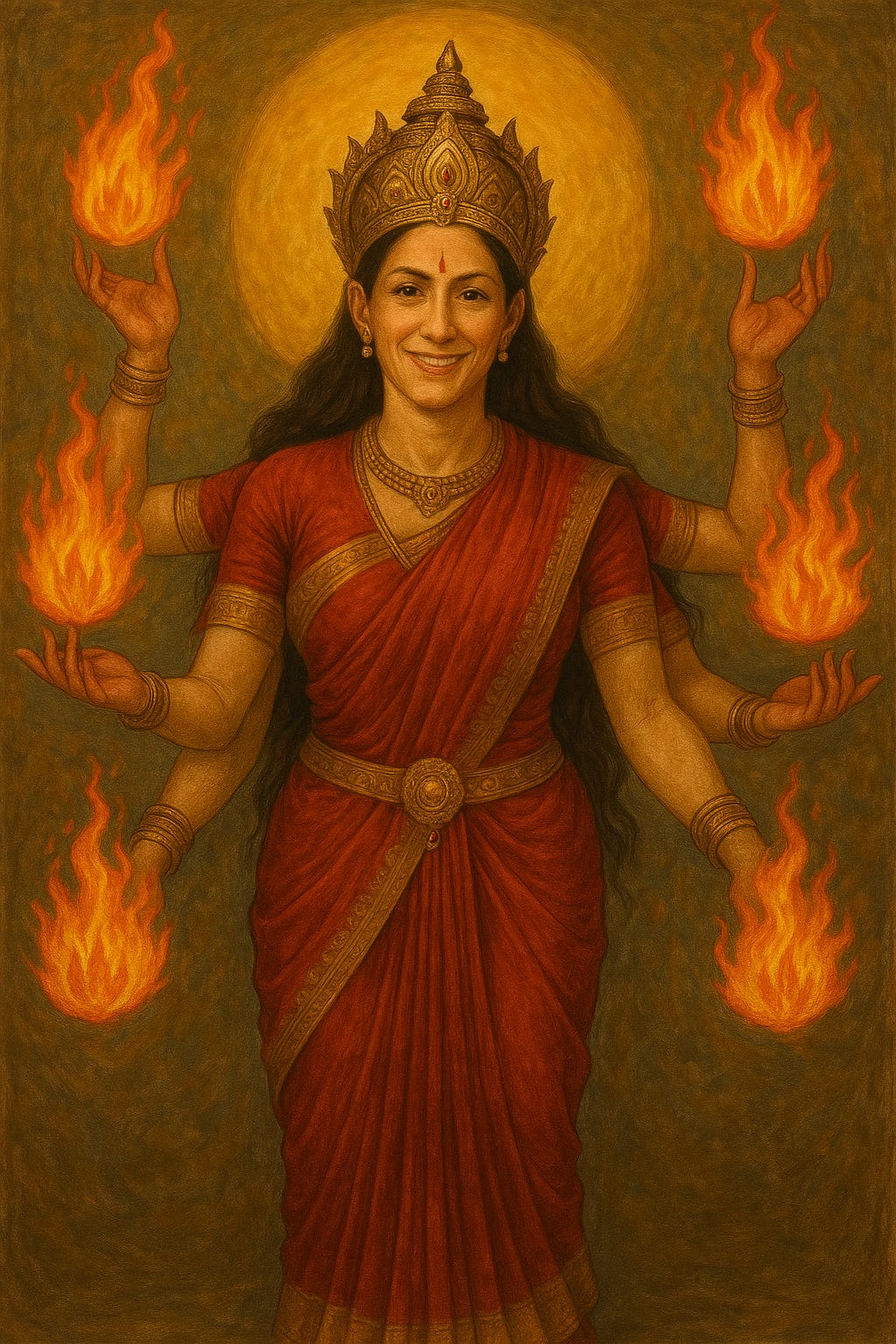
Shakti, the Feminine Divine Energy of the Universe
To sum it up: having a wide creative range might just be one of your greatest assets in a fast-shifting world. And one way to unlock it?
By channelling your inner Shakti.
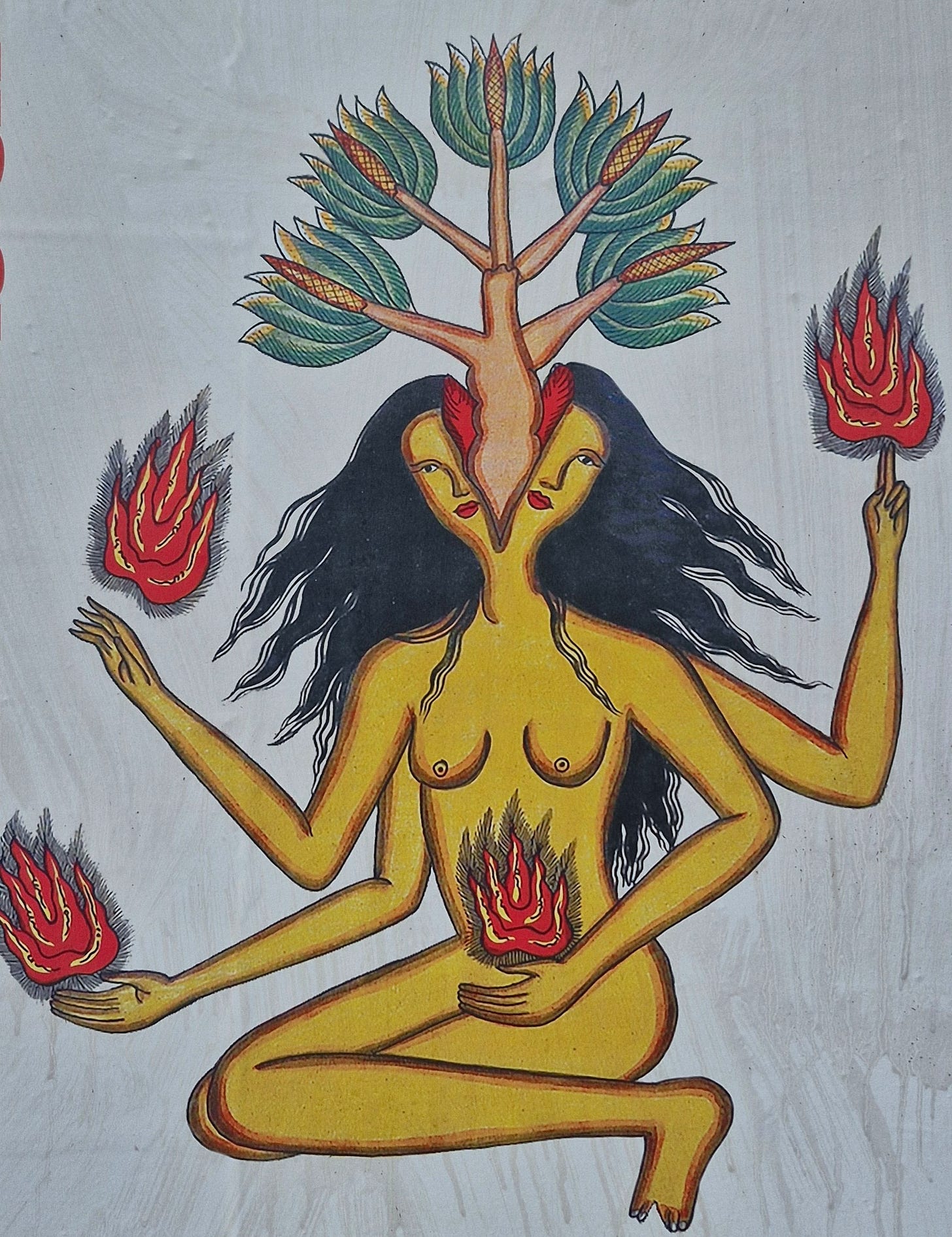
In a moment of serendipity last weekend, I walked past a poster for an exhibition at the Barbican by Indonesian artist Citra Sasmita for her show— Into Eternal Land—which stopped me right in my tracks.
It reminded me instantly of the fierce Hindu goddesses—those who birth worlds with their breath, and in that same breath, destroy them, burning down what no longer serves.
In Hindu cosmology, Shakti is the primordial feminine energy, the divine life force present in all beings and things. She is the mother of movement, the spark of creation, the force behind both genesis and collapse.
A refreshing contrast to how femininity is often framed in the Judeo-Christian West—as self-sacrificing, meek, motherly, discreet.
However, in Sanskrit, Shakti translates as strength, power, energy.
Shakti is the part of your life that you can FEEL. It's the Energy, the Fire, the Power. An interpretation of femininity as creative, full of fire, constructive, but also potentially destructive and mighty.
“This identification with shakti acknowledges women as the vessels of both creative and destructive power. Like many modern cultures, Hindu culture has a hard time reconciling the biological compulsion of these two powerful forces. Some feminists and scholars criticise this identification because they believe it has led society to label women either as saints or sinners, with little room in between. They argue that women, like benevolent goddesses, are expected to exhibit forgiveness, compassion, and tolerance of others’ transgressions. If they conform to this role, patriarchal society accepts them; if they do not, and attempt to exhibit independence and assertiveness, they are considered destructive, disrupting community and family social structures.” Jean Johnson wrote for Asia Society.
The fleeting beauty of Sakura
That’s it for this week. Japan may be in bloom, but London also put on quite a show this week, the sunny Spring air sprinkling with cherry tree confetti.
In Japanese culture the cherry blossoms, Sakura, celebrates impermanence (mono no aware) and the cyclical rhythm of death and rebirth—reminding us that all things, even the most beautiful, are transient.
So Happy Sakura, wherever you may be.
Subscribe to get new posts
Peakub is a home for creators, publishers, and teams to publish, grow, and monetize their work — all in one place. We're building a fast, privacy‑respecting platform that helps you focus on your craft while Peakub handles the plumbing — from content tooling to delivery and analytics.


I GO! by Charlotte Kan




Comments