
I GO! Edition 2: Energy, Energy, Energy!
Sampa Soul: São Paulo, A City of Superlatives
02/21/2025
This Week in ‘I GO!’:
Sampa Soul – Unpolished, vibrant, and endearing, the largest city in the Southern Hemisphere is not just Brazil’s economic powerhouse but its cultural heart and a metropolis of superlatives. São Paulo claims more helicopters per capita than anywhere else in the world (and some of its worst traffic), the largest Japanese community outside Japan, and the planet’s highest concentration of street art. But it is also bursting at the seams—over a third of the population lives in informal settlements (World Bank). Its stunning architecture, tropical vibes, and kind, diverse urbanites make it one of the most magnetic cities I have ever visited.
The Brazilian Uplift: A Masterclass in Body Confidence – Curves, confidence, and celebration. In São Paulo, body positivity isn’t a movement—it’s a way of life. A lot of exposed flesh, many tattoos, no size policing, no judgment—just playfulness and owning your space with joy. A refreshing contrast to Europe, which could learn a thing or two about the freedom—or liberation—of accepting one’s body as it is.
Selvagem, Ibirapuera Park – São Paulo is a foodie playground, and hip Selvagem isn’t just a restaurant—it’s an experience. Nestled in the city’s green lungs, Ibirapuera Park, it is where LatAm flavors, ambiance, heritage—and the city’s wild soul—converge amid luscious surroundings.
Quote of the week (Anonymous friendly taxi driver):“Aqui você vê até morcego doar sangue” - ‘Here you even see bats give blood,’ which I assume roughly translates as ‘Here, anything goes…’
Sampa Soul: São Paulo, A City of Superlatives
I loved EVERY SINGLE MINUTE of my time in São Paulo—a megacity of 22 million, bursting with life, relentless energy, unexpected beauty, and unapologetic vibrancy.
São Paulo likes to think big. The largest city in the Southern Hemisphere and the economic engine of Brazil, its skyline seems to stretch into infinity. But beyond the glass towers and relentless traffic, Sampa has soul.
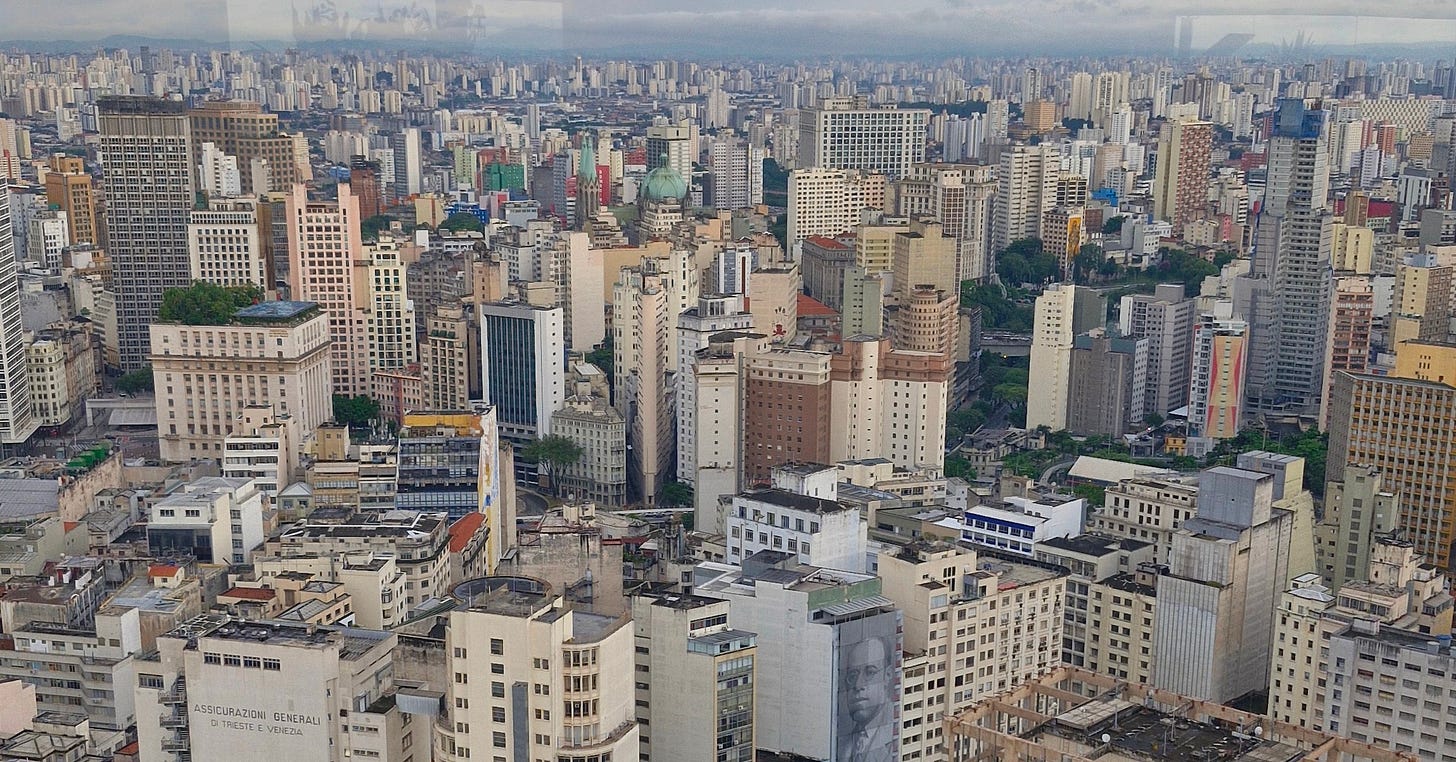
With over 20 million people in its sprawling metropolis, São Paulo could feel overwhelming, but instead, it feels like an exhilarating maze of hidden gems. This city is not polished—but it’s raw, electric, and full of upbeat spirit. It’s a place that doesn’t try to seduce you—it dares you to dive in.
Here, concrete meets nature, futuristic skyscrapers rise beside lush green pockets, and the Paulistanos—of all skin colours, body types, and heritage—fully own their city.
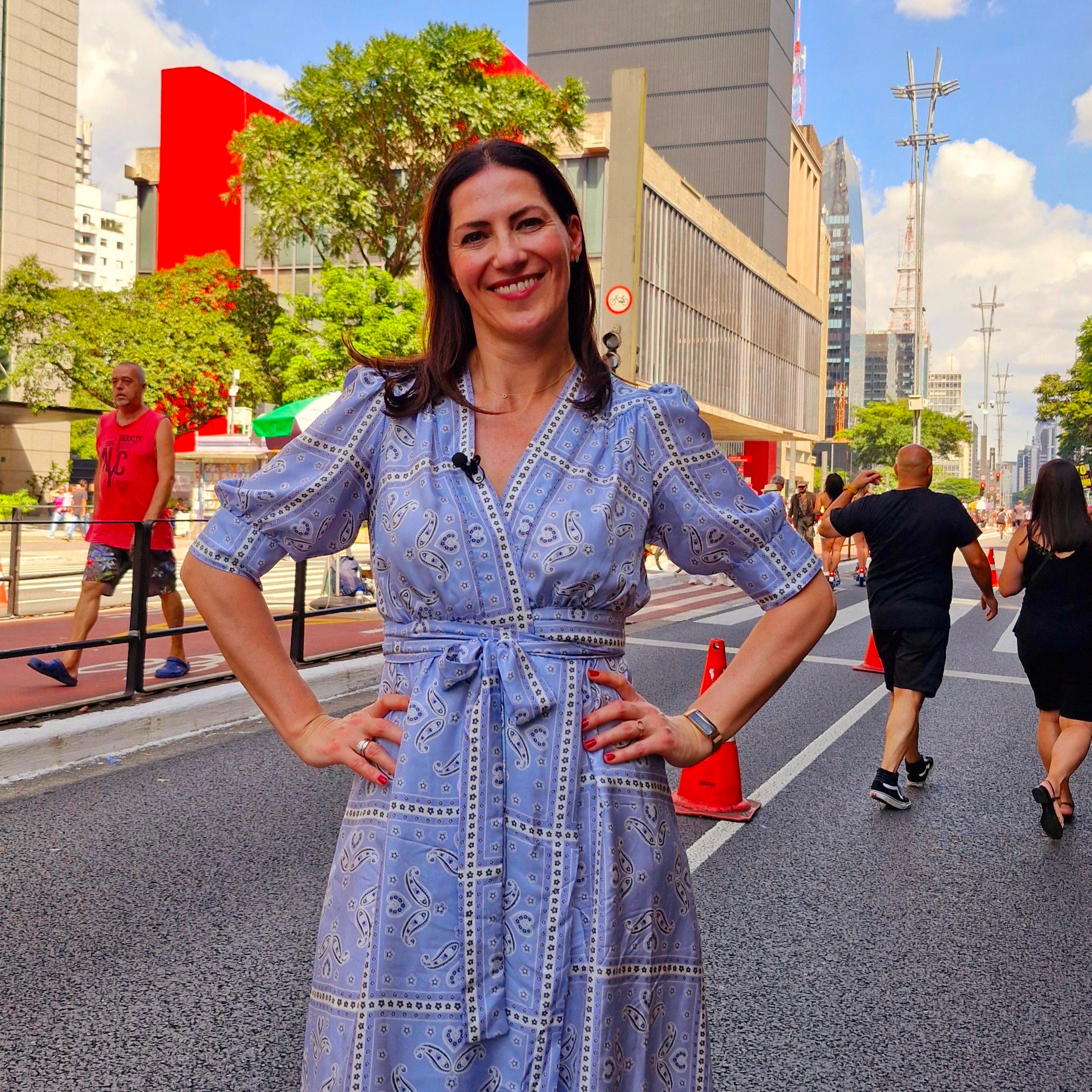
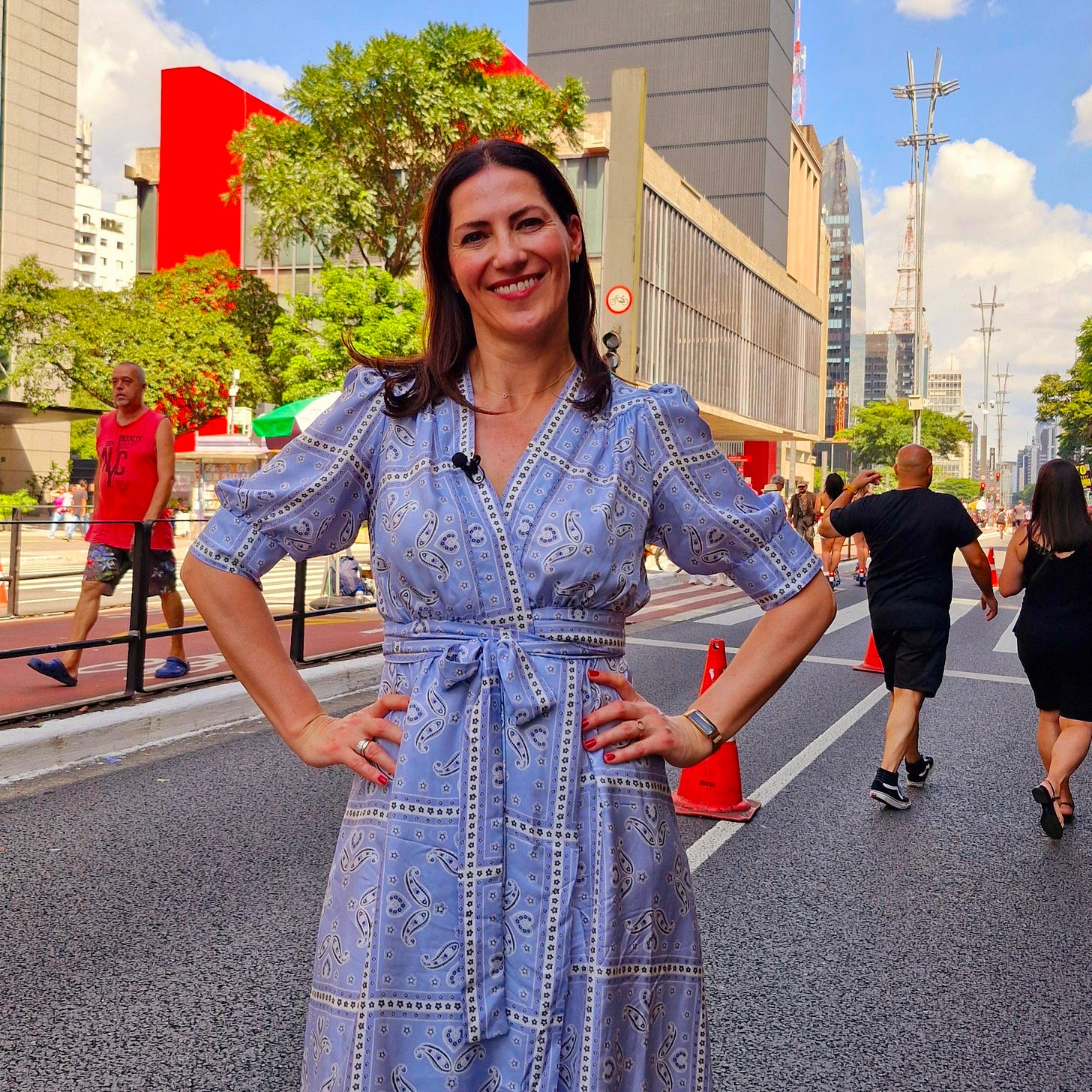
Every Sunday, on Avenida Paulista, São Paulo’s most famous boulevard, traffic halts, and the area transforms into a festival. Families, skaters, cyclists, musicians, dancers, and street food vendors serving up fresh pastéis or coconut drinks—all come out, reclaiming the space with an infectious party atmosphere.
São Paulo also boasts the highest concentration of street art on the planet, turning entire neighbourhoods into open-air galleries, like the iconic Beco do Batman alley in the vicinity of boho Vila Madalena, where graffiteiros have covered every inch of concrete with tropical hallucinations (a lot of homage to magic mushrooms).
Liberdade, a Brazilian Hub of Nikkei Culture
São Paulo is famously home to the largest Japanese diaspora outside Japan, with over 1.5 million Japanese-Brazilians in the country (Wiki). The colourful Liberdade neighbourhood, located in central São Paulo, is their spiritual home, the heart of the local Nikkei culture (Japanese established abroad).
After entering through imposing red Torii gates, visitors roaming through the lantern-clad streets are treated to traditional shops, festivals, authentic Japanese cuisine, and manga-inspired murals. I visited on Sunday when crowds flood the local craft markets, enjoy street food, and shop for vintage clothing.
Being slightly obsessed with all things Nippon, this felt like a real treat, and I had to find out more. I found out that if Japanese immigration resumed after World War II, it started much earlier. The first wave of Japanese immigrants arrived in Brazil in 1908 when a ship carrying 781 Japanese labourers (the Kasato-maru) marked the beginning of large-scale migration. Most of them arrived to work in coffee plantations in the São Paulo state. [Government of Japan]
A city of extremes
Other than the vibrancy of the different cultures that shaped its urban make-up, what strikes first-time visitors to São Paulo is its sheer size, with endless skyscrapers blocking the horizon. The greater metropolis area spans nearly 1500 km2, which makes it bigger than several European countries.
This means transportation is crucial and, unfortunately, that means cars – lots of them. Traffic congestion is one of the worst in the world and air pollution often exceeds WHO guidelines. That is also why São Paulo has more helicopters per capita (1 per 1700) than anywhere else around the planet, with 574 private helipads (Statista).São Paulo is the only city in the world that has exclusive air traffic for helicopters (Abraphe).
Despite being a concrete jungle, São Paulo is also one of the greenest megacities in Latin America: over 50% vegetation coverage across its territory (Cities Today). It is also acting on sustainability, with a target to cut CO2 emissions by 50% by 2028 and reach net zero by 2038. The city is leading one of the largest urban reforestation projects in history, with mayor Ricardo Nunes planning to convert 10.9% of private green areas into protected public parks and forests. It has invested a whopping $2 billion in electric buses, to boast the largest fleet in Latin America.
Nevertheless, there is another ESG emergency to address and it is the ‘S’ of ESG. Despite its booming economy, São Paulo is a city of extremes with a huge inequality gap (life expectancy difference of 24 years between the poorest and richest areas of the city, The Guardian). One of the main inequalities is access to decent and affordable housing, with a shortage of at least 400k homes (Synergia Consultaria Socioambiental). Over a third of the population live in informal and precarious settlements like sprawling favelas (World Bank).
Exploring solutions for sustainable and affordable housing was part of my mission in the city as a Saint Gobain International Ambassador for the company’s 360th anniversary. More details very soon when our special report is out. #MakeTheWorldABetterHome.
The Brazilian Uplift: A Masterclass in Body Confidence
What also struck me in São Paulo is the liberal attitude of its inhabitants. Here you live and let live. Few places on earth exude body confidence like Brazil, where curves are not just accepted, they are celebrated. There is an unapologetic embrace of playfulness, sensuality, and self-expression, a stark contrast to the restrained, perfection-driven beauty standards in much of Europe. But creating insecurity sells….
In São Paulo, if you’ve got a body, you flaunt it. Here no size or age-appropriate policing. No judgment. People just wear what makes them feel good and own it joyfully – the tighter the clothing, the better. Confidence is the ultimate style statement. A lot of flesh on display, tattoos, piercings, funky hairdos, and experimentation (after all Brazil is one of the world’s capitals of plastic surgery). Because life is too short to apologise for …existing.
Europe could take a lesson from this—self-love is pure freedom, and confidence is contagious.
Selvagem: A Wild Culinary Escape in Ibirapuera Park
São Paulo is a food lover’s paradise, a city where global cuisines and flavours collide. There are reportedly more pizzerias in the city than in Rome, and a flurry of sushi bars, Argentinian steak houses and of course, Brazilian or LatAm fusion restaurants and countless cocktail bars. Before traveling to the city, I had already set my eyes on Selvagem, nestled inside Ibirapuera Park, the city's lush green oasis designed by legendary architect Oscar Niemeyer, which offers a new take on Brazilian cuisine with a fusion of Amazonian fare and Paulista terroir.
You know a restaurant is special, or would like to think it is, when the reservation team sends you a list of ‘DO NOTs’ as lengthy as War & Peace and threatens to cancel guest booking if they are more than 15 mins late - only for the latter to turn up to a half empty space. We shall forgive this slight indélicatesse, because Selvagem promises “a sensory journey” between sea and land, with a farm or ocean to fork philosophy - and it delivers. My three veggies/pescatarian companions and I picked various dishes from a diverse menu of fresh local ingredients, bold flavours, in a setting that feels like you’ve escaped the city without ever leaving it.
We washed our ceviche de Camarão, grilled octopus with tucupi fregola, tomatoes, kale, fresh herbs and annatto aioli expertly created by Chef Filipe Leite with a thoughtful, red fruit and terracotta flavoured Brazilian Syrah (Guaspari - Vale da Pedra).
However, the best part was the raucous buggy ride in the pouring, warm tropical rain from the park gate to the warmly lit venue, whose decor is earthy, warm, and utterly inviting. A memorable evening.
Another special mention in my foodie section: Figueira Rubaiyat, where you get to dine under the shade of a 100-year-old fig tree with an extensive LatAm menu.
Not forgetting the spectacular Rosewood Tower or "Torre Rosewood" at Cidade Matarazzo - a complex of elegantly preserved buildings from the early 20th century complemented by an exquisite lattice tower. Designed like a vertical garden, it is the work of French starchitect/genius Jean Nouvel - with the bonus of a plush interior by Philip Stark. Walking inside the hotel is akin to stepping inside an AI generated interior designer tropical reverie. Best negroni in a long time in the courtyard of the cocktail bar/restaurant on the ground floor.
I came to São Paulo expecting a financial hub and an oppressive metropolis. I left having experienced one of the most thrilling, warm and alive cities I’ve ever visited.
And I’d go back in a heartbeat.
Subscribe to get new posts
Peakub is a home for creators, publishers, and teams to publish, grow, and monetize their work — all in one place. We're building a fast, privacy‑respecting platform that helps you focus on your craft while Peakub handles the plumbing — from content tooling to delivery and analytics.


I GO! by Charlotte Kan




Comments