
✨ I GO! Edition 13: A Stranger at Home, and At Home Everywhere…Biculturalism or ‘Geopolitical Polyamory’
What’s it like to belong to more than one place, and yet not fully to any?
05/24/2025
“Bicultural individuals are bridges. They see both shores and know how to swim between them.”
— Dr. David Livermore, Cultural Intelligence Center
This Week: Paris – London
This one’s for the shapeshifters, second and third culture kids, life expats and graceful exiles. The ones who call everywhere home — and nowhere, completely.
Living On the Edge
A few weeks ago, I wrote about liminality — the quiet art of being in-between. Between cities. Between projects. Between identities. Between states of minds.
The airport lounge. The hush before a party. The pauses. The thresholds and electric moments, where the unknown lingers and all the possibles exist.
And the deep sense of presence from just surrendering to the moment just before — the cusp of something.
And it struck me recently: for many of us who live across countries, languages, classes and cultural codes, living life in limbo isn’t an exception — it’s the norm.
Being bicultural is quietly disagreeing with everything — and somehow enjoying it.
It’s a constant thread of dissonance running beneath everything you feel.
A deep knowing that life is not either/or - but both, and more.
It’s the quiet art of not fully belonging, and so learning to curate your identity.
It’s also editing ourselves constantly - in accents, gestures, jokes. Biculturals are fluent in contradiction.
And this is a quiet superpower - an ability to better decode, better adapt, and move fluidly through the world. It makes for a richer, more multi-layered, freer existence.
The Rise of the Bicultural
In our age of globalisation and free(er) movement and exchange, biculturalism is not an exception anymore, it has become mainstream.
In the UK, 1 in 3 children is born into a multicultural household (ONS, 2023).
In France, 30% of under-18s have at least one foreign-born parent (INSEE, 2022).
Globally, 280 million people now live outside their birth country (UN Migration Report, 2023).
There are also many subsets of biculturalism.
My husband and I, for instance, are not just British and French — we’re also Welsh and Breton, respectively. Two Celtic cultures with deep roots, a proud but understated sense of identity, and a quiet defiance toward distant institutions that once swallowed in our languages, our customs, and our ancestral traditions.
That’s why I wince a little when someone describes me, or something I’ve done, as the epitome of Frenchness – often attributing idiosyncrasies to nationality rather than personality. But I am Breton first, French second.
As a child, I remember crossing the Loire on the way “down south”, surprised by how French everything suddenly looked — the place names, the terracotta roofs, the sunflower fields. I had grown up in a land of granite, slate, and broom – of strong consonants (unlike French which belongs to the big family of ‘Roman’ languages, Breton is ‘insular Celtic’ and its closest cousin is Cornish).
Being ‘provincial’ also comes with its own cultural codes and reference points, its exclusions, its need for social moulding. Even our families have travelled across class lines: from humble, hard-working miners, farmers, small-town market traders or shopkeepers to middle-class, educated, urbanites.
It’s a generational story — not just of aspiration, but of translating, of adapting. The under-appreciated Nobel Prize winner author Annie Ernaux brilliantly captured this in La Place: how class ascension reshapes identity from the inside out and how much resistance and rejection there can be to the process around you.
Born or Bred, Dahling?
There are two main types of biculturals.
You’re either born bicultural - raised in a household or community with two or more distinct cultures, often with parents from different countries - or you become bicultural later in life, through immersion: migration, long-term residence abroad, intercultural relationships, bilingual education, etc.
But humans being a terribly snobby species, biculturalism is judged a bit like ‘Old’ and ‘New’ money:
There is “Heritage biculturalism” - the kind you’re born into – this tends to be more socially validated.
Vs.
“Acquired biculturalism” - often seen as second-tier. Less authentic. As if you’ve tried it on, rather than grown into it.
And yet, it takes even more emotional labour, cultural dexterity, and psychological nuance to become what you were not born into.
Biculturalism as Creative Power
Having internalised two cultures or more means not just exposure, but an internal reworking, an emotional and cognitive shift, a deep rewiring. My sense of identity incorporates elements from all my cultures – and they are often in tension.
However, this leads to a vast array of benefits, ranging from:
Cognitive flexibility: studies show biculturals develop stronger adaptability and mental agility (Hong et al., 2000).
Enhanced Creativity: the ability to think across paradigms gives us an edge in storytelling, problem-solving, innovation (Source: Maddux & Galinsky (2009), “Cultural borders and mental barriers,” Journal of Personality and Social Psychology)
More Empathy: moving between worlds makes you more attuned to nuance, context, and emotion.
Psychological Nuance: Bicultural individuals often experience “cultural frame switching,” adapting their behaviour depending on context, the ability to move between mental models and behaviours depending on the environment, making us social and intellectual chameleons.
Biculturals will often tell you their personality shifts slightly with their environment (I am definitely more defiant in French! And wittier in English…)
Biculturalism is also deeply expansive. You carry the tools to connect worlds — not just linguistically, but emotionally, culturally, symbolically. That translates into great bridge-building skills, valuable in today’s polarised environments, and can produce more empathetic leaders (c.f. Barack Obama).
“You will never be completely at home again, because part of your heart will always be elsewhere. That is the price of belonging to more than one place.”
— Miriam Adeney
However, for all its benefits, biculturalism can lead to a feeling of estrangement that can stem from "identity incongruence" — a gap between how you see yourself and how the world sees you.
Biculturals can end up feeling like tolerated guests in their adopted country - even after years, you’re still asked where you’re from. Your contributions are valued, but your belonging is conditional.
Brexit, for instance, led me to experience a form of bureaucratic alienation. Having to “prove” my right to stay after living 20 years in the UK, despite owning land, creating a company, marrying a Brit and birthing three British children — border checks, visa paperwork, the inability to vote - that stung a fair bit. This created a sense of being both in and out. A bit used (after all you pay tax and contribute) but not fully welcomed.
At the same time, acquired biculturals like me also feel dislocation from their country of origin. When you go back “home,” it no longer feels like home. You're too changed — your pace, your manners, your worldview are different. You often have no idea what people are talking about – the cultural reference points, the pop stars in fashion, the successful films’ lines that have wormed their way into everyday conversations etc. The mood of the nation changes, but you have lived away too long to get it.
“I come from no country, from no city, no tribe. I am the son of the road.” Amin Maalouf
The perks and strangeness of biculturalism, its feeling of alienation, is great fodder for writers and artists. From Zadie Smith’s White Teeth, which explores British-Jamaican identity and class fluidity to Chimamanda Ngozi Adichie’s Americanah, moving between Nigerian and American realities to Elif Shafak, Amin Maalouf, and so many others reflecting on layered identities, migration, and memory.
Rexit! (or ‘Re-EU’, ‘RE-U’ like…massive U-turn after we made a big mistake?)
Who else rejoiced at the headlines about the “reset” between UK and UK relations this week after British PM Keir Starmer met a flock (…) of EU leaders at the first official UK-EU summit since Brexit?
Moi!
People in Europe often ask me, “So… what’s it like in the UK these days?”
My answer: It’s different.
But I’m still here.
I moved to the UK in 2000 - what was meant to be a one-year student adventure became a life. I remember the energy of that time: Cool Britannia, Britpop, Young British Artists like Damian Hirst and Tracy Emin shaking up the contemporrary art scene, Blair’s baby in Downing Street, Fatboy Slim filling Brighton beach, pride in waving the Union Jack - not with nationalism, but with swagger – it had become a worldwide statement of cool. The UK was the place to be.
The EU’s freedom of movement let me study, work, fall in love - and create a home elsewhere, somewhere that suited me better.
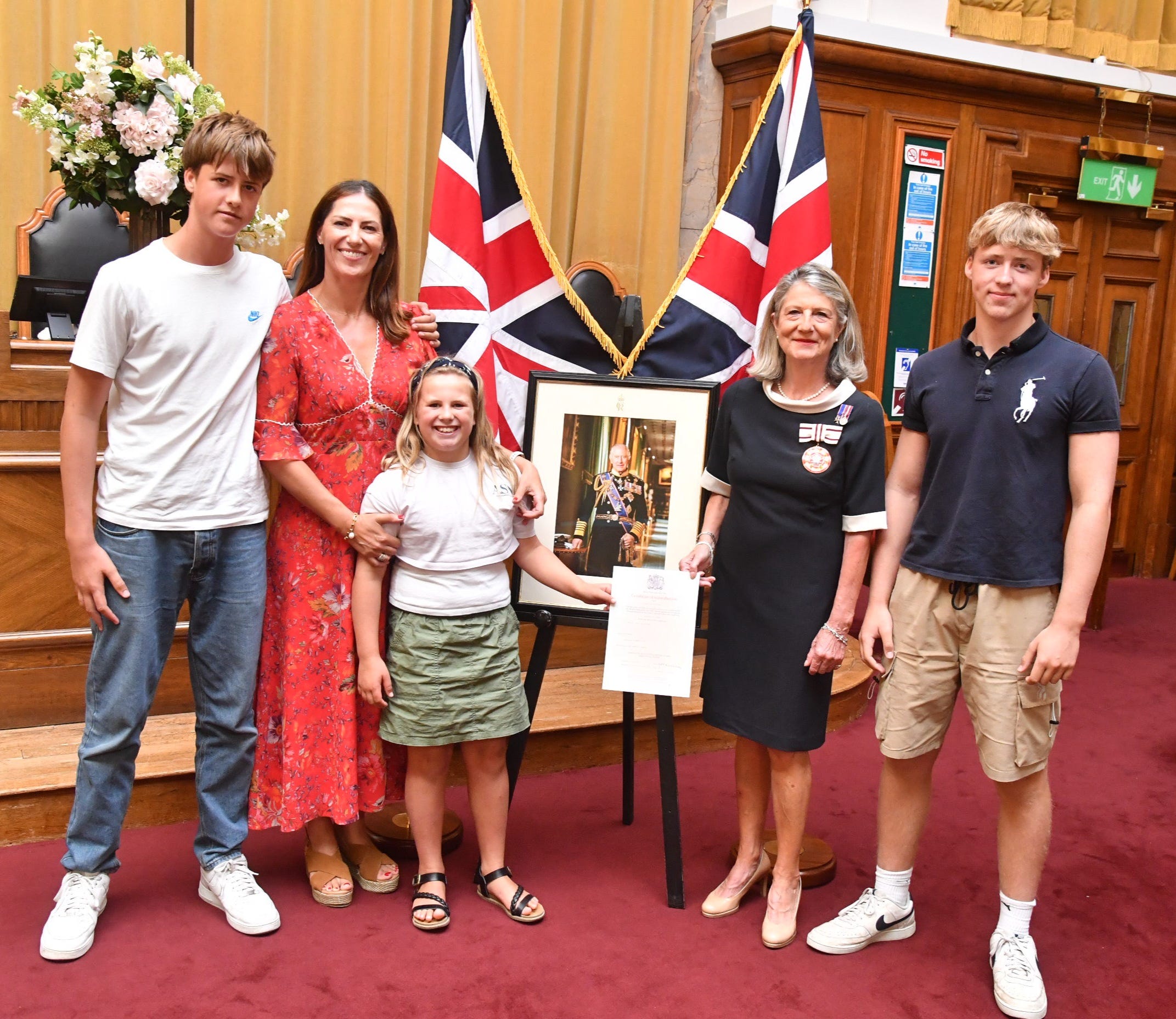
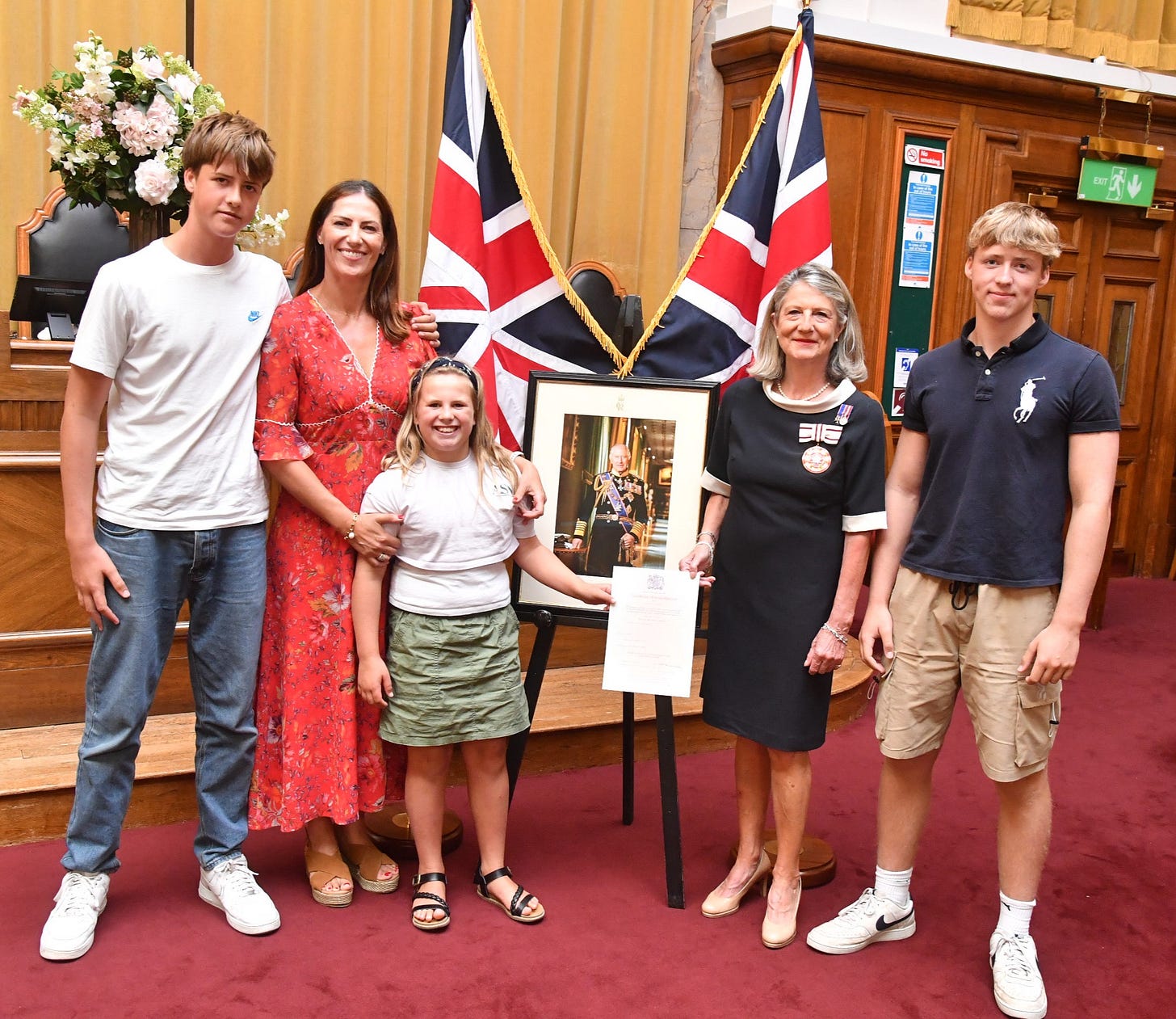
So last year, on a sunny August day, after 25 years of loyal service to Crown and Country, a quarter of a century studying, working, building, and loving in the UK, I became a British citizen.
In front of my three British children. With their London accents. Able to state textbook-perfect recitation of the Rule of Law.
I did it because I wanted to claim it. For myself.
Because questions by overzealous officials at the border, especially when travelling with my family, felt jarring and humiliating (‘So why are you travelling to the UK, and what will you be doing there’? Huh…Living?)
I love France. I always will. But I also feel British and very much part of the country’s story. Like I am both and none. And somehow there’s no contradiction in that.
Geopolitical polyamory. It’s complicated — and beautiful.
Subscribe to get new posts
Peakub is a home for creators, publishers, and teams to publish, grow, and monetize their work — all in one place. We're building a fast, privacy‑respecting platform that helps you focus on your craft while Peakub handles the plumbing — from content tooling to delivery and analytics.

I GO! by Charlotte Kan




Comments