
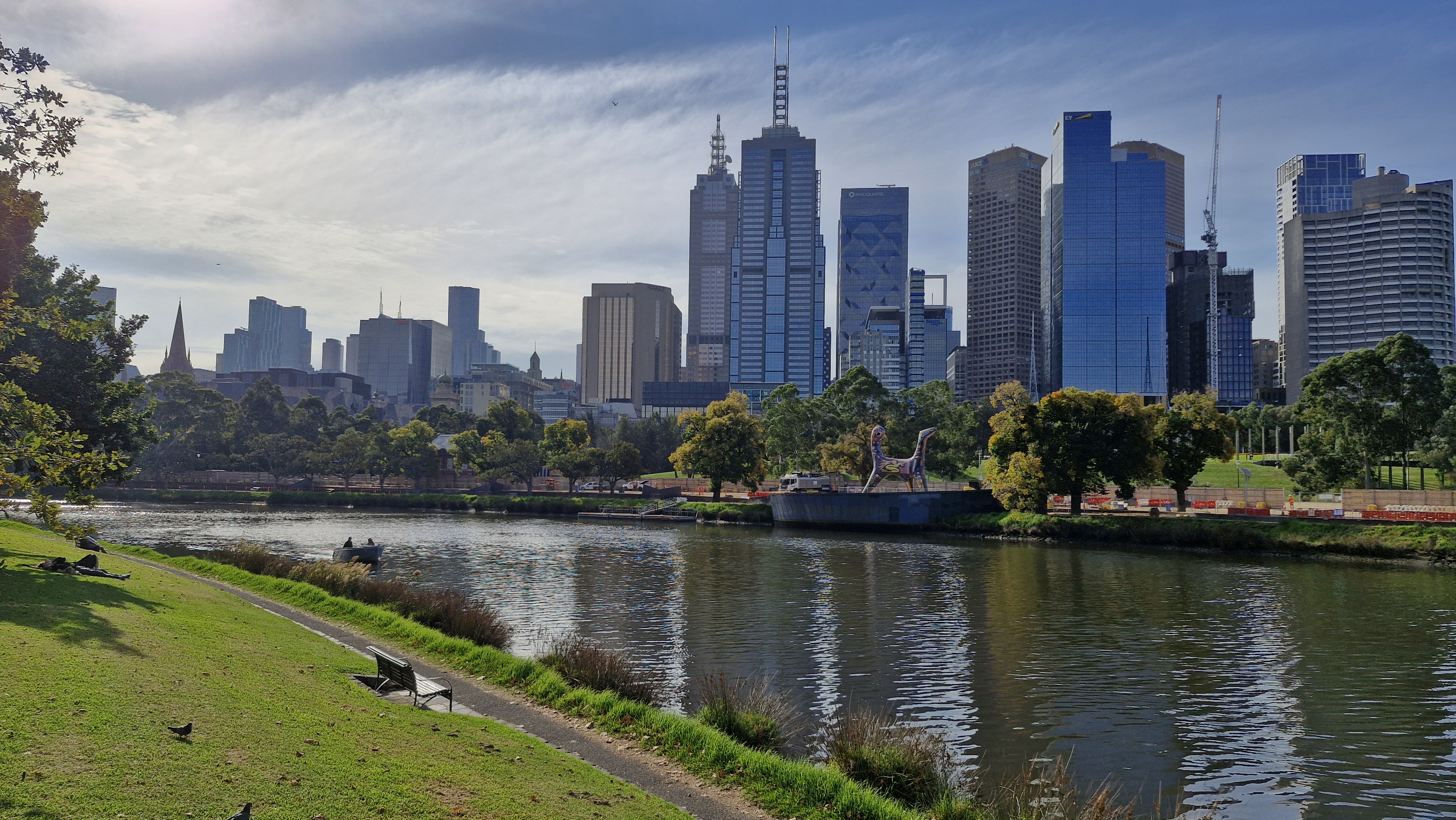
I GO! #8 Melbourne, Quality of Life & Why GDP Has Had Its Day
This week: Sydney – Melbourne
04/12/2025
G’Day!
This week’s dispatch comes from Australia, which I visited for the very first time as an International Ambassador for Saint-Gobain, celebrating the company’s 360th anniversary and its mission to #MakeTheWorldABetterHome. And it’s already one of those trips that gently rewires something inside you.
We began in Sydney, breathtaking with its iconic harbour and dramatic natural beauty. But it’s Melbourne that completely won me over—it delivers on every front.
Before I get into why, and as we close a week dominated by headlines suggesting it's become acceptable to sacrifice almost anything—including the post-WWII international order—in the name of the economy, I want to offer a moment of reflection on what good living means.
This week, I’ve been so struck by Melbourne’s relaxed brilliance as a city that gets it, that I felt compelled to step back and explore this concept of “quality of life”—and why it’s time we urgently rethought how we measure satisfaction, success, and meaning on this planet.
Why Is GDP Still the Metric of All Metrics?
At the start of my career as a stock market reporter in London, one of my key tasks was to track economic data such as GDP or inflation and corporate earnings calendars. I would write pieces anticipating the numbers, incorporating analysts’ forecasts so that traders could react instantly—buy, sell, hedge—to make gains or cut their losses.
That was the mid-2000s, still a golden age for international finance, before the crash of 2008 shattered many illusions….
Today, GDP as a measure of economic progress still reigns. If GDP goes up, everything must be fine. But is it?
We’re in the midst of rising climate anxiety and fears of biodiversity collapse, and a mental health crisis, particularly acute among young people, understandably, in our very uncertain world. According to Deloitte’s 2024 Global Gen Z and Millennial Survey, nearly half of Gen Z and over a third of Millennials report feeling anxious or stressed most of the time.
Meanwhile, the global surge in populism signals something deeper: a widespread disillusionment with institutions and a growing sense of distrust, a need for something simpler to understand - a lack of collective direction.
What GDP Misses Entirely
GDP offers a narrow snapshot of economic activity at a moment in time. It ignores environmental degradation, fails to show the increasingly unequal distribution of wealth, reflects nothing about psychological health, and omits the invisible labour that holds society together.
Unpaid work like caregiving and volunteering for instance—often carried out by women—amounts to over 16.4 billion hours a day globally, the equivalent of 9% of global GDP (OSCE). Yet in economic calculations, it counts for nothing.
And while the U.S. boasts the world’s largest economy, what’s the point of owning a huge house and parking a Hummer out front if your kids are doing lockdown drills, your chicken is chlorinated, and your savings can vanish with a cancer diagnosis?
The U.S. government promises to fight the fentanyl epidemic, but why are so many addicted in the first place? Is it about supply, availability—or escapism from a deeper despair?
The viral AI-generated video "gift" from China to the U.S. this week—featuring morbidly obese American factory workers — was a rather unfunny satire exposing the dark underbelly of societies driven by overconsumption.
This isn’t a de-growth rant. I’m a liberal who believes in economic development - but at any price? What we need is more responsible, conscious capitalism - more business with purpose beyond just profit that can enable more human flourishing.
Measuring Human Joy
Our ‘growth’ metrics must also better value health, peace, time, connection, education, access to culture and contribution to society-at-large.
There is the OECD’s Better Life Index of course. Launched in 2011, it tracks well-being across areas like housing, income, jobs, education, safety, life satisfaction, and more.
It clearly reflects that people want more than just material comfort. As the OECD puts it, “Life satisfaction has been among the top well-being priorities expressed by citizens—even in countries where material conditions may be poor.” Countries regularly topping the winners’ board include the Scandis predictably, like Norway, Iceland, Denmark, as well as Australia and Canada. They are high performing economies with a mercantile spirit and where entrepreneurship is encouraged, but with an emphasis on a strong work/life balance.
Measuring quality of life is undoubtedly complex—it is a very subjective concept. To gauge your quality of life may begin with a simple question: Do you feel safe, fulfilled, and connected, inspired?
Why Melbourne Feels Like the Perfect City
Which brings me back to Melbourne.
What struck me most was how liveable the city felt. A free tram zone downtown, streets lined with indie shops, miles and miles of bike paths and riverside promenade, many parks and green spaces, beaches a short ride away, a generally feeling of safety, of relaxed industriousness.
Melbourne consistently ranks among the world’s most liveable cities. In the 2024 Global Liveability Index (Economist Intelligence Unit), it came 4th globally and remains #1 in Australia. It boasts:
A reliable healthcare system (Health Care Index: 73.28, Numbeo)
A favourable climate for year-round outdoor living (Climate Index: 94.30) - even though I kept being told you can four seasons in one day there…
Ten world-class universities
Extensive public transport and walkable, cyclable urban design
Many museums, galleries, exhibition centres. Culture there is a cult!
Global Food Capital Meets Mixology Magic
It also boasts incredible food. I didn’t have a single average meal in Australia.
Melbourne is a global foodie haven. With more than 3,500 restaurants representing over 70 countries, the diversity isn’t just demographic—it’s in the plate. Indigenous ingredients meet Asian fusion, modern French bistro fare, Italian trattorias, and beyond.
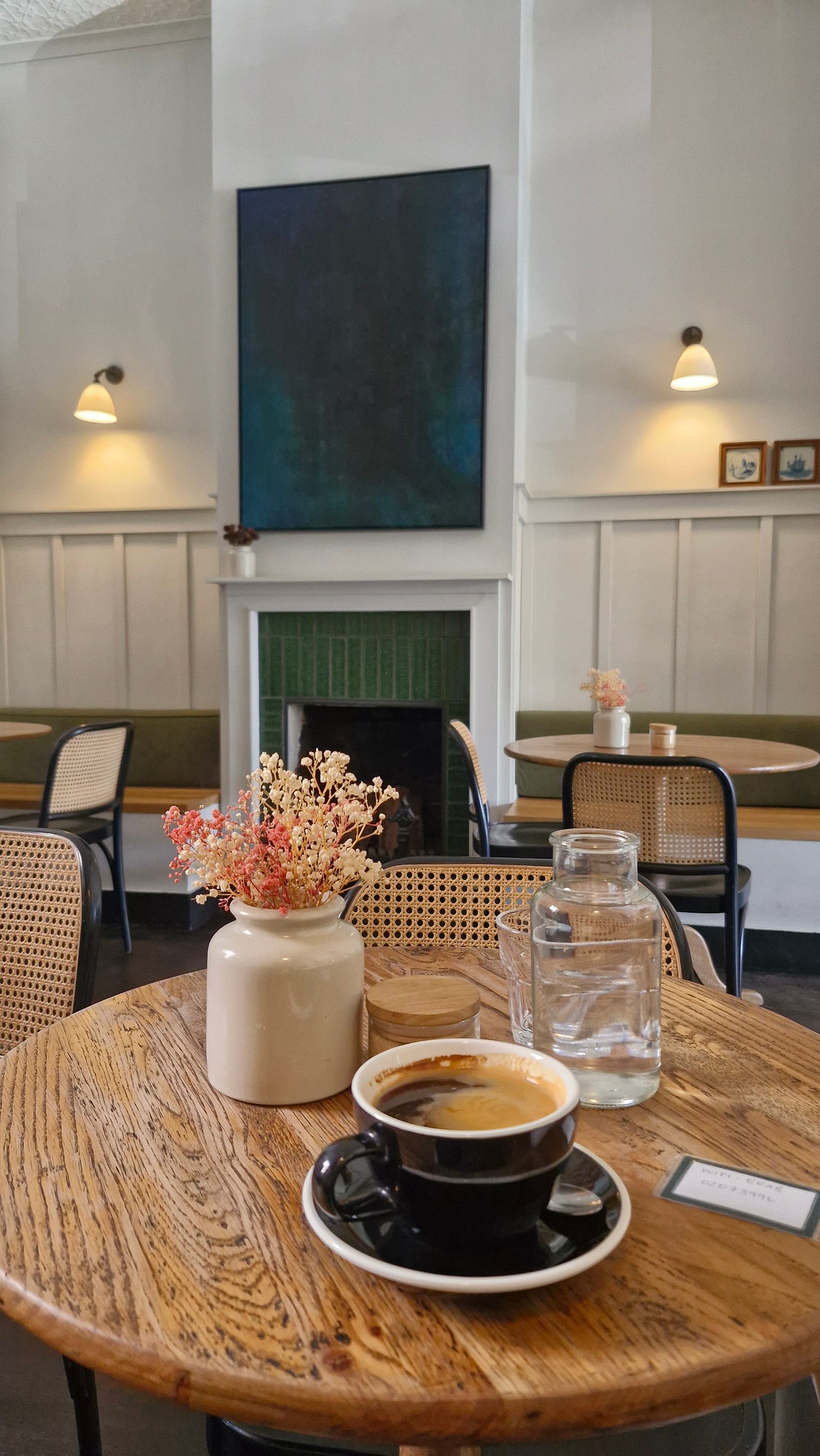
Melbourne is also reportedly the café capital of the world. With over 2,000 independent cafés, the city breathes caffeine culture. Each laneway hides another gem with its own aroma, aesthetic, and soul.
And have I told you yet about the cocktails? On my radar even before going was Caretaker’s Cottage—a tiny bar tucked behind Melbourne’s historic Wesley Church, in Melbourne’s CBD (that’s the acronym for the central district), ranked #21 on The World’s 50 Best Bars list (2024).
It’s intimate, hip, with live DJing, a creative Millennial crowd, and it made me one of the best cocktails I’ve ever had indeed: the Tai Pan, which unfolded in layers—a salty foam, a milky middle, and a peppery-spicy finish. A multi-sensory experience, true mixology magic!
We also randomly - in our usual pick of interesting dining venues - discovered Freyja, a Nordic-inspired newcomer on Collins Street. You don’t choose the menu—it arrives, showcasing traditional preservation methods like pickling, smoking, and fermenting, applied to local produce. Signature dishes include the trout roe waffle with smoked sour cream and herbs, and the beef tartare enhanced with native quandong and Tasmanian mountain pepper. Superb.
Another standout amongst gastro-hip brasseries was Cumulus Inc. in Flinders Lane, where I tried Pacific oysters—so different from the ones I grew up with in Brittany. The menu is grounded in simplicity and seasonal excellence: slow-roasted lamb shoulder, confit duck, spanner crab toast with almond gazpacho.
Local Asian Fusion institution Chin Chin didn’t disappoint either despite the extremely loud music!
Victorian Charm Meets Urban Chic
Another huge part Melbourne’s charm is its eclectic architecture, with its mix of Victorian grandeur, gothic polished bluestone and modern minimalism. You’ll spot intricate wrought-iron balconies and cute cottages in Fitzroy, Melbourne’s ultra-bohemian answer to Brooklyn, filled with indie bookshops, concept stores, street art.
This architectural richness stems from the city’s 19th-century Gold Rush boom, when Melbourne became one of the richest cities in the British Empire.
There are also the local Parliament and Art Deco hotels and theatres near Flinders Street Station—all just minutes from contemporary marvels like Federation Square and the NGV.
Acknowledgement of Country
Upon landing, we were reminded that Melbourne sits on the unceded lands of the Wurundjeri Woi Wurrung people of the Kulin Nation. "We honour them as Traditional Custodians of the land on which we live, cook, grow, and create—and we pay our respects to their Elders past and present, and to all Aboriginal and Torres Strait Islander peoples," could also be read on many restaurants’ websites, displayed like disclaimers.
Conclusion: if you crave a life steeped in culture, creativity, quality over quantity, and connection over consumption—Melbourne might just be your city.
If you haven’t been yet, GO!
Until next week,
Charlotte
Subscribe to get new posts
Peakub is a home for creators, publishers, and teams to publish, grow, and monetize their work — all in one place. We're building a fast, privacy‑respecting platform that helps you focus on your craft while Peakub handles the plumbing — from content tooling to delivery and analytics.


I GO! by Charlotte Kan




Comments